Screenshot at 2022-06-19 11-08-17

Farmability and pharmability

Our team has published a paper on the farmability / pharmability potential of different drug categories. We argue that certain drug categories can be regulated with a self-supply model. To find out more see below.

Farmability and pharmability: Transforming the drug market to a health-and human rights-centred approach from self-cultivation to safe supply of controlled substances

Authors

Fabian Pitter Steinmetz, Maja Kohek

Published

May 3, 2022

Background

The supply chains addressing the global demand for major recreational drugs are hardly addressed due to international contracts, particularly the UN Single Convention on Narcotic Drugs. Currently applied regulatory changes have several disadvantages ranging from political tensions to the neglect of ecological aspects. The aim of this study is to show some implications associated with a transformation of the recreational drug market that is focused on self-supply of different categories of drugs. The concepts of “farmability”, the feasibility to cultivate relevant plants and fungi, and “pharmability”, the feasibility to refine materials to drugs by chemical synthesis, purification etc., are addressed.

Methods

68 drug experts were invited to fill out an online survey on the feasibility of self-supply of different categories of drugs. The online survey was a five-point Likert scale and had seven questions.

Results

26 experts (38.2%) responded to the online questionnaire. Cannabinoids were considered easy to cultivate/manufacture, depressants and psychedelics were ranked with moderate difficulty, opioids and stimulants were regarded as difficult to cultivate/manufacture, and empathogens/entactogens and dissociatives were ranked very difficult. The study found that some controlled substances, in particular cannabis, could be decriminalised without the need for a commercial market. However, some drug categories, such as dissociatives and empathogens/entactogens, would require the establishment of professional manufacturers. Psychedelics and depressants are ranked in between.

Conclusion

Different drugs are associated with different cultivation and/or manufacturing steps with contrasting difficulty levels. Those differences are likely to shape use prevalence to more accessible and safer drug markets which also decrease the involvement of organised crime groups. Hence, when decriminalising the possession of drugs for personal use, it is therefore recommended to allow also for personal cultivation or cultivation within social clubs. This is particularly relevant for drugs with moderate to high farmability but also if pharmability is sufficiently high.

This research was published in the Drug Science, Policy and Law Journal.

The full report of this research is available at: https://journals.sagepub.com/doi/full/10.1177/20503245221097797 


Scan 1011

Our Little Pharm/Farm

ENCOD regularly publishes articles in the Cannadouro Magazine from Portugal.

Here’s the last winter edition published in the Portuguese language with the English version below.

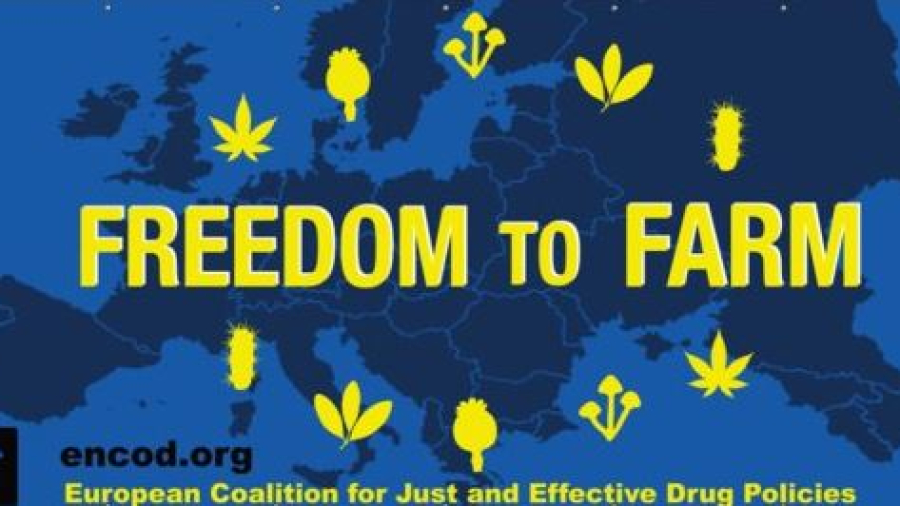
ENCOD, the European Coalition for Just and Effective Drug Policies, is advocating for the “freedom to farm”. But what does that mean? Whilst it is perceived as something totally normal to grow your own herbs and vegetables, many people worldwide are prosecuted for cultivating psychoactive plants and fungi for personal use. Due to multiple reasons, it is important that mankind does not lose its right to farm.

Farming, the contact with soil and plants is what made us who we are today. It sustained societies for millennia and we won’t allow these practices are being prohibited, restricted and controlled. However, small farmers have to be protected against corporate practices that are not only destroying families but whole species, cultivars and biodiversity in general. Several plants are prohibited by law, or their use is restricted, which is violating basic human rights. Even whilst more legislations adapt their hemp (Cannabis sativa) policies, there is still the debate about banning further plants, such as kratom (Mitragyna speciosa) or Iboga (Tabernanthe iboga). Many plants have been banned or tightly regulated without any obvious need for regulatory interference, e.g. salvia (Salvia divinorum) or kava (Piper methysticum). These regulatory practices are harmful to societies as they criminalise traditional cultivation and use and deter from getting involved in nature. 

Whilst it is debatable what would be the best regulatory model for cocaine, there was never a need for a ban on coca (Erythroxylum coca) and traditional coca products, such as tea and candy. To combat several contemporary challenges (such as prohibition, climate change, disrespect for human rights) ENCOD advocates for sustainable development of the world’s economies and farming policies that will protect and favour small farmers, self-sufficient production and social consumption models, as well as a public policy that is not prohibiting plants and substances that have been used by humans throughout history and can therefore be considered as part of the common heritage of humankind.

The so-called “war on drugs” is a war against people, plants and the whole environment. It is absurd that in some regions the beautiful poppy flower (Papaver somniferum) with its nutritious seeds is banned just because its latex, also known as opium, is used to reduce physical and mental pain. Of course, high and continuous consumption may lead to a substance use disorder, but is this a reason to ban a plant, ambush farmers and incarcerate those who disagree? Commercialising opium, as the British did in the 19th century, is something worth criticising and perhaps even impeding, but nobody should withhold this plant from mankind. Of course, the same applies to hemp and its THC-containing products, which are more and more used in the medical context.

Our concern about the impact of current drug policies upon society, the stigmatisation of users, together with economic disparity and associated harm to long-term human well-being, prompted us to emphasise the freedom to farm psychoactive plants, which should be declared the “common heritage of humankind”, irrespective of existing claims to national or international jurisdiction. “Freedom to farm” is proclaiming these plants as international commons, as significant natural resources that are acknowledged beyond the limits of national or international jurisdictions, and as such, are part of the common heritage of humankind. This is an ethical concept and a general concept of international law and therefore should undermine current regulatory practices. These resources should be available for everyone’s use and benefit.

Furthermore, we all hold the responsibility to care for and protect the environment, of which we are a part, for present and future generations. The global civil society is playing a crucial role in the development of, and advocacy for, freedom to farm. Please join our movement.

By Maja Kohek & Fabian Steinmetz

releafmaltalogo

Malta and Cannabis: Changes on the horizon

Malta set to decriminalize up to 7 grams of cannabis and to allow the establishment of Cannabis Associations. 

In the past weeks, the Government of Malta tabled a Bill in the Maltese House of Representatives detailing a plan for a partial decriminalised system for the adult personal non-medical use of cannabis. Bill No. 241 to establish the Authority on the Responsible Use of Cannabis and to amend various laws relating to certain cannabis activities, is a bold statement in favour of a less criminalised and more humane approach. The Bill comes at an important juncture in Maltese and regional drug policy developments. In fact, Malta will be one of the first from the European family to take the lead on promoting a more humane and regulated approach to cannabis.

ReLeaf Malta has been instrumental in pushing forward a model which places the rights of people who consume cannabis at the helm of every decision and ensure no corporate takeover nibbles away personal rights and freedoms.

Principles of human rights, social equity and sustainability have been at the core of ReLeaf Malta’s message and proposed regulated framework. Collaboration with key international partners was key to ensure proposals are built on research and an evidence-based approach, prioritising humanity before profit and corporate greed. Collaboration with ENCOD, especially close consultation of the ENCOD’s European Guidelines for Cannabis Social Clubs was instrumental to create a holistic approach to allow the cultivation, consumption and sharing of cannabis in Malta.

Bill No 241, modelled, in part, on ENCOD’s proposal of a not-for-profit system collectively cultivating, consuming, and sharing cannabis, includes the following points:

Personal cultivation and consumption 

  • Persons aged 18 and over can have up to 7 grams in their possession and won’t be charged in court or face proceedings before a justice commissioner if caught. Police will no longer confiscate cannabis under 7 grams 
  • The possession of between seven and 28 grams of cannabis will be punishable with a fine of between €50 and €100, as well as proceedings before a justice commissioner 
  • Up to 4 cannabis plants will be allowed in private residences, but they must still be kept out of sight, and only up to 50 grams of dried cannabis in the residence 
  • Consumption of cannabis in public will remain illegal with the person being subjected to a fine 
  • Possibility to obtain clean police conduct for amounts decriminalised or depenalised by the new law  

Cannabis Associations operating and registered as NGOs with the Commissioner for Voluntary Organisations 

  • Adults over the age of 18 can form an NGO (Cannabis Association) to collectively cultivate and share cannabis. The Association needs to obtain a licence form the Authority on the Responsible Use of Cannabis. The Associations cannot be situated within 250 metres of a school or youth area 
  • Cannabis associations that distribute cannabis among their members will be allowed to operate as an NGO and not for profit 
  • Persons with previous criminal records cannot form an association 
  • Up to 7 grams a day can be distributed to each member with a maximum of 50 grams per month.  
  • The organisation will also be able to distribute up to 20 cannabis seeds/month to each member and cannot have more than 500 grams of the plant on their premises at any given time 
  • Cannabis is to be distributed in sealed containers, including labelling 
  • No marketing or visible signage should be included 

Whilst not promoting the use of cannabis, the Bill aims to provide increased legal safeguards for the personal consumption and cultivation of cannabis, whilst directly impact the illicit trade and monopoly of cannabis by allowing the establishment of associations providing a source of safe cannabis. The Bill should therefore also directly impact how local police handle cannabis-related offences and hopefully ensure less harassment of people who cultivate, consume and share cannabis.

Nonetheless, it is somewhat strange, that old bogus beliefs spread by ‘the war on drugs’, continue to seep in the new law and unfortunately in some areas distort the core aim of such a reform. One worrying reality is that in a way, the law still considers cannabis possession a crime, especially if the police have ‘reasonable suspicion’ of trafficking. Whilst recognising that the 50 gram/month limit allowed to be purchased from the associations is a courageous step forward (presently 3.5 grams are depenalised), better reflecting consumption levels, it is unclear why the same amount will be allowed for those cultivating up to 4 plants. Any person that cultivates cannabis will tell you that this limit is too low even for one consumer, imagine 4 residents living under the same roof and all using cannabis on a daily basis.

Another example is the complete ban on public smoking, especially for areas only frequented by adults. This is not applied for tobacco and although closed venues and other areas frequented by children prohibit the use of tobacco, in other open spaces tobacco consumption is not banned.

Recent comments by Minister Owen Bonnici have also cast doubt on how the government foresees the daily operation of the associations. In fact, he confirmed that no smoking will be allowed on the premises and people will only visit the association to purchase cannabis or seeds. This is in stark difference to what a not-for-profit social club built on harm reduction aims to achieve. In fact, the main purpose of a similar system is to provide a safe space for like-minded people to share an activity that brings them closer together and gives them the opportunity to share knowledge or seek help if experiencing problems. Most importantly, a system where people visit and stay within the association premises to consume cannabis would ensure closer dialogue between the person and the association, especially on matters pertaining to harm reduction and health. Once more the legislator continues to obfuscate the aims of a decriminalised system with the need of keeping consumers separate from each other, hidden at home, and immediately criminalised if not adhering to strict bureaucratic and unsustainable systems. In a way, this seems a step backward and makes a mockery of the basic human rights of freedom of assembly and of association.

It seems the proposed Bill has also in a mysterious way introduced a business opportunity for some, completely ignoring the fact that these associations will be operating as NGOs and on a not-for-profit basis. The requirement of sealed containers, is a very convenient way how some businesspeople, maybe already involved in the medicinal cannabis market, will make a profit out of this new system.

To oblige an NGO to pay for thousands of sealed containers to be used only once is a clear insult to our collective intelligence, to our sustainable and environmental promises, and a cheap way how commercial interests attempt to sabotage human rights and civil liberties law.

It is also a blatant reflection that cannabis is STILL considered as an illicit narcotic that needs to be sealed and kept hidden. Whilst acknowledging the importance to keep cannabis out of the reach of children, these strict measures imposed on NGOs, together with a complete ban of participation for people with a previous criminal conviction, create an unbalanced playing field from the very beginning. Ultimately, this approach seriously risks excluding those that have been so badly affected by prohibition and the current draconian laws. These provisions also risk increasing the price of cannabis (through membership fees or other means) and thus in no significant way compete with what is available and more accessible on the illicit market.

The Bill is now at its second stage. However, due to parliamentary debates related to the yearly Government Budget, discussions on the Bill have stalled before even starting. Rumors of an early election in November continue to crumble Malta’s green aspirations that the Bill will go through by Christmas. Despite these technical and political hiccups, ReLeaf Malta remains committed to ensure any legislative change continues to respect in full human rights, social equity, and sustainability.

Keeping optimistic is what has kept us going.

Now that Malta is going through this legislative and social transition, as a small but determined NGO, ReLeaf Malta continues to wave our shared green leaf, representing and championing the voice and rights of people who consume, cultivate, and share cannabis.

I want to read the full bill.


banner_F2F_klein

Pre-review of kratom at the WHO ECDD

Dr. Fabian Steinmetz gave a statement on kratom at the Forty-fourth Expert Committee on Drug Dependence.


Dear Expert Committee on Drug Dependence,
we would like to encourage the ECDD not to classify kratom (Mitragyna speciosa) as a controlled substance. First of all, banning plants has never solved any drugrelated issues. Products derived from hemp (Cannabis sativa), poppy (Papaver somniferum), and coca (Coca erythroxylum), and chemical substitutes are readily available worldwide. However, banning those plants inflicted direct and indirect harm to millions of people, particularly ethnic minorities. There is a scientific consensus that sensible regulations dependent on use prevalence and substancespecific risks are the best approach to reduce harm to health and society. A ban on kratom would particularly affect people with traditional and medical use. For many people, kratom is a safe pain medication or mild opioid substitute.

As a toxicologist and professional risk assessor, I would like to emphasise that many plant extracts in high concentrations have psychotropic effects but could also, at high and constant exposure, provoke organ toxicity, e.g. lavender (Lavandula angustifolia), mugwort (Artemisia vulgaris), tea (Camellia sinensis), chamomile (Matricaria recutita), lettuce (Lactuca spp) etc. Hence, this cannot be the rationale for banning a plant, particularly not if there is an overall long history of safe use.

While extracts/isolates should undergo regulatory approaches comparable to other plantbased pharmaceuticals (i.e. dependent on potency), it is important not to schedule the plant and traditional formulations to avoid obstruction of medical research, obstruction of current medical therapies as opioid substitute, analgesic etc. (particularly when access to healthcare is limited) and to avoid the general criminalisation of people using kratom. Particularly the latter is harmful on its own but also may lead to unhealthier substance choices. Hence, the cultivation, trade and use of kratom should not be prosecuted. This should also encompass novel formulations if typical alkaloid exposure is not exceeded.

Overall, the use prevalence is, compared to alcoholic beverages and hempbased products, not particularly high although the plant and its effects are known in the Western world for over 100 years. One reason might be the taste which is not perceived well by many people using kratom. Another reason might be unpleasant effects, e.g. dizziness, drowsiness, particularly at high doses. Due to the fact that the main alkaloid (mitragynine) is a proddrug towards the μopioid receptor, it is unlikely that other routes of administration than the oral route could lead to use patterns associated with severe substance use disorders (cf. first-pass effect). The active metabolite (7hydroxymitragynine) is also present in the plant but only in pharmacologically irrelevant trace levels. This clearly differentiates kratom’s main alkaloid mitragynine from cocaine or morphine.

The political challenges with regard to climate change and mass extinction should also remind us not to interfere with ecosystems lightheartedly. The kratom plant, growing as a tropical evergreen tree, is an important part of local ecosystems and these ecosystems should not be deliberately harmed. Despite that, we already know that banning plants has never been a successful strategy. When looking at other banned plants, it is not unlikely that banning the plant would even encourage more cultivation, extractions and eventually chemical alterations (cf. poppy to heroin or coca to cocaine hydrochloride/freebase).
Although, as described above, this is less likely with kratom, the creation of more harmful derivatives should be a reminder of negative consequences based on drug prohibition. Currently, kratom is considered a rather unproblematic remedy used by a rather small population, nevertheless, “technological progress” due to prohibition should not be underestimated. It is important not to give organised crime groups further opportunities to increase their market share.
Overall, considering health and social implications, the cultivation, trade, and use of kratom should not be prosecuted. Therefore, it is important to respect communities and their freedom to farm, use, and trade recreational and medical goods of low concern.

Kind regards,

Dr. Fabian Pitter Steinmetz

Member / Scientific Advisor of ENCOD

Click here to read the statement.

Click here for more information about the event.


Erec Hand & Topbud 2018-111

Recommendations for regulating the recreational use of cannabis in the European Union

TEMPLATE LETTER TO THE MEPs


Situational analysis
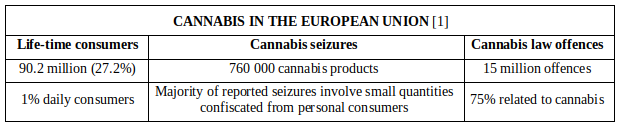
 

Every week, 90.2 million European citizens risk being sold a synthetic cannabis product
or cannabis contaminated with pesticide and other harmful substances.
Every day, criminal organisations continue to strengthen their market monopoly.
Every hour, 1% of European citizens risks being arrested by the police.


Rationale

The European Union Charter of Fundamental Rights underlines the importance of keeping the individual at the helm of every decision making and ensures that the universal principles of human dignity, freedom, equality, solidarity, democracy, security, sustainability, and rule of law are upheld for every European citizen. The four freedoms of the EU; free movement of people, goods and capital, and freedom of establishment, complement and strengthen the fundamental rights of the individual. Furthermore, adherence and full participation to the unifying and noble targets of sustainable development set by the UN Sustainable Developments Goals 2030, further enhance the critical nexus between justice, security, and well-being.

The EU Agenda and Action plan on drugs 2021-2025 [2] emphasises that:

The aim of the EU Agenda on Drugs is to protect citizens through better coordinated measures that will: (i) have a substantive and measurable impact on the security and health issues arising from drug use and the operations of the drug market; and, (ii) address both the direct and indirect consequences arising from this problem including links to violence and other forms of serious crime, related health, and societal problems, environmental damage, while raising public and policy awareness on these issues.

Furthermore, prevention and awareness, including addressing stigma are identified as key to prevent substance use and harms associated with it. The priorities also propose the introduction of wider harm reduction measures and alternatives to coercive methods.

When looking at the prevalence of cannabis consumption in the European Union standing at 27.2% and cannabis law offences amounting to 75% of all European union drug law offences (majority of reported seizures involve small quantities confiscated from personal consumers), the draconian European approach is evidently causing more harm than good. The current policy frameworks adopted by national governments, predominantly criminalising and persecuting personal consumers and cultivators, continues to propagate an environment of discrimination and injustice.

Some European Union Member States have since the early 1990s recognised that the criminalisation of the personal cultivation, consumption and sharing of cannabis is not conducive to better public health and social well-being outcomes for the community. These initiatives, together with other policy changes in the years that followed, introduced various legislative measures to address the widespread consumption of cannabis and primarily separate the personal consumer and cultivator from the criminal justice system. The shift towards a decriminalised system aims to directly disrupt the monopoly of the illicit drugs market, whilst ensuring law enforcement agents direct their attention and resources towards more pressing and violent crimes such as domestic violence, human trafficking, money laundering, and homicide.

Furthermore, it may be advisable to view regulation as a process in which revisions and corrections are not seen as failures, but pave the way for efficient regulation that promotes health policy goals. To make this possible, the necessary flexibility in implementation should be planned for from the beginning. After all, an innovation such as the regulation of the cannabis market primarily involves a social, but also legislative learning process, which is accompanied by progress and setbacks. In order to be able to continuously take into account new experiences in regulation, coordination and evaluation are cornerstones of any regulation.


Recommendations for the Members of the European Parliament and the EU Member States

Considering the core European values of defending and upholding human dignity, freedom, and equality for all European citizens, included in the European Union Charter of Fundamental Rights [3], particularly Article 7; respect for private and family life, Article 8; protection of personal data, Article 12; freedom of Assembly of Association, and Article 21; Non-discrimination;

Noting the UN International Guidelines on Human Rights and Drug Policy [4] placing human dignity and sustainable development at the centre of Member State responses to illicit drug economies;

Noting the aims and priorities of the EU Agenda on Drugs (2021-2025) particularly enhanced security measures to disrupt criminal organizations, the use of alternatives to coercive methods, and broader inclusion of harm reduction tools to educate citizens and mitigate harm originating from substance use;

Recognising the potential risks associated with driving and operating heavy machinery under the influence of psychoactive substances and the need to ensure road-side testing reflects clinically determined impairment levels [5];

Considering the high prevalence of cannabis consumption in the EU standing at 27.2% of life-time consumers and 1% of daily consumers;

Considering the large proportion of cannabis law offences amount to 75% of all drug related offences and the shocking reality that the majority of reported seizures involve small quantities confiscated for personal consumption;

Considering the current inconsistency between member state’s approach to a non-violent personal choice to consume, cultivate and share cannabis, and the various legislative changes and ongoing discussions at national level to decriminalise the personal consumption and cultivation of cannabis;

  1. Calls on the European Parliament to recognise the unjust and dangerous reality of criminalising a personal and private matter of consuming, cultivating, and sharing cannabis, including its derivatives and products;
  2. Calls on the European Parliament to honour the rights and freedoms enshrined in the EU Charter of Fundamental Rights for people who consume cannabis and promote an inclusive and regulatory framework built on human dignity, respect for private life, and social justice;
  3. Urges the European Parliament to take a strong stance in favour of human rights, public health, and harm reduction for all people, including people who use cannabis, and promote effective approaches to disrupt the criminal drugs market;
  4. Invites the European Parliament to recognise the health and social benefits of allowing self-cultivation and encourages the Member States to discuss the amount of plants allowed to grow per person for personal use;
  5. Invites the European Parliament to recognise the health and social benefits of Cannabis Social Clubs (CSC) and encourages the Member States to facilitate the creation of CSC [6];
  6. Urges the European Parliament to encourage the Member States to introduce the expungement of criminal records for non-violent and non-harming cannabis convictions and ensure any administrative sanctions adopted in the case of a breach of rights are proportionate and do not impinge on the fundamental rights of European Union citizens;
  7. Encourages a more active and inclusive approach with civil society organisations directly working with people who consume cannabis, including cannabis growers’ cooperatives and experts in the field of cannabis, and promote a European-wide campaign on safe, organic, and sustainable personal cultivation practices.

______________

[1] EMCDDA. (2020). European Drug Report 2020: Trends and Developments. Publications Office of the European Union: Luxembourg.

[2] European Commission. (2020). EU Agenda And Action Plan On Drugs 2021-2025. Communication from the Commission to the European Parliament, the Council, the European Economic and Social Committee and the Committee of the Regions. Brussels, 24.7.2020, Com(2020), 606 Final.

[3] European Convention. (2012). Charter of Fundamental Rights of the European Union (CFR). Official Journal of the European Union, 26.10.2012, C 326/391.

[4] United Nations. (2019). International Guidelines on Human Rights and Drug Policy.

[5]    Source: Dr. Fabian Pitter Steinmetz

[6] ENCOD. (2020). The Cannabis Social Club Guidelines.

 

Erec Hand & Topbud 2018

Coming up…

Dear friends and members,

In the past two months, our team was busy organizing a conference on the recreational use of cannabis in collaboration with the Maltese MEP Cyrus Engerer and his team.

Check out the teaser for the conference below, and we hope you tune in on the 19th of April at 10.30 (CET) to watch the conference online.

More information coming soon…


For a better drug policy1

The European Guidelines for Cannabis Social Clubs

Dear friends and members,

as part of the Freedom to Farm campaign, we are proud to publish the operation guide for Cannabis Social Clubs. 

Cannabis Social Clubs (CSC) are one of the most deeply-rooted and widespread models for regulating cannabis in the European Union. According to a study published a few months ago by the researchers of the University of Ghent, there are CSCs in 13 European countries. Although with some operational differences, this model guarantees a viable and effective regulatory option. CSCs also spread to various non-European countries. Currently, this type of organisation can be found in Argentina, New Zealand and they have been regulated in Uruguay since 2013.

CSCs are non-profit associations and base their activity on the self-supply of cannabis. The CSCs were born in Spain thanks to a long history of legal victories related to self-cultivation and shared consumption. At present, they are a real alternative to illicit markets, in which users themselves organize self-supply, thus guaranteeing the traceability and availability of the substance while reducing both legal and health risks. One of the main objectives of a CSC is the promotion of health and the reduction of potential risks or damages associated with consumption, as well as avoiding contact of users with illicit markets including preventing access for minors.

ENCOD is publishing the Guidelines to introduce good practices for Cannabis Social Clubs and to standardize the management model. Their purpose is to support civil society and offer a regulatory framework that ensures safe and controlled access to cannabis, as well as guarantee legal security for people who use cannabis.

You can also download the guidelines here.

Contact us for any further questions.

We wish you happy holidays and stay healthy!


IMG_4433-1

Canna-chaos in Vienna?

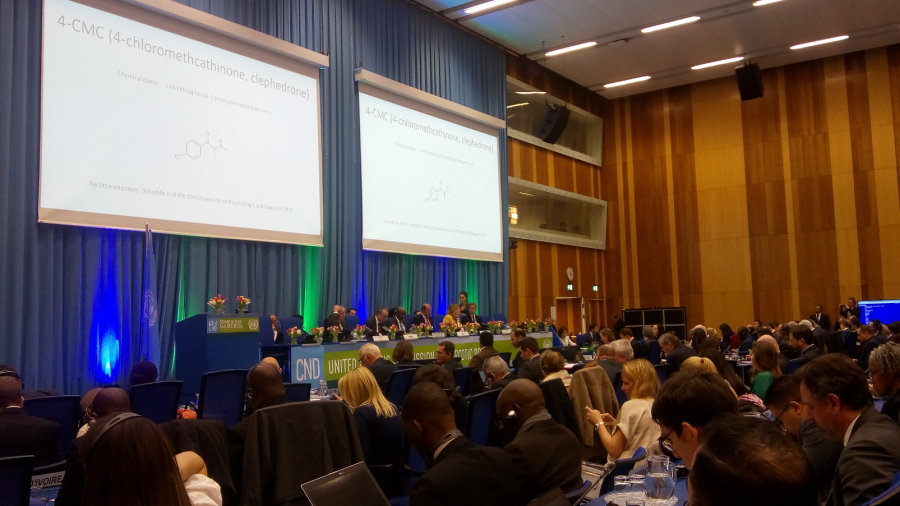
The genesis of the decision of today’s 63rd Reconvened Conference on Narcotic Drugs of the UN is certainly due to the perseverance of the international activists of ENCOD, FAAAT and the US Veterans for Safe Access and many other friends who from Mexico to Barcelona raised the cannabis issue and the legitimacy of the past control system which has been highly exaggerated as to cannabis issues.

For the first time, some poor and underprivileged activists of the civil society forced the WHO in Geneva after 5 years of intense work to make up their minds on the therapeutical potentials of the plant. It has been a long trip to stimulate and finally, the experts sent their recommendations to the drug authorities of the UN in Vienna. This long trip is not over yet. But considering it by some aspect quite unrealistic in some corridor discussions at the ENCOD GA in Slovenia, the actual result of 2nd of December 2020 is a real breaking point and a light in the darkness of the past century of cannabis prohibition.

As a matter of fact, the cannabis issue has been buried by a century of ignorance and bigotry starting with the fascist-racist imprinting of the Italian medical delegation at the 1925 meeting of the League of Nations that started to pose the cannabis issue as a threat to the white race throughout all the years where the science achieved seminal results in the cannabis research which were never taken to knowledge hitherto by the state community.

All efforts to reconsider cannabis as to the outdated 1961-1971 Single Convention on narcotic and psychotropic substances were postponed several times and discussed finally today at the 63rd Conference on Narcotic Drugs of the United Nations closing on the 6th of March 2020 and reconvened on 2-4th of December to establish the viability of cannabis in the global pharmacopoeia after the UN treaties in 1961 assessed its forfeiture in the medical applications despite the fact that most cannabis-related scientific the research was still to be done.

Two statements of civil society were sent to the CND, one lead by Encod (Vote Yes) with 195 signatures representing 53 nations stressing the need of the full recognition of the therapeutical potential of the cannabis plant and last but not least, the appeal, subscribed by Forum Droghe of Italy and others like Science for Democracy, that highlighted the importance of science-driven policies on this respect.

As a result, cannabis was taken out of schedule IV with the consent of 27 nations voting yes and 24 against. It is a historical change in the rather elephantine structure of the global drug control mechanism. Cannabis is still considered (mainly for political reasons, as admitted the WHO experts) as dangerous as heroin and fentanyl being left in schedule I. But the result will accelerate society to evaluate the empowerment of just and effective drug policies. The other proposals were rejected like the insert Dronabinol, the non-proprietary name of THC, from schedule II to schedule I. Also, the question of CBD was rejected and similar dispositions on extracts based on THC. There have been countries that rejected those recommendations being rather liberal on cannabis like Canada. Hungary seems out of control and meanwhile so obsessed that they opted against a major restriction of cannabis in schedule I as to pure THC remaining in Schedule II whereas the flowering tops remain notably in Schedule I.

Most probably the latitude of the single nations will grow and accomplishing the declarations of the former Bush and Obama drug czar John Brownfield whose doctrine allows the US to do whatever they might dispose of as to cannabis but tend to oblige the other nations to follow the flawed daily grind of the UN we have just attended today.
In the meanwhile and at the centre of our political agenda a simple and basic slogan:

Freedom to Farm!


PLEASE CHECK OUT THE CND MONITOR HERE:

Monitoring the vote on WHO medical cannabis recommendations (V6)

5-1

Human Rights and Public Health shape a new agenda on drugs

Dear members and friends,

we are glad to publish the report Civil Society and Drug Policy 2020: An overview of European Drug Policy Reform and the Role of Civil Society. The report points out the need to overcome drug use criminalization in those European countries where actions related to personal use continue being criminal offences. It emphasises the urgency of cannabis regulation in some countries. Additionally, it describes the European PWUD movement, its claims and protest tools.

Starting today, the Commission on Narcotic Drugs (CND) is having the Reconvened 63rd session where countries are expected to vote on cannabis rescheduling, besides that the European Union is carrying out the definition of the new Drug Agenda 2021 – 2025, which the European Council and Parliament will debate in the coming weeks. This report tries to convey the vision of Civil Society to public decision-makers to generate a drug policy that protects the rights of individuals and Public Health.

We want to thank all the contributions and support from Civil Society stakeholders to make it possible.

Download the report here.


IMG_20200304_111824-111111

WHO cannabis patients statement released!

Dear friends and colleagues,

It is our pleasure to announce that the statement Support patient access to medicine, vote yes! has been released by the UN under document symbol E/CN.7/2020/NGO/7.

Feel free to send it to your governments and national authorities, to ensure they are aware that civil society is monitoring them, and ensure they take action to improve access to cannabis for patients! In case you are not aware of relevant government authorities’ in charge of “drug control” in your country, you can find their contact on this list (from last year though). You can also find here contacts of the Embassy of your country in Vienna, Austria (where the UN headquarters hosting the vote is located).

Otherwise, feel free to share broadly this statement to your contact lists, media, social media, but also during family time and everywhere such a broadly-supported statement can help change minds… and policies!

To date, there have been a total of 193 NGO signing, from 52 different countries!