
IMG_20220630_172249~2111

Germany’s Changing Drug Policy: Current Challenges and Future Potential

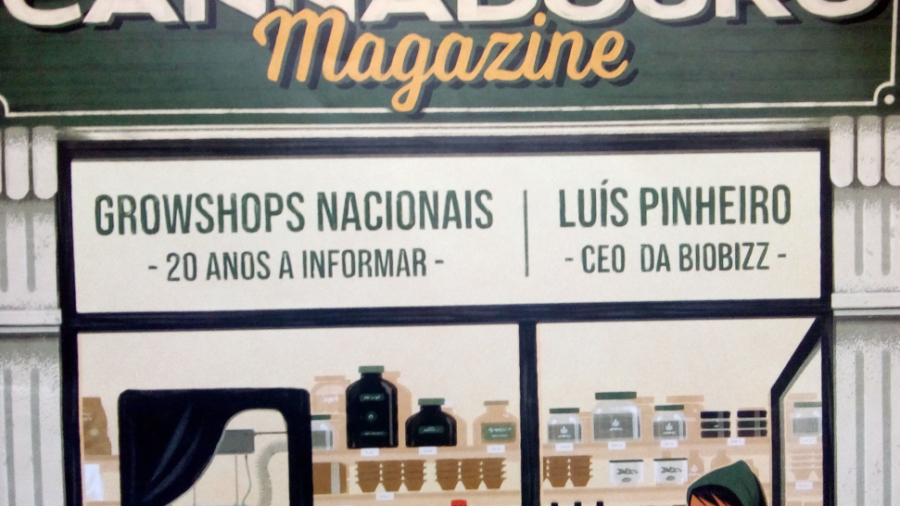
ENCOD regularly publishes articles in the Cannadouro Magazine from Portugal.

Here’s the last summer edition published in the Portuguese language with the English version below.

In late 2021, the new German government announced its plans to legalize recreational cannabis: A milestone in European drug policy. Legalisation will control quality, increase youth protection, and stop the spread of contaminated cannabis. The announcement was followed by enthusiasm, not only in Germany but all over Europe and the world. So far though, the police are continuing to arrest and abuse people for cannabis possession, the black market is thriving, and cannabis activists are taking to the streets demanding action. So, what is happening?

German drug policy is at a fundamental turning point in time, not only regarding Cannabis. As the most populated state in Europe, German cannabis policy will significantly influence European and global policy. As EU law dictates adherence to the international drug conventions, Germany´s way of dealing with the 1961 Single Convention and the international drug policy bodies CND (Commission on Narcotic Drugs) and INCB (International Narcotics Control Board) will be key. However, with the new government comes a new Drug Czar: Burkhard Blienert. His position was so deliberately neglected by the former governments, his two predecessors most notable achievements were meme-worthy interviews and providing the legalization movement with new slang words for cannabis. In comparison, Blienert has been an advocate for decriminalisation, legalisation, and harm reduction inside his own, sometimes reluctant, party and will be the first drug Czar to speak at the annual Hemp Parade, the biggest pro-cannabis legalization demonstration in Germany. Just the announcement that Blienert was going to be the new Drug Czar sparked excitement amongst people involved in harm reduction as well: “Now the office (of Drug Czar) is occupied by a person with drug and health-related knowledge who is using this foundation towards a more humane drug policy…” says Dirk Schäffer, a representative of the Deutsche Aidshilfe (German Aids help). As of now, the German minister of health, Karl Lauterbach, has announced that a cannabis legalization law will be drafted in the second half of the year. There are no specific details yet, just that cannabis is supposed to be sold in specialized shops and that national and international experts will be involved in the process. One of the more important questions, whether growing cannabis at home will be legal, has not been answered yet, with politicians from the Liberal and Green party proclaiming to be in favour of growing at home while the Social Democrats seem to be hesitant.

But progress isn’t only happening regarding cannabis. The Psychedelic Renaissance has arrived in full force in Germany and even the state is getting involved. Several psychedelic society groups have popped up in places like Berlin, Leipzig and Hamburg, promoting topics around psychedelic substances. But the most notable psychedelic project happening in Germany right now is the EPIsoDE-study, a clinical stage II trial researching psilocybin for therapy-resistant depression. The study is done by several research organizations, among them the prestigious Charité university hospital in Berlin. While still being officially banned by governments around the world, the German Federal Ministry of Education and Research finances the study with almost 2.3 million Euros in total, citing the potential of psychedelics for mental health issues. Results are expected to come out in 2024/2025 and could lay the groundwork for further research into psychedelic compounds in Germany.

And lastly, it was announced that harm reduction services will be expanded. While being considered progressive at the international level, on the ground harm reduction programs have struggled during the last years. In his first international speech, Blienert made several comments about these issues, promising a more effective and humane approach focusing on harm reduction, prevention, and treatment. A notable new development is the government’s decision to introduce drug checking services. Again, no details have been published, but after several German states and municipalities tried to introduce them and failed at the federal level, a federally supported drug checking program sparks high hopes in the German harm reduction community.

Cannabis legalization, psychedelic research, drug checking and a Drug Czar actually qualified for his position: German drug policy could be in for a fundamental change in the coming years.

By Nils Biedermann, ENCOD
IMG_20220630_172234-11

Europe is awaking and baking

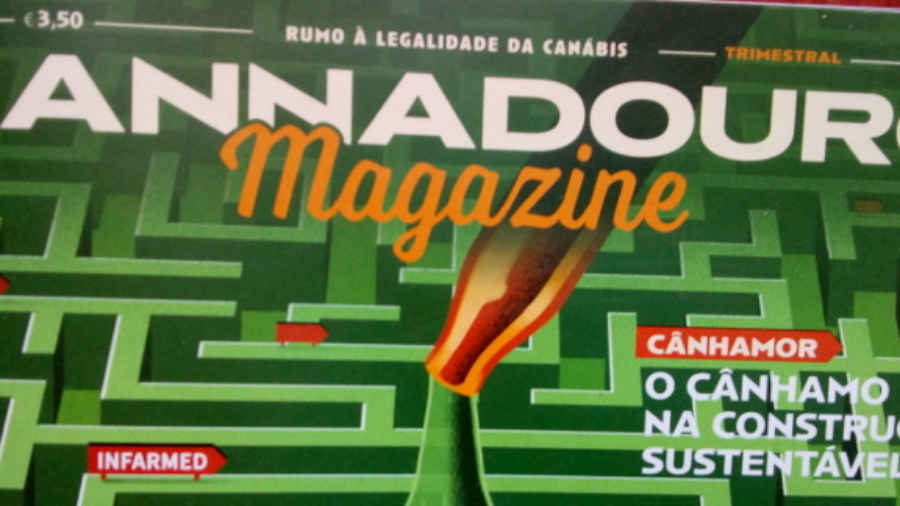
ENCOD regularly publishes articles in the Cannadouro Magazine from Portugal.

Here’s the last spring edition published in the Portuguese language with the English version below.


In the past year, we witnessed important developments in cannabis policy in Europe. Discussions on recreational use of cannabis are getting louder across Europe and important steps have been taken by some countries to address the status quo in drug policy.

In Spain, particularly in Catalonia, the recreational use of cannabis is tolerated for many years. The Cannabis Social Club (CSC) model is already relatively well established, however, it is still not regulated. In the past year, several topics have been addressed on a national level such as medicinal cannabis, the economic impact of regulation, accessibility of cannabis, and a debate on cannabis regulation for recreational purposes entered the Spanish parliament. Three bills for comprehensive regulation of cannabis had been registered by three parties: the pro-Catalan independence, social-democratic Esquerra Republicana de Catalunya, the left-wing Más País, and the democratic socialist electoral alliance Unidas Podemos. The latter was the most ambitious one, but it is still unsure how Spanish cannabis policies will develop in the future since all of the proposed bills received criticism not only from the opposition but also from those in favour of regulation. Many issues remain open, particularly those related to the inclusion of the civil society and vulnerable groups in the discussion, an appropriate representation of public and private sectors involved, and developing public policies that are based on evidence. These are challenges that not only the Spanish authorities are facing but apply to drug policy reform in general.

Germany also made headlines in autumn 2021 after the newly elected coalition of social democrats (SPD), Greens, and free democrats (FDP) agreed on the coalition agreement, which included cannabis regulation. They are in favour of decriminalisation, licensed shops and a ban on

the advertisement. There are many milestones to be taken before the first gram of cannabis is sold legally for recreational purposes but such a plan is already a major milestone on its own. Perhaps the estimation of 4.7 billion € tax income/savings per year calculated by a German economics institute analysing the effects of cannabis legalisation helped persuade the former finance minister and new chancellor. Germany paving the way towards a regulated market might very well serve as an example for other countries to follow.

Before Germany’s new coalition announced legalisation, Luxembourg’s similar coalition, consisting of (liberal-)democrats DP, socialists LSAP and the Greens, agreed on legalisation but only delivered decriminalisation: while possession of up to 3 grams leads only to a fine, there is now tolerance for self-cultivation up to 4 plants.

Probably the most decisive step towards a regulated cannabis market for recreational purposes was taken by the Maltese government. In March 2021, a White Paper was published that opened a substantial public discussion on the regulatory approach. Domestic and international experts and civil society have been participating in the discussions. In December, a law was passed that decriminalizes the possession of 7 grams of cannabis without any criminal or administrative repercussions; allows the cultivation of up to four plants per household; enables the establishment of cannabis associations (with up to 500 members) supplying cannabis and seeds to their members; and enables the expunction of criminal records. Although the Maltese approach is socially and non-profit oriented, it still presents issues, such as the sharing of cannabis, which is not specifically defined. The year 2022 will be a pivotal year for cannabis reform in Malta.

Public discussions on cannabis reform are becoming the “new normal” in Europe. Any advances towards regulation, however minor they might be, are better than the status quo maintained for over half a century. It is time to replace ignorance with knowledge, and take firm steps toward cannabis policies based on social equity, transparency, inclusion, effectiveness, and sustainability. Each step in this direction is a step in the right direction. Help us to walk this path – support ENCOD!

By Maja Kohek, ENCOD


Scan 1011

Our Little Pharm/Farm

ENCOD regularly publishes articles in the Cannadouro Magazine from Portugal.

Here’s the last winter edition published in the Portuguese language with the English version below.

ENCOD, the European Coalition for Just and Effective Drug Policies, is advocating for the “freedom to farm”. But what does that mean? Whilst it is perceived as something totally normal to grow your own herbs and vegetables, many people worldwide are prosecuted for cultivating psychoactive plants and fungi for personal use. Due to multiple reasons, it is important that mankind does not lose its right to farm.

Farming, the contact with soil and plants is what made us who we are today. It sustained societies for millennia and we won’t allow these practices are being prohibited, restricted and controlled. However, small farmers have to be protected against corporate practices that are not only destroying families but whole species, cultivars and biodiversity in general. Several plants are prohibited by law, or their use is restricted, which is violating basic human rights. Even whilst more legislations adapt their hemp (Cannabis sativa) policies, there is still the debate about banning further plants, such as kratom (Mitragyna speciosa) or Iboga (Tabernanthe iboga). Many plants have been banned or tightly regulated without any obvious need for regulatory interference, e.g. salvia (Salvia divinorum) or kava (Piper methysticum). These regulatory practices are harmful to societies as they criminalise traditional cultivation and use and deter from getting involved in nature. 

Whilst it is debatable what would be the best regulatory model for cocaine, there was never a need for a ban on coca (Erythroxylum coca) and traditional coca products, such as tea and candy. To combat several contemporary challenges (such as prohibition, climate change, disrespect for human rights) ENCOD advocates for sustainable development of the world’s economies and farming policies that will protect and favour small farmers, self-sufficient production and social consumption models, as well as a public policy that is not prohibiting plants and substances that have been used by humans throughout history and can therefore be considered as part of the common heritage of humankind.

The so-called “war on drugs” is a war against people, plants and the whole environment. It is absurd that in some regions the beautiful poppy flower (Papaver somniferum) with its nutritious seeds is banned just because its latex, also known as opium, is used to reduce physical and mental pain. Of course, high and continuous consumption may lead to a substance use disorder, but is this a reason to ban a plant, ambush farmers and incarcerate those who disagree? Commercialising opium, as the British did in the 19th century, is something worth criticising and perhaps even impeding, but nobody should withhold this plant from mankind. Of course, the same applies to hemp and its THC-containing products, which are more and more used in the medical context.

Our concern about the impact of current drug policies upon society, the stigmatisation of users, together with economic disparity and associated harm to long-term human well-being, prompted us to emphasise the freedom to farm psychoactive plants, which should be declared the “common heritage of humankind”, irrespective of existing claims to national or international jurisdiction. “Freedom to farm” is proclaiming these plants as international commons, as significant natural resources that are acknowledged beyond the limits of national or international jurisdictions, and as such, are part of the common heritage of humankind. This is an ethical concept and a general concept of international law and therefore should undermine current regulatory practices. These resources should be available for everyone’s use and benefit.

Furthermore, we all hold the responsibility to care for and protect the environment, of which we are a part, for present and future generations. The global civil society is playing a crucial role in the development of, and advocacy for, freedom to farm. Please join our movement.

By Maja Kohek & Fabian Steinmetz