Malta set to decriminalize up to 7 grams of cannabis and to allow the establishment of Cannabis Associations.
In the past weeks, the Government of Malta tabled a Bill in the Maltese House of Representatives detailing a plan for a partial decriminalised system for the adult personal non-medical use of cannabis. Bill No. 241 to establish the Authority on the Responsible Use of Cannabis and to amend various laws relating to certain cannabis activities, is a bold statement in favour of a less criminalised and more humane approach. The Bill comes at an important juncture in Maltese and regional drug policy developments. In fact, Malta will be one of the first from the European family to take the lead on promoting a more humane and regulated approach to cannabis.
ReLeaf Malta has been instrumental in pushing forward a model which places the rights of people who consume cannabis at the helm of every decision and ensure no corporate takeover nibbles away personal rights and freedoms.
Principles of human rights, social equity and sustainability have been at the core of ReLeaf Malta’s message and proposed regulated framework. Collaboration with key international partners was key to ensure proposals are built on research and an evidence-based approach, prioritising humanity before profit and corporate greed. Collaboration with ENCOD, especially close consultation of the ENCOD’s European Guidelines for Cannabis Social Clubs was instrumental to create a holistic approach to allow the cultivation, consumption and sharing of cannabis in Malta.
Bill No 241, modelled, in part, on ENCOD’s proposal of a not-for-profit system collectively cultivating, consuming, and sharing cannabis, includes the following points:
Personal cultivation and consumption
- Persons aged 18 and over can have up to 7 grams in their possession and won’t be charged in court or face proceedings before a justice commissioner if caught. Police will no longer confiscate cannabis under 7 grams
- The possession of between seven and 28 grams of cannabis will be punishable with a fine of between €50 and €100, as well as proceedings before a justice commissioner
- Up to 4 cannabis plants will be allowed in private residences, but they must still be kept out of sight, and only up to 50 grams of dried cannabis in the residence
- Consumption of cannabis in public will remain illegal with the person being subjected to a fine
- Possibility to obtain clean police conduct for amounts decriminalised or depenalised by the new law
Cannabis Associations operating and registered as NGOs with the Commissioner for Voluntary Organisations
- Adults over the age of 18 can form an NGO (Cannabis Association) to collectively cultivate and share cannabis. The Association needs to obtain a licence form the Authority on the Responsible Use of Cannabis. The Associations cannot be situated within 250 metres of a school or youth area
- Cannabis associations that distribute cannabis among their members will be allowed to operate as an NGO and not for profit
- Persons with previous criminal records cannot form an association
- Up to 7 grams a day can be distributed to each member with a maximum of 50 grams per month.
- The organisation will also be able to distribute up to 20 cannabis seeds/month to each member and cannot have more than 500 grams of the plant on their premises at any given time
- Cannabis is to be distributed in sealed containers, including labelling
- No marketing or visible signage should be included
Whilst not promoting the use of cannabis, the Bill aims to provide increased legal safeguards for the personal consumption and cultivation of cannabis, whilst directly impact the illicit trade and monopoly of cannabis by allowing the establishment of associations providing a source of safe cannabis. The Bill should therefore also directly impact how local police handle cannabis-related offences and hopefully ensure less harassment of people who cultivate, consume and share cannabis.
Nonetheless, it is somewhat strange, that old bogus beliefs spread by ‘the war on drugs’, continue to seep in the new law and unfortunately in some areas distort the core aim of such a reform. One worrying reality is that in a way, the law still considers cannabis possession a crime, especially if the police have ‘reasonable suspicion’ of trafficking. Whilst recognising that the 50 gram/month limit allowed to be purchased from the associations is a courageous step forward (presently 3.5 grams are depenalised), better reflecting consumption levels, it is unclear why the same amount will be allowed for those cultivating up to 4 plants. Any person that cultivates cannabis will tell you that this limit is too low even for one consumer, imagine 4 residents living under the same roof and all using cannabis on a daily basis.
Another example is the complete ban on public smoking, especially for areas only frequented by adults. This is not applied for tobacco and although closed venues and other areas frequented by children prohibit the use of tobacco, in other open spaces tobacco consumption is not banned.
Recent comments by Minister Owen Bonnici have also cast doubt on how the government foresees the daily operation of the associations. In fact, he confirmed that no smoking will be allowed on the premises and people will only visit the association to purchase cannabis or seeds. This is in stark difference to what a not-for-profit social club built on harm reduction aims to achieve. In fact, the main purpose of a similar system is to provide a safe space for like-minded people to share an activity that brings them closer together and gives them the opportunity to share knowledge or seek help if experiencing problems. Most importantly, a system where people visit and stay within the association premises to consume cannabis would ensure closer dialogue between the person and the association, especially on matters pertaining to harm reduction and health. Once more the legislator continues to obfuscate the aims of a decriminalised system with the need of keeping consumers separate from each other, hidden at home, and immediately criminalised if not adhering to strict bureaucratic and unsustainable systems. In a way, this seems a step backward and makes a mockery of the basic human rights of freedom of assembly and of association.
It seems the proposed Bill has also in a mysterious way introduced a business opportunity for some, completely ignoring the fact that these associations will be operating as NGOs and on a not-for-profit basis. The requirement of sealed containers, is a very convenient way how some businesspeople, maybe already involved in the medicinal cannabis market, will make a profit out of this new system.
To oblige an NGO to pay for thousands of sealed containers to be used only once is a clear insult to our collective intelligence, to our sustainable and environmental promises, and a cheap way how commercial interests attempt to sabotage human rights and civil liberties law.
It is also a blatant reflection that cannabis is STILL considered as an illicit narcotic that needs to be sealed and kept hidden. Whilst acknowledging the importance to keep cannabis out of the reach of children, these strict measures imposed on NGOs, together with a complete ban of participation for people with a previous criminal conviction, create an unbalanced playing field from the very beginning. Ultimately, this approach seriously risks excluding those that have been so badly affected by prohibition and the current draconian laws. These provisions also risk increasing the price of cannabis (through membership fees or other means) and thus in no significant way compete with what is available and more accessible on the illicit market.
The Bill is now at its second stage. However, due to parliamentary debates related to the yearly Government Budget, discussions on the Bill have stalled before even starting. Rumors of an early election in November continue to crumble Malta’s green aspirations that the Bill will go through by Christmas. Despite these technical and political hiccups, ReLeaf Malta remains committed to ensure any legislative change continues to respect in full human rights, social equity, and sustainability.
Keeping optimistic is what has kept us going.
Now that Malta is going through this legislative and social transition, as a small but determined NGO, ReLeaf Malta continues to wave our shared green leaf, representing and championing the voice and rights of people who consume, cultivate, and share cannabis.
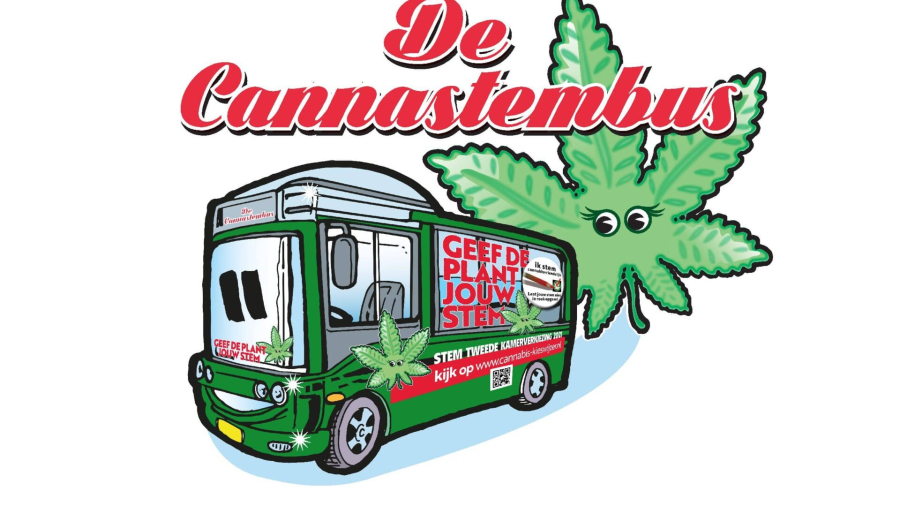
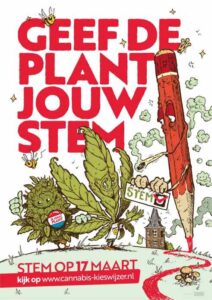 Seven of the hundred thousand copies of “De Nationale Cannabis Krant” contain a Golden Ticket. The lucky finders get to spend an unforgettable cannabis day in Amsterdam, including a visit to the Cannabis College, the Hash, Marijuana & Hemp Museum and various coffeeshops, a private canal tour and a VIP dinner with special guests. Participation is limited to persons aged 18 and older. The VOC foundation, established in 2009 to speed up legalization of cannabis in the Netherlands, cooperates with the “Maatschappij en Cannabis” foundation, creators of the “Cannabis-Kieswijzer” and the new “Cannabis-Stemwijzer”, and with the national coffeeshop unions PCN and BCD. The paper will be available for free at cannabis coffeeshops from February 9, the website www.denationalecannabiskrant.nl contains a PDF and additional information. Cannabis-friendly voting With “De Nationale Cannabis Krant”, the VOC tries to get the negative effects of cannabis prohibition higher on the political agenda and to get as many cannabis consumers as possible to vote cannabis-friendly in the elections. The center pages feature an election poster, designed by Amsterdam based artist Mossy Giant. The slogan “Geef de plant jouw stem” translates as “Give your vote to the plant”.