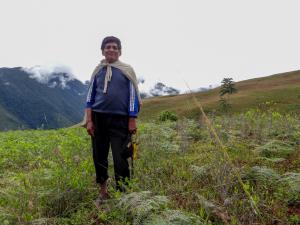

Joep_Oomen_Cannabis_Hearing_EU_Brussels_8_12_2010_foto_db

The ECDD’s Hands Tied: The Structurally Impossible Descheduling of the Coca Leaf from Schedule I

Oral and written statement submitted to 48th ECDD – Information Session – October 20th 2025

The ECDD’s Hands Tied: The Structurally Impossible Descheduling of the Coca Leaf from Schedule I 

Distinguished Chair, dear members of the ECDD, all delegates here,

The forthcoming evaluation of the coca leaf by the WHO Expert Committee on Drug Dependence offers a moment of historic importance. It invites the international community to reflect on the coherence and fairness of the Single Convention on Narcotic Drugs (1961).

Yet it must be acknowledged that, under the current structure of the Convention, an effective descheduling of the coca leaf from Schedule I is legally impossible without a formal treaty amendment.

The coca leaf (Erythroxylon Lam.) holds profound cultural, medicinal, and nutritional significance for Indigenous and Andean communities. Nevertheless, since 1961 it has been treated as equivalent to cocaine. This is because coca, alongside opium and cannabis, constitutes one of the three botanical pillars upon which the Convention’s control system was built.

Under Articles 2(6), 26, and 27, the coca leaf is subject to all control measures applicable to Schedule I substances, irrespective of its formal inclusion in the Schedule. Therefore, even if the ECDD were to recommend, and the Commission were to approve, its removal, the same control obligations would remain in place.

Such descheduling would result only in a change of terminology, not of substance. It could even generate regressive effects:

  1. The coca leaf would remain fully controlled;
  2. It would lose access to Article 2(9), which permits exemptions for industrial or non-medical uses;
  3. The system would face a new inconsistency, applying narcotic drug controls to a substance no longer defined as one.

This would neither correct a historical error nor advance the decriminalisation of traditional and medicinal practices. Instead, it would perpetuate the rigidity of a system that has constrained Andean States and Indigenous peoples for over six decades.

If this process is to honour the principles of the United Nations — respect for cultural diversity, human rights, and scientific evidence — it must move beyond scheduling debates to address the structural limitations of the Convention itself.

We therefore urge Member States, the WHO, and the Commission on Narcotic Drugs to:

  • Recognise the legal and structural barriers inherent in the Convention;
  • Acknowledge the distinct cultural and pharmacological nature of the coca leaf; and
  • Initiate an inclusive dialogue toward a coherent and equitable reform of the international drug control system.

Only through such reflection can we move from symbolic revision to substantive reform, and honour the spirit of the United Nations Charter by upholding the dignity and rights of the peoples for whom the coca leaf remains a living heritage.

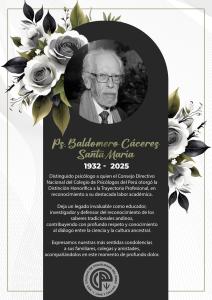
In memoriam Joep Oomen, Jorge Hurtado and so many friends of the coca leaf

Thank you, Chair.



Submissions form – Oral Statement ENCOD-FAAAT-CSF.docx
 

banner_F2F_klein

Pre-review of kratom at the WHO ECDD

Dr. Fabian Steinmetz gave a statement on kratom at the Forty-fourth Expert Committee on Drug Dependence.


Dear Expert Committee on Drug Dependence,
we would like to encourage the ECDD not to classify kratom (Mitragyna speciosa) as a controlled substance. First of all, banning plants has never solved any drugrelated issues. Products derived from hemp (Cannabis sativa), poppy (Papaver somniferum), and coca (Coca erythroxylum), and chemical substitutes are readily available worldwide. However, banning those plants inflicted direct and indirect harm to millions of people, particularly ethnic minorities. There is a scientific consensus that sensible regulations dependent on use prevalence and substancespecific risks are the best approach to reduce harm to health and society. A ban on kratom would particularly affect people with traditional and medical use. For many people, kratom is a safe pain medication or mild opioid substitute.

As a toxicologist and professional risk assessor, I would like to emphasise that many plant extracts in high concentrations have psychotropic effects but could also, at high and constant exposure, provoke organ toxicity, e.g. lavender (Lavandula angustifolia), mugwort (Artemisia vulgaris), tea (Camellia sinensis), chamomile (Matricaria recutita), lettuce (Lactuca spp) etc. Hence, this cannot be the rationale for banning a plant, particularly not if there is an overall long history of safe use.

While extracts/isolates should undergo regulatory approaches comparable to other plantbased pharmaceuticals (i.e. dependent on potency), it is important not to schedule the plant and traditional formulations to avoid obstruction of medical research, obstruction of current medical therapies as opioid substitute, analgesic etc. (particularly when access to healthcare is limited) and to avoid the general criminalisation of people using kratom. Particularly the latter is harmful on its own but also may lead to unhealthier substance choices. Hence, the cultivation, trade and use of kratom should not be prosecuted. This should also encompass novel formulations if typical alkaloid exposure is not exceeded.

Overall, the use prevalence is, compared to alcoholic beverages and hempbased products, not particularly high although the plant and its effects are known in the Western world for over 100 years. One reason might be the taste which is not perceived well by many people using kratom. Another reason might be unpleasant effects, e.g. dizziness, drowsiness, particularly at high doses. Due to the fact that the main alkaloid (mitragynine) is a proddrug towards the μopioid receptor, it is unlikely that other routes of administration than the oral route could lead to use patterns associated with severe substance use disorders (cf. first-pass effect). The active metabolite (7hydroxymitragynine) is also present in the plant but only in pharmacologically irrelevant trace levels. This clearly differentiates kratom’s main alkaloid mitragynine from cocaine or morphine.

The political challenges with regard to climate change and mass extinction should also remind us not to interfere with ecosystems lightheartedly. The kratom plant, growing as a tropical evergreen tree, is an important part of local ecosystems and these ecosystems should not be deliberately harmed. Despite that, we already know that banning plants has never been a successful strategy. When looking at other banned plants, it is not unlikely that banning the plant would even encourage more cultivation, extractions and eventually chemical alterations (cf. poppy to heroin or coca to cocaine hydrochloride/freebase).
Although, as described above, this is less likely with kratom, the creation of more harmful derivatives should be a reminder of negative consequences based on drug prohibition. Currently, kratom is considered a rather unproblematic remedy used by a rather small population, nevertheless, “technological progress” due to prohibition should not be underestimated. It is important not to give organised crime groups further opportunities to increase their market share.
Overall, considering health and social implications, the cultivation, trade, and use of kratom should not be prosecuted. Therefore, it is important to respect communities and their freedom to farm, use, and trade recreational and medical goods of low concern.

Kind regards,

Dr. Fabian Pitter Steinmetz

Member / Scientific Advisor of ENCOD

Click here to read the statement.

Click here for more information about the event.