IMG_4433-1

Canna-chaos in Vienna?

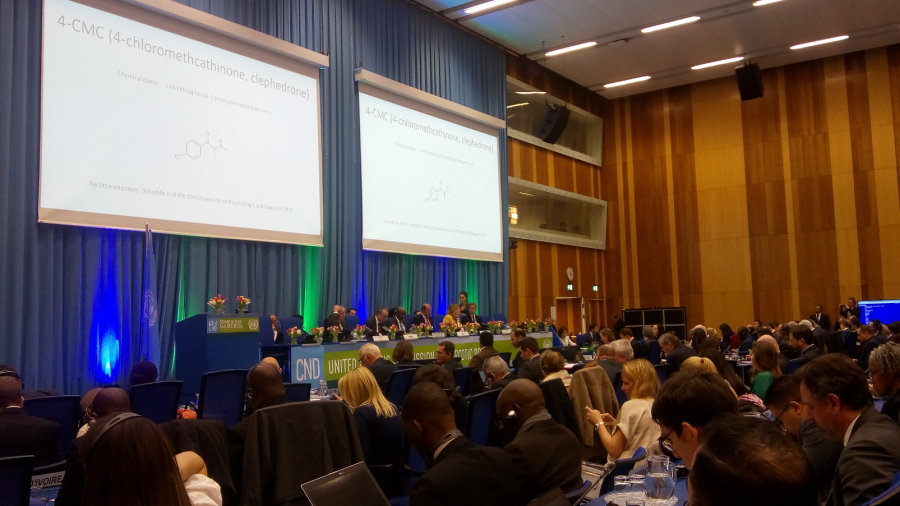
The genesis of the decision of today’s 63rd Reconvened Conference on Narcotic Drugs of the UN is certainly due to the perseverance of the international activists of ENCOD, FAAAT and the US Veterans for Safe Access and many other friends who from Mexico to Barcelona raised the cannabis issue and the legitimacy of the past control system which has been highly exaggerated as to cannabis issues.

For the first time, some poor and underprivileged activists of the civil society forced the WHO in Geneva after 5 years of intense work to make up their minds on the therapeutical potentials of the plant. It has been a long trip to stimulate and finally, the experts sent their recommendations to the drug authorities of the UN in Vienna. This long trip is not over yet. But considering it by some aspect quite unrealistic in some corridor discussions at the ENCOD GA in Slovenia, the actual result of 2nd of December 2020 is a real breaking point and a light in the darkness of the past century of cannabis prohibition.

As a matter of fact, the cannabis issue has been buried by a century of ignorance and bigotry starting with the fascist-racist imprinting of the Italian medical delegation at the 1925 meeting of the League of Nations that started to pose the cannabis issue as a threat to the white race throughout all the years where the science achieved seminal results in the cannabis research which were never taken to knowledge hitherto by the state community.

All efforts to reconsider cannabis as to the outdated 1961-1971 Single Convention on narcotic and psychotropic substances were postponed several times and discussed finally today at the 63rd Conference on Narcotic Drugs of the United Nations closing on the 6th of March 2020 and reconvened on 2-4th of December to establish the viability of cannabis in the global pharmacopoeia after the UN treaties in 1961 assessed its forfeiture in the medical applications despite the fact that most cannabis-related scientific the research was still to be done.

Two statements of civil society were sent to the CND, one lead by Encod (Vote Yes) with 195 signatures representing 53 nations stressing the need of the full recognition of the therapeutical potential of the cannabis plant and last but not least, the appeal, subscribed by Forum Droghe of Italy and others like Science for Democracy, that highlighted the importance of science-driven policies on this respect.

As a result, cannabis was taken out of schedule IV with the consent of 27 nations voting yes and 24 against. It is a historical change in the rather elephantine structure of the global drug control mechanism. Cannabis is still considered (mainly for political reasons, as admitted the WHO experts) as dangerous as heroin and fentanyl being left in schedule I. But the result will accelerate society to evaluate the empowerment of just and effective drug policies. The other proposals were rejected like the insert Dronabinol, the non-proprietary name of THC, from schedule II to schedule I. Also, the question of CBD was rejected and similar dispositions on extracts based on THC. There have been countries that rejected those recommendations being rather liberal on cannabis like Canada. Hungary seems out of control and meanwhile so obsessed that they opted against a major restriction of cannabis in schedule I as to pure THC remaining in Schedule II whereas the flowering tops remain notably in Schedule I.

Most probably the latitude of the single nations will grow and accomplishing the declarations of the former Bush and Obama drug czar John Brownfield whose doctrine allows the US to do whatever they might dispose of as to cannabis but tend to oblige the other nations to follow the flawed daily grind of the UN we have just attended today.
In the meanwhile and at the centre of our political agenda a simple and basic slogan:

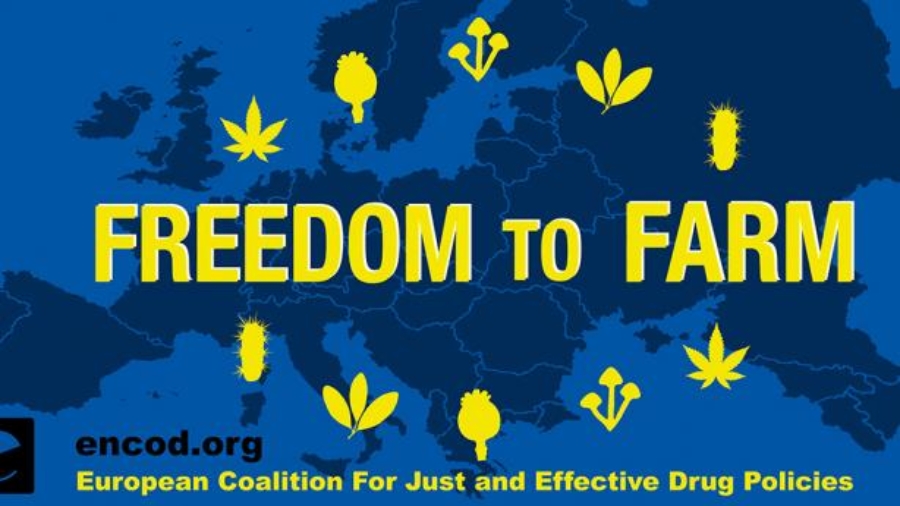
Freedom to Farm!


PLEASE CHECK OUT THE CND MONITOR HERE:

Monitoring the vote on WHO medical cannabis recommendations (V6)
5-1

Human Rights and Public Health shape a new agenda on drugs

Dear members and friends,

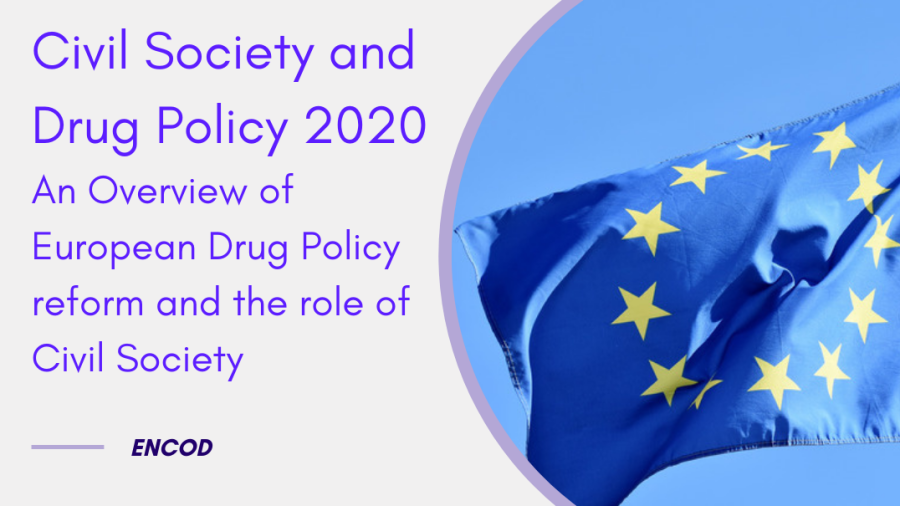
we are glad to publish the report Civil Society and Drug Policy 2020: An overview of European Drug Policy Reform and the Role of Civil Society. The report points out the need to overcome drug use criminalization in those European countries where actions related to personal use continue being criminal offences. It emphasises the urgency of cannabis regulation in some countries. Additionally, it describes the European PWUD movement, its claims and protest tools.

Starting today, the Commission on Narcotic Drugs (CND) is having the Reconvened 63rd session where countries are expected to vote on cannabis rescheduling, besides that the European Union is carrying out the definition of the new Drug Agenda 2021 – 2025, which the European Council and Parliament will debate in the coming weeks. This report tries to convey the vision of Civil Society to public decision-makers to generate a drug policy that protects the rights of individuals and Public Health.

We want to thank all the contributions and support from Civil Society stakeholders to make it possible.

Download the report here.


IMG_20200304_111824-111111

WHO cannabis patients statement released!

Dear friends and colleagues,

It is our pleasure to announce that the statement Support patient access to medicine, vote yes! has been released by the UN under document symbol E/CN.7/2020/NGO/7.

Feel free to send it to your governments and national authorities, to ensure they are aware that civil society is monitoring them, and ensure they take action to improve access to cannabis for patients! In case you are not aware of relevant government authorities’ in charge of “drug control” in your country, you can find their contact on this list (from last year though). You can also find here contacts of the Embassy of your country in Vienna, Austria (where the UN headquarters hosting the vote is located).

Otherwise, feel free to share broadly this statement to your contact lists, media, social media, but also during family time and everywhere such a broadly-supported statement can help change minds… and policies!

To date, there have been a total of 193 NGO signing, from 52 different countries!


foto

The future of CBD

02.09.2020

End of July EIHA shocked us all with a press article about some upcoming decisions of European Commission regarding CBD.

Gossips and rumours started, nobody really knew what it was about.
ENCOD members are private persons, PWUDs, shops, NGOS, etc., they all have common but also different interests. Together with our members and co-activists we came up with this letter to state our opinion.

We hope we expressed what is really important and hope that the European Commission will understand the needs of people concerned and decide accordingly.

——————————-

18.09.2020

We received the first reply from the European Commission, Directorate for Health and Food Safety.


Screenshot at 2020-01-23 17-48-54

Drug policy reform at the United Nations: A Youth Advocacy Handbook

Civil society engagement at the UN Commission on Narcotic Drugs (CND) and related meetings has improved dramatically over the past decade – in terms of the numbers attending, the opportunities to interact and participate, and the levels of experience and professionalism of non-governmental organizations (NGOs) themselves. These changes are very important given that  the contribution of NGOs and civil society organisations make policy making more responsive to the needs of society. Moreover, youth involvement specifically makes the voice of those who are normally excluded from policy making but are disproportionally affected by the results heard. In their efforts to promote an inclusive and evidence based debate, SSDPers have been organizing side events and have even been elected on the board of the Vienna NGO Committee on Drugs (VNGOC) which advocates for and oversees civil society involvement in CND proceedings. In order to encourage these dynamics, this Advocacy Handbook gives an overview of the main UN institutions involved with the making of global drug policy, as well as about the ins and outs of youth advocacy at the CND. We hope that such an overview will help you to make valuable contribution to the work of the CND and advocate for an evidence based drug policy embedded in the protection of human rights.

Please access the handbook here.

2019-Banner-150x300-04-1080px-web-614x346

A seed for a better future: A proposal for a European regulation of cannabis use

We are proud to present our proposal, addressed to the European Commission, the European Parliament and the governments of the Members States represented in the European Council, related to cannabis use for recreational purposes and the decriminalization of minor offences related to illicit drugs.

The proposal defines the opportunities the European Union has to regulate the personal use of illicit drugs, as well as the cultivation or possession for such purposes in order to respect basic rights of the users. It presents the trends and legal possibilities to regulate cannabis supply systems, as well as provides arguments for the decriminalization of illicit drug use in the European Union.

It is necessary to give a voice to the civil society through the participatory tools in the Member States and to explore new models of regulation that are based on human rights and harm reduction.

For more information see: SUMMARY PROPOSALS FOR THE REGULATION OF CANNABIS FOR RECREATIONAL PURPOSES IN THE EUROPEAN UNION

Survey: European Civil Society on Drugs Report (ENCOD)

We are very happy to present you the new survey: ¨European Civil Society on Drugs¨ by ENCOD. It will be used to create an updated report about the Drugs Policy in Europe and the situation of the most vulnerable people on drug matters: the users, the activists and the advocates.


It is addressed to activists, advocates and experts who want to participate, and it includes questions about the users’ experience as well. It is to draw the current situation on Drugs Policy in each European country. Please. It will take you ten minutes approximately.


The deadline to contribute to the survey is Saturday 15th of December 2018. Moreover, you can send to other activists and NGO’s to enlarge the sample in the collection of data.


Thank you for your confidence.


You can find the survey embedded below or visit this link.

bill-griffen-800w.jpg

Encod Participates In Civil Society Meeting On Municipal Drug Policies In Member States At European Parliament

Brussels – 20 June 2017
An expert panel was held in the European Parliament organized by Michał Boni MEP, Maltese Presidency of the Council of the European Union and the Polish Drug Policy Network on “Public safety and public health – municipal drug policies in the Member States”. Representatives of groups working “in the trenches” were invited to listen to panels and share their thoughts and questions.

arton4805

MANIFEST FOR SAFE AND HEALTHY DRUG POLICIES IN THE EUROPEAN UNION

On December 6th, 2013, activists for drug policy reform from all over Europe gathered in Brussels to adopt a manifest for safe and healthy drug policies. This manifest contains ten recommendations to the European council, that were made by the European Parliament in 2004. None of these have been implemented. With the following letter, Encod asked all candidates for the European Parliament elections on 22 to 25 May 2014 to sign this manifest and declare support to the recommendations.

Manifest in Greek