ENCOD demonstration CND69 French Dutch Paradox

Sunny premiere of travelling cannabis policy exhibition at CND in Vienna

ENCOD Press release 12. March 2026Press release ENCOD - VOC

Press release march 12th, 2026

Sunny premiere of travelling cannabis policy exhibition at CND in Vienna

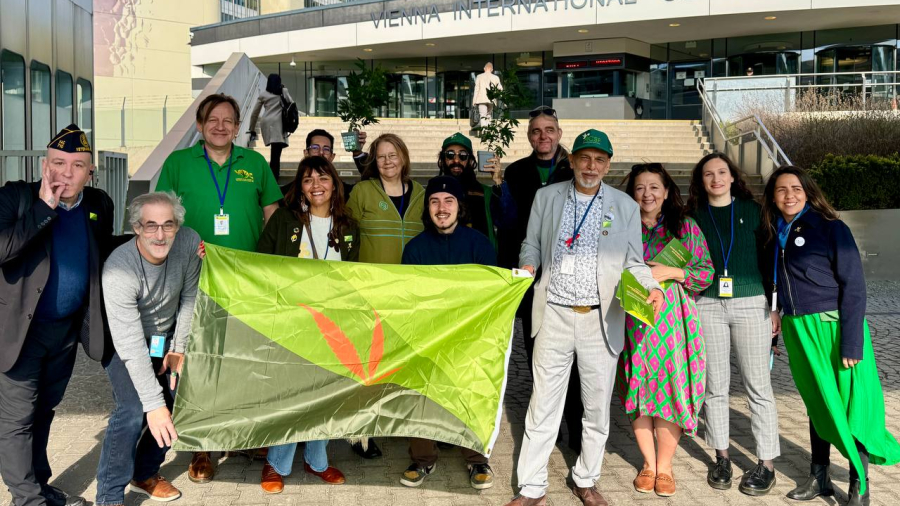
VIENNA – International delegates taking part in the annual Commission on Narcotic Drugs (CND) Vienna were
welcomed by activists from seven countries and a unique exhibition on cannabis policy in France and the
Netherlands on Thursday.

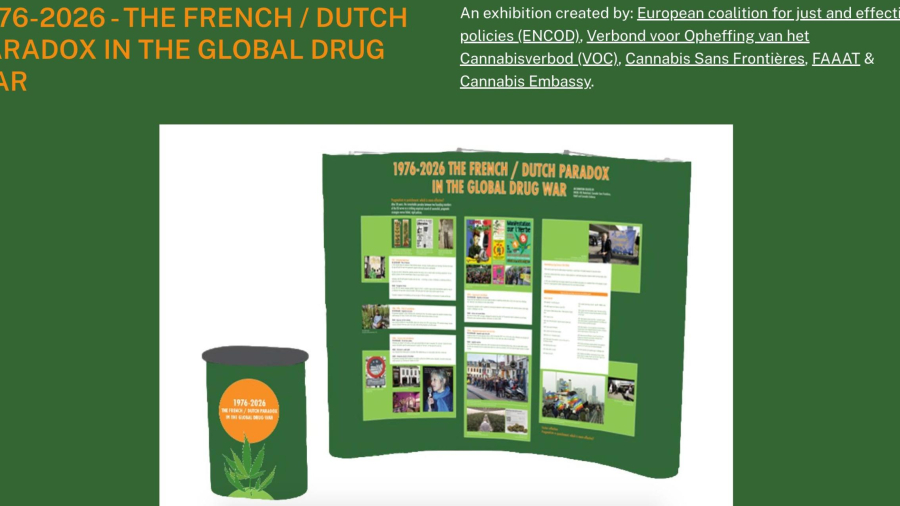
The exhibition, called “1976-2026 The French/Dutch Paradox in the Global Drug War”, centers around 50 years of
Dutch cannabis tolerance policy and 50 years since a French appeal for decriminalization of cannabis by a group of
prominent French citizens.

Activists from ENCOD, the European coalition for just and effective drug policies, and VOC, the Dutch union for the
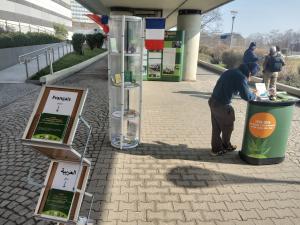
abolition of cannabis prohibition, handed out over 500 exhibition guides to delegates and other CND visitors. A big
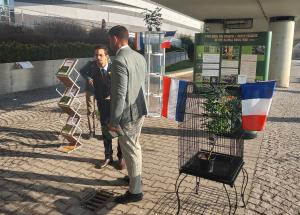
cage containing a live cannabis plant proved to be the most popular exhibit, with many people taking pictures and
selfies with it.

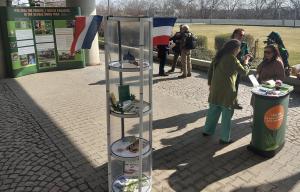
On a colorful curved wall, the story of the two diverging policies is told. One of the paradoxes is the fact that
despite having a very strict prohibition policy on cannabis, France is the European champion of cannabis
consumption. The Dutch cannabis coffeeshops have not led to similar high consumption rates, while providing safe
access for adult consumers and diminishing the “forbidden fruit effect” for young people.

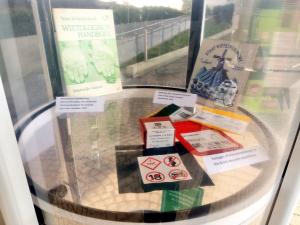
A display case showed artefacts from half a century of French and Dutch cannabis culture and activism. Among the
objects was an original copy of the French paper Liberation from June 18, 1976, containing the appeal for
decriminalization, L ́Appel du 18 Joint. Other highlights included one of the first Dutch guides for growing your own
cannabis from 1987, and a Delft blue tile commemorating the start of the Dutch cannabis closed chain experiment
in 2025.

The exhibition led to some lively discussions between activists, delegates and other visitors. Derrick Bergman,
chairman of VOC: “This is exactly what we had hoped for: stimulating debate and discussion about prohibition
versus regulation of cannabis.

” ENCOD chairman Farid Ghehioueche: “We ́re proud of this exhibition, that will travel throughout Europe during the rest of the year. Our message is that prohibition is no solution. Regulation with respect for human rights is the way forward.

After Vienna, the exhibition will travel to Bilbao the 17 -19 April 2026 followed by Berlin, Paris, Brussels,
Amsterdam, The Hague, Prague and Eindhoven. Exhibition website: www.frenchdutchparadox.org.

The only negative occurrence of the day was an outrageous article with an equally outrageous AI generated image
on the website Europeantimes.news. ENCOD and VOC strongly denounce this fake news story, titled “Cannabis
Smoke at UN Drugs Summit Sparks Outrage in Vienna”. The claim that CND participants “encountered a cloud of cannabis smoke before they even reached the entrance” is a blatant lie.


ENCOD website: www.encod.org
VOC website: www.voc-nederland.org

Spokesperson: Farid Ghehioueche, ENCOD chairman, phone: +33 751 350 234


Pictures from the demonstration FrenchDutchParadox

ENCOD_Flyer_P1

ENCOD at the #CND69


Press release

Vienna, March 5th 2026

ENCOD at the #CND69


ENCOD’s delegation to CND69 in Vienna from Monday 9th to 13th will be huge. 

With 31 members, we hope to show that our community is concerned and that we need to meet policymakers to achieve changes.


CND69 challenges

The 69th session of the Commission on Narcotic Drugs, from March 9th to 13th, will address a variety of challenges: With the “Vienna Consensus” no longer in place because the United States is demanding a vote on every resolution that mentions “gender issues” and the United Nations’ “Sustainable Development Goals,” the debates are sure to be heated.

The first two resolutions will attract particular attention as they deal with the same issue, although the first, proposed by Mexico, is much more serious in content, while the second, presented by the United States, appears much more problematic in its wording and objectives.

The third resolution concerns “alternative development” and follows on from previous resolutions adopted at each session. However, even on this one, the US will call for a vote.


The fourth is presented by Kyrgyzstan (perhaps supported behind the scenes by Russia) and seems to complement the first resolution and counter the second with its seriousness. 


The fifth resolution, presented by Finland and Norway, is very ambitious and the most interesting from the point of view of civil society organisations. 


It is clear that, as last year, the Committee of the Whole (CoW) will have to conduct lengthy negotiations to finalise the content of the five resolutions submitted for vote at the 69th session of the CND, votes in the Plenary that promise moments of “epic fury” in the UN buildings in Vienna (where the IAEA for nuclear energy and the UNODC for drug control are based).


Among other topics addressed at this 69th session of the CND, the WHO recommendation on coca leaf will not be voted on, as it does not provide for any change in the scheduling of coca leaf, as ENCOD already indicated in its statement at the 48th ECDD (WHO Experts Committee on Drug Dependance) briefing. It will nevertheless be interesting to follow the discussions between Member States during the Plenary closely. We’ll pay attention to the Colombian exhibition in the Rotunda, the heart of the VIC. 


With a busy agenda, including a side event every day, two demonstrations (on Monday and Thursday) at the entrance to the VIC, the Première of a European tour of the exhibition,   https://frenchdutchparadox.org/, and numerous other interventions, both with oral statements in the Plenary and by asking questions during informal dialogue with representatives of UN agencies meetings… Encod attempts to keep its strong commitments at the highest level.


Civil Society Delegation


ENCOD delegation will be more than 30 people, and more than 15 countries, representing: Associacao de Apoio a Pesquisa e Pacientes de Cannabis medicinal (ACURA), Cannabis Cura Sicilia, Cannabis Embassy, Cannabis Sans Frontières, Cannabis sem Fronteiras, DRCnet Foundtion, For Alternative Approaches to Addictions Think&Do tank – Forum Drogues Mediterranée (FAAAT-FDM), Fields of Green For All, Law Enforcement Action Partnership (LEAP), Multidisciplinary Association for Psychedelic studies (MAPS), Nonviolent Radical Party, Santo Amor – World Movement for Cannabis Freedom Club, Verbond voor Opheffing van het Cannabisverbod (VOC), Veteran Action Council (VAC). 


DEMONSTRATIONS


Monday, 9 March 2026, from 7:30 to 10:00.
Advertisement of ENCOD’s activities related to CND69th.

Thursday, 12 March 2026, from 7:30 a.m. to 3:00 p.m. It will consist of an exhibition wall with a small display case with artefacts and a decorative birdcage with a clone, symbolising the long struggle for Freedom to Farm.


EXHIBITION 

Pragmatism vs punishment: which is more effective? 

After 50 years, the remarkable paradox between two founding members of the EU serves as a striking empirical record of successful, pragmatic strategies versus failed, rigid policies.

Following its Vienna debut, the exhibition will travel around Europe in seven countries and nine cities – Bilbao, Berlin, Paris, Brussels, Prague, Amsterdam, The Hague and Eindhoven.

Visit: https://frenchdutchparadox.org/


SIDE EVENTS (slight program of the week at the UN)

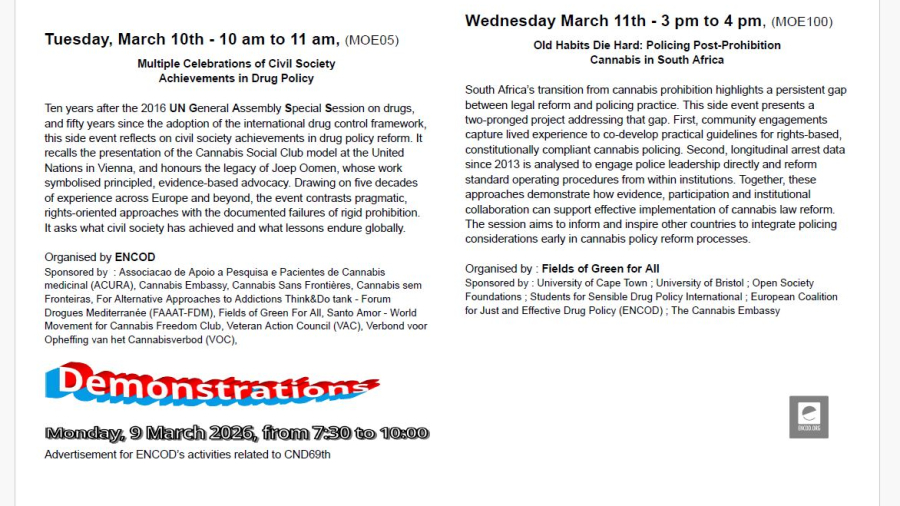
Tuesday, March 10th – 10 am to 11 am, (MOE05) 

Multiple Celebrations of Civil Society Achievements in Drug Policy

Follow online : https://us02web.zoom.us/j/81897668686

Wednesday March 11th – 3 pm to 4 pm, (MOE100)

Old Habits Die Hard: Policing Post-Prohibition Cannabis in South Africa

Wednesday, March 11th – 11:30 am to 12:30 pm (MOE07)

War on Drugs and Systemic Corruption : Unintended Consequences

Friday, March 13th, 11:30 am to 12:30 pm (M5)

CBD-Rich Cannabis – Policy and Patient Experience Hybrid 

PRESS RELEASED ENCOD AT CND69_VF


ENCOD_Flyer Page

Exhibition Website frenchdutchparadox.org

Travelling exhibition on French/Dutch cannabis paradox to premiere at United Nations in Vienna


VIENNA – A new travelling exhibition comparing the divergent cannabis policies of France and the Netherlands will premiere in Vienna on March 12, coinciding with the annual meeting of the UN Commission on Narcotic Drugs (CND).

The year 2026 marks a dual 50th anniversary: the birth of the Dutch tolerance policy for cannabis, which paved the way for their world-famous coffeeshops, and the publication of ‘L’Appel du 18 Joint’, a plea by a group of prominent French citizens for decriminalization of cannabis.

The exhibition, ‘1976-2026 – The French/Dutch Paradox in the Global Drug War’, explores half a century of cannabis policy within these two founding members of the European Union, contrasting pragmatic regulation with rigid prohibition.

Visitors can trace the evolution of the Dutch model, up to the current experiment with regulated cannabis cultivation, supplying around 80 coffeeshops. The contrast with France is stark. The 1976 appeal has evolved into a French “420”, with demonstrations for legalization all over France on June 18. Yet the law remains strict and repression persists. Despite decades of criminalisation and mass arrests, France continues to see the highest cannabis consumption rates in Europe.

What’s on display? The heart of the exhibition is a narrative wall featuring photos, illustrations and English texts. A display case contains historical artefacts depicting Dutch and French cannabis culture. There’s a live cannabis plant in a cage and a section dedicated to the late Joep Oomen (1961-2016), drug reform activist extraordinaire and co-founder of NGOs Encod and stichting VOC.

The project is a collaboration between Encod (European coalition for just and effective policies), stichting VOC, Cannabis Sans Frontières, FAAAT and the Cannabis Embassy.

Nine cities in seven countries

Following its Vienna debut, the exhibition will travel to Bilbao, Berlin, Paris, Brussels, Prague, Amsterdam, The Hague and Eindhoven. The goal is to show it in nine cities in seven countries. Leaflets with translations of the exhibition texts in five languages are available, as well as a comprehensive 24-page guide featuring further information and imagery.

Vienna: March 12

The exhibition will be stationed in front of the Vienna International Centre (VIC) on Thursday March 12. Board members from Encod and stichting VOC will be on site to talk to visitors, international delegates and journalists.


Website: www.frenchdutchparadox.org

Gaby Kozar, Encod coordinator (Vienna): gaby@encod.org Phone: +43 699 123 790 86

More information: www.voc-nederland.org


THE FRENCH / DUTCH PARADOX IN THE GLOBAL DRUG WAR 

LaLineaTrump

ENCOD POST – Educate Not Lie #1

ENCOD post – Educate not lie #1


With the New Year 2026, ENCOD wants to share our Food for thought, that we name: “ENCOD post – Educate not lie”.

Food for thought

Download : ENCOD Post – Educate not Lie #1

By Encod Post, february, 4th 2026

We wish you the best 2026 you can have.

This year is of very big challenges for ENCOD, ten years after the UNGASS on drugs which occurred one month after Joep Oomen deceased on March 18th, while the day before, the Cannabis Social Club model was presented at the UN in Vienna.

Ten years later, countries like Malta and Germany have legalized such clubs, even if these often overlook a key element of Joep’s vision: 

By prohibiting on-site consumption, these laws strip the clubs of their essential “social” function which is providing a safe, shared space for consumption, an essential part of Harm Reduction.

A decade after his passing, Joep’s dedication and vision remain an inspiration to drug reform activists worldwide, as you’ll read it in the Minutes of our last Général Assembly in Eindhoven, Encod stands firm in its commitment to promote just and effective drug policies rooted in human rights, public health and social equity. 

What lies ahead

A whole series of celebrations lies ahead of us. In addition to the 50th anniversary of the Franco-Dutch paradox in the global war on drugs, the particular paradox between two founding members of the EU impressively underscores the empirical evidence for successful, pragmatic strategies as opposed to failed, rigid policies. We are aiming to tour   Europe with an exhibition and would like to present it in various cities and countries. Please let us know if you’re interested in participating in this important initiative.

Drugs and Driving:

ENCOD has established a dedicated working group on cannabis and driving, involving representatives from several EU countries. The group’s main objective is to address the challenges related to current detection levels and testing practices across Europe. There is a need to reassess existing thresholds, as many drivers face penalties such as losing their licenses due to detection windows that can extend up to three days after consumption, an approach widely viewed as disproportionate and unfair. This also applies to cannabis patients. The group will collaborate to propose fairer, evidence-based standards that better reflect actual impairment rather than mere presence of cannabis in the system. We’re aiming to organize a European Conference in September 2026, focusing on the topic of cannabis and driving. The event will bring together experts, policymakers, and stakeholders from across Europe to discuss the implications of cannabis use on road safety, legal frameworks, and scientific research related to impairment and testing.

Please let us know if you’re interested in participating in this important initiative.

European Network of Cultural Organisations on Drugs

Encod among the Cannabis Embassy are willing to work hard to change the narrative about cannabis from “hard prohibition” to “cannabis as a solution”.

In Barcelona, during the last MONDIACULT (world’s largest conference on cultural policy), a delegation of cannabis activists met official delegates to raise our argument about the sociocultural aspect regarding the consideration of cannabis as an Intangible cultural heritage of humanity. This is a call to all the driving forces from different countries to do the Intangible Cultural Heritage (ICH) process, an open consultation process, to the social movement and all cultural organisations related to cannabis. Please contact us if you are interested in joining this initiative. 

Among other projects

  • Cannabis Fair Trade from Morocco: The idea is to create a project to export cannabis in a fair trade relationship from Morocco to the Netherlands.
  • Consumption Site in Vienna/Smokers’ Club: The idea is to create a place where CBD consumers could consume CBD, a smoker’s social club, where ENCOD could also have a place to be.
  • EU NGO “Grow your rights”: Creating a European NGO for defending the rights of people prosecuted for cannabis offences. (In relation with the The Last prisoner project lead by Steve De Angelo : https://stevedeangelo.com/last-prisoner-project/)


Global Drug Policy overview

Legal regulation in the Czech Republic

The year begins with very good news from the Czech Republic, which is introducing a legal framework for cannabis. The Czech reform follows similar legislation to that passed in Germany in 2024, although the two countries differ in several respects. Authorities have described the current phase as focused on personal cultivation rather than shared or commercial use, explaining that allowing home cultivation could reduce demand for unregulated or synthetic cannabinoid products. This innovative framework aims to reduce legal uncertainty while easing pressure on courts, prisons, and police. The new law marks a significant change in Czech drug policy, which has previously relied on a combination of decriminalization thresholds and discretionary prosecution.


Czechia (2026): Minimum age 21; up to 3 plants at home; up to 100 g at home, 25 g in public; cannabis clubs not yet legal, no retail sales.

Germany (2024): Minimum age 18; up to 3 plants at home; up to 50 g at home, 25g in public; non-profit cannabis clubs legal, no retail. 

Luxembourg (2023): Minimum age 18; up to 4 plants per household; home possession legal; 3 g in public; no sales, private use only. 

Malta (2021): Minimum age 18; up to 4 plants per household; up to 50 g at home, 7g in public; non-profit cannabis social clubs legal (limited to 500 members); no sales

Netherlands: Minimum age 18; home cultivation illegal (limited pilots underway); small amounts decriminalized; public possession decriminalized; retail tolerated in coffeeshops. Ongoing supply chain experimentation in ten Cities.

Spain: Personal cultivation decriminalized; cannabis social clubs exist in some regions; public possession and sale are technically illegal. 

NPS and other threats

We must be aware that prohibitionists never run out of new conceptual threats. After the complete failure of the “war on drugs” at the end of the 20th century, “narco-terrorism” is now emerging as a brand-new linguistic element for the 21st century, serving law enforcement agencies (and their financial support). As commented by Pierre-Arnaud Chouvy, It’s easy to denounce a threat that doesn’t exist, even more so when most people won’t test the concept of the threat itself. Ultimately, denouncing so-called narco-terrorism is a scare tactic and an ideal smokescreen”.

This neologism can conceal many things, from the events in Venezuela with the kidnapping of the head of state to the new concerns raised by some NPS, especially opiate-based drugs, but also cathinones, cannabinoid mimetics with hundreds of molecular formulas.

Behind “drug terrorism” lies a new kind of music played with weapons of mass destruction (WMD) to stir up fear. But, as Steve Rolles noted in his blog,Designating fentanyl as a WMD has nothing to do with drug control – and won’t work as a form of drug control even if it did. In a similar fashion to the recent designation of some drug cartels/organised crime groups as ‘terrorist organisations’, this latest move is more than just drug war machismo. It’s a very deliberate strategy to justify punitive domestic policing and overseas military interventions by triggering access to emergency, anti-terror and wartime powers. It’s a way of consolidating executive power”.

Coca leaf

Last December, during the 68th CND reconvened session, WHO presented 48th ECDD recommendations on coca leaf. With no surprise for ENCOD, as we clearly stated  in our contribution to the ECDD review information meeting, WHO has no other recommendation than to keep Coca leaf in the schedule 1 of the Single convention on narcotic drugs.

As we declared in our statement to the information session of the 48th ECDD “However, it is imperative to recognise that under the Convention’s current structure, an effective descheduling of the coca leaf from Schedule I is legally and institutionally impossible without a formal amendment to the treaty itself.

The coca leaf (Erythroxylon Lam.) holds deep cultural, medicinal, and nutritional importance for Indigenous and Andean communities. Nevertheless, since 1961 it has been treated under international law as equivalent to its extracted alkaloid, cocaine. This conflation is not incidental: coca, together with opium and cannabis, forms one of the three botanical pillars upon which the Convention’s classification system is built.”

Then, as for Cannabis five years ago which still remains in schedule 1, there is no possibility to change the scope of the plants that are at the core of the whole drug control system. Again, for Coca leaf as well as for cannabis, we can always argue that this international framework is inherited from the colonial grip on resources, only for the benefit of the pharmaceutical industry, but we must think out of the box of a long misunderstanding of the real purpose of the UN conventions on drugs.

Thanks to this very interesting essay published by FAAAT edition, the same analysis can be conducted on coca bush and coca leaves. What should be loudly supported is that the international drug control conventions contain a dichotomy of “medical purposes” vs “non-medical purposes” in the text of the 1961 Single Convention (C61)

 “health and welfare of [hu]mankind.”

create a legal landscape where State Parties can legally regulate the production and use of Coca leaves products for non-medical use, under Article 2(9). 

Article 2(9) offers each sovereign member state bound to the Single Convention, a legal ground to legalize coca leaves “de lege lata (or lex lata: without the need for a change in the law as it is currently) under fairly precise establishing provisions.

There are only two obligations, also compliance mechanisms:

  • According to the preamble (object and purpose) and Art. 2(9)(a), Art. 38 (prevent abuse of coca leaves) and Art. 27(2) (additional provisions relating to the coca leaves):

⇒   Any government, as a member state, can decide to adopt dispositions that ensure that non-medical Coca leaves products are safe and minimally harmful, and reduce the burden of substance use disorders (SUD/abuse) or to otherwise undermine public health and welfare –by any mean that is appropriate, in good faith (it can be denaturation, but it can also be other means of harm reduction)

  • According to Article 2(9)(b) and Article 20(1)(b):

⇒  All governments, as a member state, [if it has decided to exempt coca under art 2(9), must] send annually the amount of non-medical coca leaves in the legal industry, to the INCB via Form C Part II.B.

In addition, the government, as a member state would need to maintain a separation between medical purposes (healthcare, pharmaceutical and research sectors) and the non-medical coca leaves industry (adult use and industrial coca leaves sectors), in order to comply with Article 4(c) and 27(1) & (2).

In practice, this does not affect the performance of other treaty provisions under the C61 and does not affect other Parties (except w.r.t the specificities of EU internal market). The interpretation is not binding on the States having disagreed to it. 


New expert group to be appointed

Last march, a resolution held by the Colombian delegation was adopted at the 68th CND. It calls for an independent expert group to be appointed, under the auspices of the UN Secretary General, to scrutinise the global drug control system and make recommendations for its more effective implementation. 

The panel will be composed of 19 members: ten selected by the CND and its regional groups, five appointed by the UN Secretary-General, three by the International Narcotics Control Board (INCB), and one by the World Health Organization (WHO). An update on the progress made in establishing the panel will be presented at its sixty-ninth session in 2026 and a discussion of the panel’s recommendations will occur at its seventieth session in 2027; with a view to contributing to the review to be conducted by the Commission in 2029.

At the reconvened 68th session, last December, part of the panel was presented, but four seats remain to be filled.  This situation will certainly lead to delays and could hamper the work of this independent expert group.  

Another major hurdle will be ensuring the review is funded as member states will need to provide extrabudgetary resources. As the threshold set by the EBM has been met, the panel will be established, but to date, a little more than half has been pledged. 

Such an independent expert group to be convened within the UN system has actually been a long standing strategic goal for many, as ENCOD, in the reform movement that dates back to before the 2016 UN General Assembly Special Session on Drugs.

Will this expert group conclude that it is necessary to create a new global framework for the international drug control system, based on 21st-century scientific knowledge and the lessons learned from the past mistakes?


CND68th and its reconvened session

Regarding the CND68th and reconvened session last December, votes are clearly pulling apart US and Argentina.

In favor: Argentina, United States 

Not in favor: Bangladesh, Austria, Australia, Algeria, Indonesia, Guatemala, France, Finland, Colombia, China, Canada, Brazil, Armenia, Hungary, Ghana, Dominican Republic, Chile, Belgium, United Kingdom, Thailand, South Africa, Republic of KoreA, Nigeria, Morocco, Mexico, Japan, Italy, Cote D’Ivoire, Switzerland, Spain, Slovenia, Singapore, Russian Federation, Portugal, Poland, Peru, Kingdom of Netherlands, Malta, Lithuania, Kenya, India, Uruguay. 

Abstentions: no abstentions.

Summary – Reconvened 68th Session of the CND (5 Dec 2025): more info on https://cndblog.org 

  • The session opened with the adoption of the consolidated budget for 2026-2027 following informal consultations and approval by silence procedure (Vienna consensus). 
  • The Commission then moved to endorse the FinGov Bureau for 2026, with nominations from regional groups: Mexico for Chair, Morocco for Vice Chair, and Iran for another Vice Chair position. 
  • The United States objected to Iran’s nomination, arguing it was incompatible with service on a UNODC body, and called for a vote rather than automatic endorsement. 

The United States opposed the nomination of the second secretary of Iran’s permanent mission to serve as Vice Chair of FinGov and has called for a vote on the candidacy. The U.S. argued that Iran’s involvement, through the Islamic Revolutionary Guard Corps and the Quds Force—designated terrorist organizations—in terrorism and narcotics trafficking is incompatible with service on any UNODC body. Granting Iran a leadership role would, in the U.S. view, legitimize destabilizing behavior and undermine the integrity of FinGov. The United States therefore urged Commission members not to support the Iranian candidate and requested that this position be reflected in the meeting report.

Iran argued that there is a long-established procedure under which regional groups decide their own nominations, and that it is inappropriate for delegations from other regions to challenge those decisions. Iran warned that allowing such interference would set a dangerous precedent, undermine established practice, and weaken the authority and credibility of the Commission’s rules. Emphasizing adherence to the rule of law rather than arbitrary decision-making, Iran urged members to reject any challenge to the regional nomination process and, if a secret ballot was held, to vote in favor of the Iranian candidate.


  • After procedural discussion, the chair confirmed the first two nominations by acclamation, and the Commission held a secret ballot on the Iranian nominee. 
  • In the secret ballot, the Iranian candidate was elected Vice Chair of FinGov with the required majority of votes.

Total number: 44. Invalid: 1. Valid: 21. Abstentions: 22. Members present and voting: 21. Majority required was 11. Results: Iran received 21 votes. The candidate obtained necessary majority and elected as vice chair of FinGov. 

  • The session then discussed follow-up to the 2019 Ministerial Declaration commitments, including national responses to drug consumption, harm reduction strategies, and alternative development, with contributions noted from Thailand (intend to table a resolution at the 69th session, building on existing guiding principles), Morocco (respond to the challenges of drug consumption and drug use, integrating prevention, treatment and harm reduction into their national mental health plans), and Peru (need for more inclusive alternative development: present in the form of a conference room paper as well as in a resolution for adoption by members at the CND 69th, including the proposal for additional guiding principles). 
  • OHCHR: Human rights issues related to drug policy were highlighted, including concern over the use of the death penalty for drug offences, with calls for moratoria and abolition in line with international law. 
  • The provisional agenda for the 69th CND session was adopted, including dates (9–13 March 2026, pre-session 7 March), and objections by the U.S. and Argentina urge deletion of the words “including follow-up to and review and implementation of the 2030 Agenda for Sustainable Development“. 
  • Under “Other Business,” several delegations debated the issue of unilateral coercive measures (sanctions), prompted by the commemoration on December 4th of the UN International Day Against Unilateral Coercive Measures.

Venezuela, Russia, Iran, China, Cuba, and others argued that unilateral coercive measures violate international law, the UN Charter, international humanitarian law, and the right to development. They described such measures as instruments of economic warfare that harm civilian populations, restrict access to food, medicine, finance, and technology, undermine development, and disproportionately affect developing countries. These delegations called for the immediate and unconditional lifting of all unilateral coercive measures and urged states not to recognize or implement them, emphasizing multilateralism, international cooperation, and adherence to General Assembly mandates. 

In contrast, the United States, Canada, Australia, the United Kingdom, and France rejected the characterization of autonomous sanctions as illegal. They argued that sanctions can be lawful, legitimate, targeted, and necessary foreign policy tools to address serious threats such as terrorism, human rights violations, corruption, proliferation of weapons of mass destruction, and threats to international peace and security. These delegations stressed that sanctions are not punitive, include safeguards and humanitarian exemptions, allow for legal review, and aim to change behavior. France and others also expressed concern that the CND was not the appropriate forum for this debate and warned against conflating unlawful measures with sanctions that are consistent with international law and the UN Charter.

Overall, the exchange highlighted a deep divide among Member States over the legality, legitimacy, humanitarian impact, and appropriate forum for discussing unilateral sanctions within the UN system.

  • The Chair’s initiative on a policy-to-practice compendium of national experiences was introduced, and the report of the session was adopted. 
  • Finally, the 69th session chair and bureau were introduced, with Andranik Hovhannisyan, Armenia’s Permanent Representative nominated and approved as Chair.

Under the Trumputinism hammer

Within its borders, the Trump administration is continuing its mutation to a neofascist-authoritarian shift. On January 6, the Senate confirmed Sara A. Carter Bailey as the new “drug czar,” the colloquial title for the director of the Office of National Drug Control Policy (ONDCP), by a vote of 52-48. The former Fox News contributor was nominated by President Donald Trump in March 2025 and is the first woman to lead the ONDCP. She will likely use the position to amplify fentanyl misinformation and conspiracy theories targeting immigrants. “Under [Trump’s] leadership, we will reassert our fundamental right to live healthy lives”, Carter stated following her confirmation. “We will hold accountable the narco-terrorists who infringe upon this right, participating in the deliberate poisoning of tens of thousands of Americans each year. They will no longer kill our families, friends, neighbors, and even children with impunity. At the same time, I will ensure that every parent, family member, and child has the resources they need to prevent and combat addiction. I will stand with our brave law enforcement officials, and with every family who has lost a loved one to drug overdose”.

At the UN level, the Trump administration is opposing all resolutions recalling UN wording about  “Gender issues” and all mentions of “implementing the 2030 Agenda for Sustainable Development”. The United States objects each time they read a reference to the “2030 Agenda and the Sustainable Development Goals”, citing principled concerns with that framework. Each time the US requests that this position be reflected in the meeting notes and calls for a vote on this amendment. Generally, Argentina follows the same argument and fully supports the U.S. proposal, emphasizing that the 2030 Agenda is non-binding, that states retain sovereignty over its implementation.

Last but not least, weakening the UN

White House decision titled “Withdrawing the United States from International Organizations, Conventions, and Treaties that Are Contrary to the Interests of the United States” Presidential Memorandum, 7 January 2026: The President directed a broad review of all international intergovernmental organizations, conventions, and treaties to identify those deemed contrary to U.S. interests. Based on that review, the United States will withdraw from 66 international bodies, treaties, and conventions—including both non-UN organizations and numerous United Nations entities—by ending U.S. participation and funding to the extent permitted by law. The list includes major treaties and organizations such as the UN Framework Convention on Climate Change (UNFCCC), the Intergovernmental Panel on Climate Change (IPCC), and a range of environmental, development, and governance bodies. All executive departments and agencies are directed to take immediate steps to implement these withdrawals. 

The memorandum reflects a policy of prioritizing U.S. national interests and reducing engagement with institutions viewed as advancing global agendas that conflict with those interests. 

  • Critics and international officials have described the move as a significant retreat from global cooperation, especially on climate, environment, development, and human rights issues. 
  • There are also legal questions about whether the President can unilaterally exit certain treaties that were ratified with Senate approval, such as the UNFCCC.


Next places to meet

19 February 2026

https://cannabis-europa.com/

9 – 13th March 2026

https://www.unodc.org/unodc/en/commissions/CND/session/69_Session_2026/Main.html

13-15 April 2026

https://internationalcbc.com/berlin/

17-19 April 2026

https://spannabis.es/bilbao/en/home/

24-26 April 2026

https://konopex.cz/en/

 

Joep_Oomen_Cannabis_Hearing_EU_Brussels_8_12_2010_foto_db

The ECDD’s Hands Tied: The Structurally Impossible Descheduling of the Coca Leaf from Schedule I

Oral and written statement submitted to 48th ECDD – Information Session – October 20th 2025

The ECDD’s Hands Tied: The Structurally Impossible Descheduling of the Coca Leaf from Schedule I 

Distinguished Chair, dear members of the ECDD, all delegates here,

The forthcoming evaluation of the coca leaf by the WHO Expert Committee on Drug Dependence offers a moment of historic importance. It invites the international community to reflect on the coherence and fairness of the Single Convention on Narcotic Drugs (1961).

Yet it must be acknowledged that, under the current structure of the Convention, an effective descheduling of the coca leaf from Schedule I is legally impossible without a formal treaty amendment.

The coca leaf (Erythroxylon Lam.) holds profound cultural, medicinal, and nutritional significance for Indigenous and Andean communities. Nevertheless, since 1961 it has been treated as equivalent to cocaine. This is because coca, alongside opium and cannabis, constitutes one of the three botanical pillars upon which the Convention’s control system was built.

Under Articles 2(6), 26, and 27, the coca leaf is subject to all control measures applicable to Schedule I substances, irrespective of its formal inclusion in the Schedule. Therefore, even if the ECDD were to recommend, and the Commission were to approve, its removal, the same control obligations would remain in place.

Such descheduling would result only in a change of terminology, not of substance. It could even generate regressive effects:

  1. The coca leaf would remain fully controlled;
  2. It would lose access to Article 2(9), which permits exemptions for industrial or non-medical uses;
  3. The system would face a new inconsistency, applying narcotic drug controls to a substance no longer defined as one.

This would neither correct a historical error nor advance the decriminalisation of traditional and medicinal practices. Instead, it would perpetuate the rigidity of a system that has constrained Andean States and Indigenous peoples for over six decades.

If this process is to honour the principles of the United Nations — respect for cultural diversity, human rights, and scientific evidence — it must move beyond scheduling debates to address the structural limitations of the Convention itself.

We therefore urge Member States, the WHO, and the Commission on Narcotic Drugs to:

  • Recognise the legal and structural barriers inherent in the Convention;
  • Acknowledge the distinct cultural and pharmacological nature of the coca leaf; and
  • Initiate an inclusive dialogue toward a coherent and equitable reform of the international drug control system.

Only through such reflection can we move from symbolic revision to substantive reform, and honour the spirit of the United Nations Charter by upholding the dignity and rights of the peoples for whom the coca leaf remains a living heritage.

In memoriam Joep Oomen, Jorge Hurtado and so many friends of the coca leaf

Thank you, Chair.


Submissions form – Oral Statement ENCOD-FAAAT-CSF.docx


LOGO centenary of Cannabis Prohibition 1925-2025

UNESCO’s Mondiacult to Spotlight Cannabis in Global Cultural Policy for First Time


Read the new in Business of Cannabis Online : https://businessofcannabis.com/unescos-mondiacult-to-spotlight-cannabis-in-global-cultural-policy-for-first-time/

For the first time in its history, UNESCO’s flagship cultural policy conference will give cannabis a prominent platform, marking the centenary of its international prohibition and reflecting its growing cultural acceptance.

UNESCO’s (United Nations Educational, Scientific and Cultural Organisation) World Conference on Cultural Policies and Sustainable Development, Mondiacult, is the world’s largest cultural conference, welcoming delegations from all 194 member states, aimed at setting the cultural agenda across the globe for the coming years.

From September 29 to October 01, during the 25th edition of the event, two contributions from civil-society organisations FAAAT (Forum Drugs Mediterranean) and the Cannabis Embassy, will make the case to position cannabis at the heart of global cultural policy discussions as the UN prepares its post-2030 development framework.

FAAAT and the Cannabis Embassy have submitted two official contributions: a technical paper, Cannabis: A Plant Without Borders. Cultural Diagnosis, One Hundred Years After Its Prohibition, and a consultation report on the role of cannabis-linked communities in preserving intangible cultural heritage, with insights drawn from events in Barcelona and Santiago de Chile.

This inaugural inclusion of cannabis comes on the centenary of cannabis being simultaneously recognised in the international pharmacopoeia and listed as a ‘narcotic’ under treaty law. The initiatives at Mondiacult seek to reframe this legacy by integrating cannabis-linked practices into broader heritage and sustainability agendas.

Mondiacult is the largest international gathering dedicated to culture, bringing together thousands of participants who will shape the global agenda for years to come,” said Sébastien Béguerie, president of FAAAT.

Kenzi Riboulet-Zemouli, an expert on international drug policy, added that the 2025 edition represents a “decisive moment to enshrine cannabis-related cultures within the United Nations’ next development strategy“.

The move reflects a broader trend from prohibition towards cultural recognition. FAAAT, which has been active in drug policy reform for over two decades, played a key role in the UN’s 2020 rescheduling of cannabis. The Cannabis Embassy, formed in 2024 to unify international advocacy, continues this work by appointing ‘cannabis ambassadors’ and participating in global forums.

Mondiacult gathers thousands of policymakers and cultural practitioners every four years. With the 2030 Sustainable Development Agenda nearing its end, the 2025 conference provides a rare opportunity to re-evaluate the place of traditional and contemporary cannabis cultures in global policy-making.

  • https://mondiacult2025.org/
  • https://agoracivica.cat/en/


More infos

En français :

  • https://www.newsweed.fr/lunesco-met-pour-la-premiere-fois-le-cannabis-a-lhonneur-dans-la-politique-culturelle-mondiale/?fbclid=IwY2xjawM3a-RleHRuA2FlbQIxMQABHifsR8JXRYN4zJuCyDcrZGlqPOKHvahIL2bX3eBu4sQxm_PvAGBVj1EFJzut_aem_LlRt5vca3VRNMt0qjrJ4kQ

Spanish :

Barcelona marca un punto de inflexión histórico para la liberación del cannabis


Cannabis growers as gardeners: results from a survey among Italian and British small-scale growers

In the last issue of the International Journal of Drug Policy

Volume 144, Part 3, October 2025, 104959, we can read this very interesting analysis of a survey.


Cannabis growers as gardeners: results from a survey among Italian and British small-scale growers

Background

The horticultural nature of growing cannabis is often overlooked in the study of cannabis production, and subsequent policies. Little is known about whether growers’ horticultural expertise influences cannabis cultivation methods, the growing of other psychoactive plants, substance use behaviors, or interactions with the criminal justice system. The trajectory of cultivation, in terms of whether cannabis is a gateway to more general gardening, or vice versa, is also unexplored. Studying individuals who combine cannabis cultivation with other gardening activities is valuable because it provides insights into the motivations and practices of cannabis growers as illegal drug market participants.

Methods

Data from 1302 small-scale cannabis growers in Italy and the UK was collected through an online survey from 2020 to 2021. We ran two regressions to compare (1) those who only grow cannabis with those who also grow other plants and; (2) those who started growing cannabis and then grew other plants and vice versa.

Results

Most people in our sample grew cannabis and other plants (General Gardeners; 82 %). In comparison with the Only-cannabis group (OCG), General Gardeners (GG) tended to be older, more educated, and more likely to be in a relationship. GG grew more cannabis crops outdoors, and the purposes for growing were more related to ecological or medical reasons rather than selling cannabis. The OCG group had higher odds of using stimulant drugs and meeting cannabis use dependence criteria compared to GG. Among GG, the majority (71 %) started growing other plants and later moved to cannabis.

Conclusion

Gardening other plants is common among cannabis growers and precedes cultivating cannabis far more than the reverse pathway. As general gardeners appear focused on cannabis alone, concerns about spillover to growing other psychoactive plants or fungi may be overstated. Given the lower expected harms associated with general gardening, it could serve as a proxy for reduced supply involvement in legal assessments.
29_September_2025,_it_will_be_exactly_100_years_after_Cannabis_was

At its 23rd meeting the Government of the Cannabis Embassy released its official flag for Legatio Cannabis – 大麻大使馆 – سفارة القنب.

At its 23rd meeting on 27 August 2025, the Government of the Cannabis Embassy adopted the official flag

The shades of green represent the sociocultural and biological diversity that characterises Cannabis sativa L. (a plant known under many synonyms: hemp, marijuana, pot, weed, also known as pakalolo, भांग, dagga, গাঁজা, konopi, 麻, ntsangu, коноплі, haschisch, riamba, قنب, siddhi, kif, cáñamo, mambe, 大麻, chanvre, maconha, 대마초, mota, κάνναβη, hamppu).

Orange is the colour of international Cannabis


prohibition. In 1925, the first placement under international control happened in the “Orange Room” of the League of Nations’ headquarters. Today, diplomats at the United Nations’ Commission on Narcotic Drugs meets annually in an orange building to reaffirm their 1925 commitments to combat a plant that accompanied humankind for millennia. In the country that epitomises the “war on drugs” with a special focus against Cannabis, hundreds of thousands of people have been jailed, in orange, for interacting with this millennial plant.

Flag of the Cannabis Embassy | Drapeau de l'Ambassade du Cannabis | Bandera de la Embajada de la Cannabis

Flag of the Cannabis Embassy

Like a plague, the orange of prohibition may taint some leaves. But leaves are destined to fall, seasons turn, and the eternal green diversity —both human and botanical— eventually covers the strains of prohibition, a temporary and failed global social experiment.

Meloni_Mussolini

Italy : Hemp for victory !

Hemp for Victory!
By Enrico Fletzer

At the eve of the national demonstration against the Security Laws on Saturday 31st of May scheduled at 2 PM in Piazza Vittorio, Rome

Cannabis seems to be the obsession of Mr. Alfredo Mantovano, a right wing politician who in the recent past inspired the so-called Law Fini-Giovanardi that had equaled heroin with cannabis, and which introduced penalties up to 20 years of prison terms for possessing, dealing and even the non-profit sharing of illegal substances. We all saw his modest speech at the CND plenary this year in his mixed array of moralistic views about the corrupted mores of the global youth at the base of the drug scourge.
Not following even today the Einstein motto on the insanity consisting on repeating failed attempts, even then the illegal law in 2007 was passed as a mandatory “urgent measure” to ensure the budget of the Winter Olympics was finally cancelled on the 2014 by the Constitutional Court in a verdict that did not consider its contents but rather the obnoxious procedures adopted to pass the decree as an emergency measure, a decision taken with no discussion in the Parliament and not consistent with the Italian Constitution. Just like it is happening in these hours in Rome on the so called Security Law being passed with no discussion and with some amounts of beatings in the streets of Rome.

In a growing spiraling of penal populism Giorgia Meloni claims to have re- established the prevalent value of the private property in a extremely dramatic situation with overfilled prisons with 20.515 inmates, being the 34,1% subject of a single law, the Art 73 on drugs with 17.406 prisoners , 28,9% who are labelled as being drug dependent. Decimalization , amnesties and legal regulation are considered yet as a practicable solution also in parts of the opposition.

The continuing moral stigma, according the above mentioned former subsecretary on Justice lead from 1990 to a mass persecution of the Italian Youth, with 1.400.000 persons labelled as drug addicts and with more than a million subjected to heavy administrative penalties like the loss of the driving license and passport for the mere possession.

The actual Decree on Security, nicknamed as the Scare Decree shows many unconstitutional aspects and in the case of cannabis is also clearly clashing with the EU regulations on the free exchange of goods throughout the Union. But as a matter of fact, the Italian and European Courts stopping this scoundrel will be always a bit late to correct the records and accordingly the impact on the penal and social system will be huge. All acts of civil nonviolent protest will be practically made impossible. The planned national conference on drugs planned on the 7/8 November 2025 in Rome will be possibly another step of the authoritarian regime to introduce further pain and distress to the Italian lower classes and social activists. An alternative conference is also planned.

In the meanwhile trains, buses and private cars are organizing possibly the biggest protest against the present government. Also a big and unexpected comeback of the activists of the Million Marijuana March in Rome that in the past organized the biggest Cannabis Parade of the world but which had been long quite silent. With 8 loaded trucks of 20 meters length and quite a different musical and political potential the impact of the march will be one of the highlights of the oncoming struggle for freedom in Italy. Hemp for victory!

For further references
www.globalproject.info
www.millionmarijuanamarch.info

Cannabis Sem Fronteiras

The Urgency of Regulating Cannabis Vaporizers in Brazil: Between Institutional Omission and the Right to Health

The Urgency of Regulating Cannabis Vaporizers in Brazil: Between Institutional Omission and the Right to Health

Paulo Thiessen, lawyer and global activist in the cannabis sector, Administrative Director of ACURA, Legal Director of the International Movement Cannabis Sem Fronteiras, President of Santo Amor, human rights and drug policy consultant for ENCOD, legal advisor for NORML France, member of the Cannabis Embassy and Cannabis Sans Frontières.

Email: paulothiessen@gmail.com.

Konstantin Gerber, Ph.D. in Law from PUC-SP, lawyer with expertise in the third sector and regulatory law. Member of SBEC – Brazilian Association for Cannabis Studies.

Email: juristasabolicionistas@gmail.com


The regulatory progress of cannabis in Brazil has been drawing global attention. In this tropical country of continental dimensions, where at least 7.7% of the population (1) has reported having used cannabis, a vast network of activists, users, patients, doctors, and lawyers is actively shaping public policy around the plant through a range of strategies—both direct and indirect.

To the attentive observer, the recent advancements in securing individual and collective rights for patients—including the legal recognition of cultivation and use of cannabis for health and well-being—combined with the recent decision of the Supreme Federal Court (STF) decriminalizing possession and private adult use in Brazil, all point toward an unavoidable question:

When will the country advance toward clear, effective, and accessible regulation of cannabis vaporizers? After all, these are well-established tools for the treatment of certain clinical conditions and for harm reduction—validated by evidence, scientific literature, and comparative law.

The proposed revision of RDC 327/2019 (2), currently under public consultation No. 1316/2025, reignites a crucial debate. While it expands the routes of administration for cannabis-based medicinal products—now including oral, buccal, sublingual, inhalation, and dermatological routes—it expressly excludes medical devices from its scope. This exclusion disregards the real needs of patients who depend on vaporizers to consume cannabis flowers and concentrates, thus exposing a troubling regulatory gap.

According to the draft regulation, the inhalation route is defined as the administration “through the nasal or oral respiratory system simultaneously for local or systemic effect (3),” allowing for pharmacokinetic identification of cannabinoids(4). Still, despite this explicit inclusion, there remain significant and urgent restrictions on the use of vaporizers that must be addressed.

First, we must dispel the notion that regulating vaporizers in Brazil is impossible due to the current restrictions on the import of cannabis flowers by individuals for medicinal purposes—as stated in ANVISA’s Technical Note No. 35/2023, which argues a lack of sufficient scientific evidence.

This argument loses credibility when confronted with reality: the therapeutic use of cannabis flowers has already been recognized by the Judiciary, both through favorable rulings to patient associations—such as ACAFLOR(5)—and via habeas corpus granted to individual patients. Added to this is the recent Supreme Court decision decriminalizing the possession of up to 40 grams and the cultivation of up to 6 female plants for personal use.

In this context, a logical conclusion emerges: there is an urgent need to ensure safe and regulated access to devices that enable inhalation for therapeutic purposes—vaporizers.

It is worth noting that Brazil has recently made progress by incorporating the quality standards for cannabis flowers described in pharmacopoeial monographs and their reintegration into the Brazilian Pharmacopoeia through RDC No. 940/2024(6). This is a positive step, no doubt. However, this milestone pertains to pharmaceutical ingredient standardization, not to the raw plant drug itself, especially regarding its use via inhalation. This regulatory gap continues to generate considerable bureaucratic hurdles—hurdles that must be tackled with urgency.

Although the current draft regulation still prohibits “(…) the commercialization of Cannabis products in the form of raw Cannabis sativa L. plant material or its parts, even after stabilization and drying, or in shredded, ground, or pulverized form, even if provided in any pharmaceutical form(7),” this delay on ANVISA’s part cannot override the lived reality of patients—whether members of associations or fighting legal battles individually— nor ignore the private sphere of citizens, as recognized by the STF recent ruling.

It is essential to distinguish between cannabis flower vaporization, when performed with pharmaceutical-grade products, and conventional smoking methods such as cigarettes. Vaporization, by definition, does not involve combustion, which significantly reduces respiratory harm and the release of toxic substances. Internationally, it is widely recognized as a therapeutic tool for managing chronic pain.

Yet, ANVISA still fails to recognize the medical justification for inhalation, even with high-quality vaporizers, citing supposed harm to the respiratory system and risks associated with thermal degradation byproducts(8)—despite internal technical responses indicating that these devices could be imported under RDC 81/2008(9). This contradiction exposes a lack of internal consistency in the agency’s approach.

Let us digress briefly to expose a regulatory contradiction: the same ANVISA that authorizes the commercialization of tobacco cigarettes—full of pesticides, carcinogenic chemical additives, and plastic filters that become toxic environmental waste (cigarette butts)—refuses to regulate even hemp-derived smoking products, a cannabis variety with minimal THC. This is blatant hypocrisy, with consequences that extend beyond public health and into the realm of social justice and institutional coherence. While this debate deserves further exploration, especially within harm reduction, the point remains: ANVISA cannot continue ignoring the safe use of cannabis vaporizers, which do not burn the material—unlike tobacco cigarettes.

To advance as a nation on this issue, we must confront a terminological problem: the overuse of the English term “vape” to describe all devices used for inhalation, which blurs the line between harmful electronic cigarettes and cannabis medical vaporizers designed for harm reduction.

Indeed, ANVISA’s own responses to its public ombudsman—dated September 25 and 30, 2024—illustrate its confusion. On the first date, the agency claimed vaporizers could not be imported due to the prohibition on electronic cigarettes under RDC 46/2009(10) by the time. On the second, it acknowledged that while the use of flowers is restricted, such devices could be imported under the medical regulation of RDC 81/2008(11). This inconsistency demonstrates the lack of conceptual clarity between electronic cigarettes and medicinal cannabis vaporizers.

If ANVISA itself cannot distinguish between different device types and their respective regulations—committing errors that reveal conceptual confusion—then the matter becomes even more urgent. At the end of the day, patients and citizens suffer the consequences, relying on these devices for treatment, and they cannot have their care confused with risk promotion, especially by the very authority meant to ensure health safety. It is ANVISA’s duty to expand access and protect patients and citizens, instead of creating regulatory barriers.

So, what is the global regulatory landscape for cannabis vaporizers?

In Canada(12), devices such as dab pens (for concentrates) are licensed, and healthcare professionals receive specific guidelines on cannabis use, including vaporization as a safer alternative to combustion. Vaporization is known to extract Delta-9 THC and CBD efficiently, without adverse effects, and is clinically recommended, especially for chronic pain(13).

Israel is a global leader in medicinal cannabis and was one of the first to regulate vaporizers. Since 2018, devices such as the VapePod(14) (for extracts) and Syqe Inhaler (for microdosed flowers) have been approved by the Ministry of Health as medical devices(15). Both allow precise, safe, and damage-reducing cannabis administration compared to smoking. Israeli policies include clinical guidelines that prioritize vaporization as a preferred medicinal route.

The European Union, through the European Medicines Agency, regulates medical devices, allowing vaporizers to be certified(16). In Germany, where medicinal cannabis has been legal since 2017, devices like the Volcano Medic 2 and the Mighty+ Medic, from the German company Storz & Bickel, are certified medical vaporizers used across Europe(17) and beyond(18), demonstrating regulatory harmonization.

Australia legalized medicinal cannabis in 2016 and maintains an official list of approved vaporization devices(19), ensuring safe and effective methods of administration for patients.

In the United States, although cannabis remains federally illegal, 39 states and the District of Columbia have legalized medicinal use, each with its own rules for prescription, dispensing, and cultivation. Cannabis vaporizer regulation also varies by state, resulting in a patchwork of approaches. As in Brazil, the term “vape” can refer to both cannabis vaporizers and electronic cigarettes, highlighting the need for regulatory clarity.

In Brazil, based on ANVISA’s second response mentioned earlier, vaporizers could theoretically be imported under RDC 81/2008(20) for medical devices. However, this procedure is far from proportional to patients’ real needs, nor does it fit for citizens who now have the legal right to grow and use cannabis for personal use. This inconsistency clearly reveals the need for a new, proportional regulatory framework to enable citizens to exercise their constitutional right to health via vaporization (Article 5, LXXI, of the Constitution)(21).

For legal entities seeking to import such devices, the procedures outlined in the Manual for Importing Medical Devices and the Licensing Manual via LPCO (License, Permission, Certificate, and Other Documents) must be followed. It is essential to include the manufacturer’s instructions for use.

Moreover, the manufacturing of cannabis vaporizers in Brazil could be enabled through regulatory harmonization with international certifications. RDC No. 687/22(22) allows the use of foreign Good Manufacturing Practice Certificates (CBPF) issued by recognized health authorities, which facilitates the local installation of production lines originally based abroad.

Already-certified vaporizers could adapt their production processes to Brazil, provided they comply with the criteria set out in IN No. 292/2024(23) and RDC No. 741/2022(24), which govern the recognition of good practices and international manufacturer inspections. This presents a concrete opportunity to stimulate national production of cannabis-focused health technology, with regulatory security and technical rigor.

In any case, the absence of clear regulation for cannabis vaporizers in Brazil is a direct obstacle to the realization of the rights to health, freedom, dignity, and self-determination. It hampers safe access to proven, less harmful devices, discourages productive investment in the country, prevents the establishment of international companies, and deprives the state of tax revenue and innovation in a sector that already exists and will not disappear.

The conceptual confusion between electronic cigarettes and medical vaporizers—often reinforced by ANVISA’s contradictory positions—only deepens this issue. It is urgent to technically distinguish these devices and establish specific rules to ensure safe, responsible access for Brazilians.

In the face of regulatory omission, it is both legitimate and necessary for patients, associations, and companies to pursue administrative and judicial remedies—such as writs of injunction or collective legal actions—to secure the right to cannabis vaporization treatment.

To regulate is, above all, a choice between institutional omission and commitment to public health. In a constitutional democracy, public administration must act in accordance with the principles of legality, reasonableness, and efficiency (Art. 37, CF), upholding the health and dignity of its citizens (Art. 5 and Art. 6, CF).

Brazil has already taken important steps toward therapeutic freedom. What remains is to do the same for the devices that make this freedom possible.


Footnotes

(1) : CORRÊA, Douglas. Fiocruz: 7.7% of Brazilians have used cannabis at least once. August 9, 2019. Available at: https://agenciabrasil.ebc.com.br/saude/noticia/2019-08/fiocruz-77-dos-brasileiros-usaram-maconha-pelo-menos-uma-vez (Accessed: April 16, 2025).

(2) : ANVISA – Brazilian Health Regulatory Agency. Collegiate Board Resolution (RDC) No. 327/2019 regulates the manufacture, importation, commercialization, and prescription of cannabis-based products for medicinal purposes in Brazil. It establishes quality, labeling, safety, and control standards for these products, allowing their use with a medical prescription, but does not authorize the cultivation of the plant within national territory. Available at: https://www.in.gov.br/en/web/dou/-/resolucao-rdc-n-327-de-9-de-dezembro-de-2019-232669358 (Accessed: April 16, 2025).

(3) : BRAZIL. Controlled Vocabulary of Pharmaceutical Forms, Routes of Administration and Medicine Packaging. 1st Edition. Brasília: ANVISA, 2011, p. 34. Available at: https://www.gov.br/anvisa/pt-br/centraisdeconteudo/publicacoes/medicamentos/publicacoes-sobre-medicamentos/vocabulario-controlado.pdf (Accessed: April 11, 2025).

(4) : BRAZIL. Regulatory Impact Analysis Report on Cannabis Products for Medicinal Purposes. Brasília: ANVISA – National Health Surveillance Agency, 2024, p. 51.

(5) : Court of Justice of Paraíba (TJ-PB). Criminal Habeas Corpus, Case No. 0816072-35.2023.8.15.0000. Judgment on February 29, 2024.

(6) : BRAZIL. Public Consultation No. 1,316 of March 27, 2025. Available at: https://anvisalegis.datalegis.net/action/ActionDatalegis.php?acao=abrirTextoAto&link=S&tipo=CPB&numeroAto=00001316&seqAto=222&valorAno=2025&orgao=ANVISA/MS&cod_modulo=630&cod_menu=9373 (Accessed: April 11, 2025).

(7) : BRAZIL. Op. cit., 2024, p. 128.

(8) : ANVISA – Brazilian Health Regulatory Agency. RDC No. 81/2008: Resolution establishing technical regulations for goods and products subject to health surveillance during importation. It defines the procedures and requirements for the entry of medicines, health products, food, cosmetics, and others into national territory.

(9) : ANVISA. RDC No. 46/2009: Resolution prohibiting the commercialization, importation, and advertising of electronic smoking devices (e-cigarettes), aiming to protect public health in light of the lack of scientific evidence on their safety and efficacy. This resolution was later repealed and updated by RDC No. 855/2024.

(10) : ANVISA – Brazilian Health Regulatory Agency. RDC No. 940/2024. Resolution that reintegrates Cannabis sativa L. into the Brazilian Pharmacopoeia, establishing official quality standards for the plant’s dried flowers, without modifying cultivation rules in the country.

(11) : Ibid. 7.

(12) : CANADA. Cannabis accessories for inhalation: minimizing your risk when smoking, vaping and dabbing. Available at: https://www.canada.ca/en/health-canada/services/drugs-medication/cannabis/personal-use/accessories-inhalation.html (Accessed: April 11, 2025).

(13) : CANADA. Information for health care professionals: cannabis (marihuana, marijuana) and the cannabinoids. Available at: https://www.canada.ca/en/health-canada/services/drugs-medication/cannabis/information-medical-practitioners/information-health-care-professionals-cannabis-cannabinoids.html#a2.2.1.2 (Accessed: April 11, 2025).

(14) : LEICHMAN, Abigail Klein. Israel first country to approve medical cannabis vaporizer. Israel21c, March 13, 2018. Available at: https://www.israel21c.org/israel-first-country-to-approve-medical-cannabis-vaporizer/ (Accessed: April 14, 2025).

(15) : KRESH, Daniela. Israel aposta em maconha com fim medicinal. Folha de São Paulo, February 17, 2018. Available at: https://www1.folha.uol.com.br/mundo/2018/02/israel-aposta-em-maconha-com-fim-medicinal.shtml (Accessed: April 14, 2025).

(16) : EUROPEAN UNION. Medical Devices. European Medicines Agency. Available at: https://www.ema.europa.eu/en/human-regulatory-overview/medical-devices (Accessed: April 11, 2025).

(17) : VENTURA, Gregorio. Cannabis vaporizers receive EU certification. Cannabis & Saúde, July 25, 2023. Available at: https://www.cannabisesaude.com.br/vaporizadores-storz-bickel-certificados/ (Accessed: April 14, 2025).

(18) : SCHULER, Frank. Storz and Bickel announces certification of medical vaporizers. International Cannabis Business Conference, July 23, 2023. Available at: https://internationalcbc.com/storz-and-bickel-announces-certification-of-medical-vaporizers/ (Accessed: April 14, 2025).

(19) : AUSTRALIA. Medicinal cannabis vaping devices that are approved in Australia. Available at: https://www.tga.gov.au/products/unapproved-therapeutic-goods/medicinal-cannabis-hub/medicinal-cannabis-vaping-devices-are-approved-australia (Accessed: April 11, 2025).

(20) : Ibid. 7.

(21) : In cases where the lack of regulation prevents the exercise of a fundamental right, the constitutional remedy of writ of injunction (mandado de injunção) is guaranteed.

(22) : ANVISA. RDC No. 687/2022: Resolution establishing the criteria for granting and renewing the Certificate of Good Manufacturing Practices (CBPF) for Class III and IV medical devices. Applies to both national and international manufacturers, including units that produce final devices, conduct final product release, or manufacture software as medical devices (SaMD).

(23) : ANVISA. IN No. 292/2024: Normative Instruction outlining criteria and procedures for recognizing foreign regulatory authorities regarding good manufacturing practices for medical devices. Establishes a list of countries and organizations whose certifications may be accepted as equivalent in Brazil, facilitating registration, importation, or local production.

(24) : Cannabis Sem FronteirasANVISA. RDC No. 741/2022: Resolution regulating procedures for certifying good manufacturing practices for medical devices. Allows the use of audit reports conducted by foreign health authorities or recognized organizations, provided they comply with applicable regulations and are included in Brazil’s regulatory convergence agreements.