Italy6

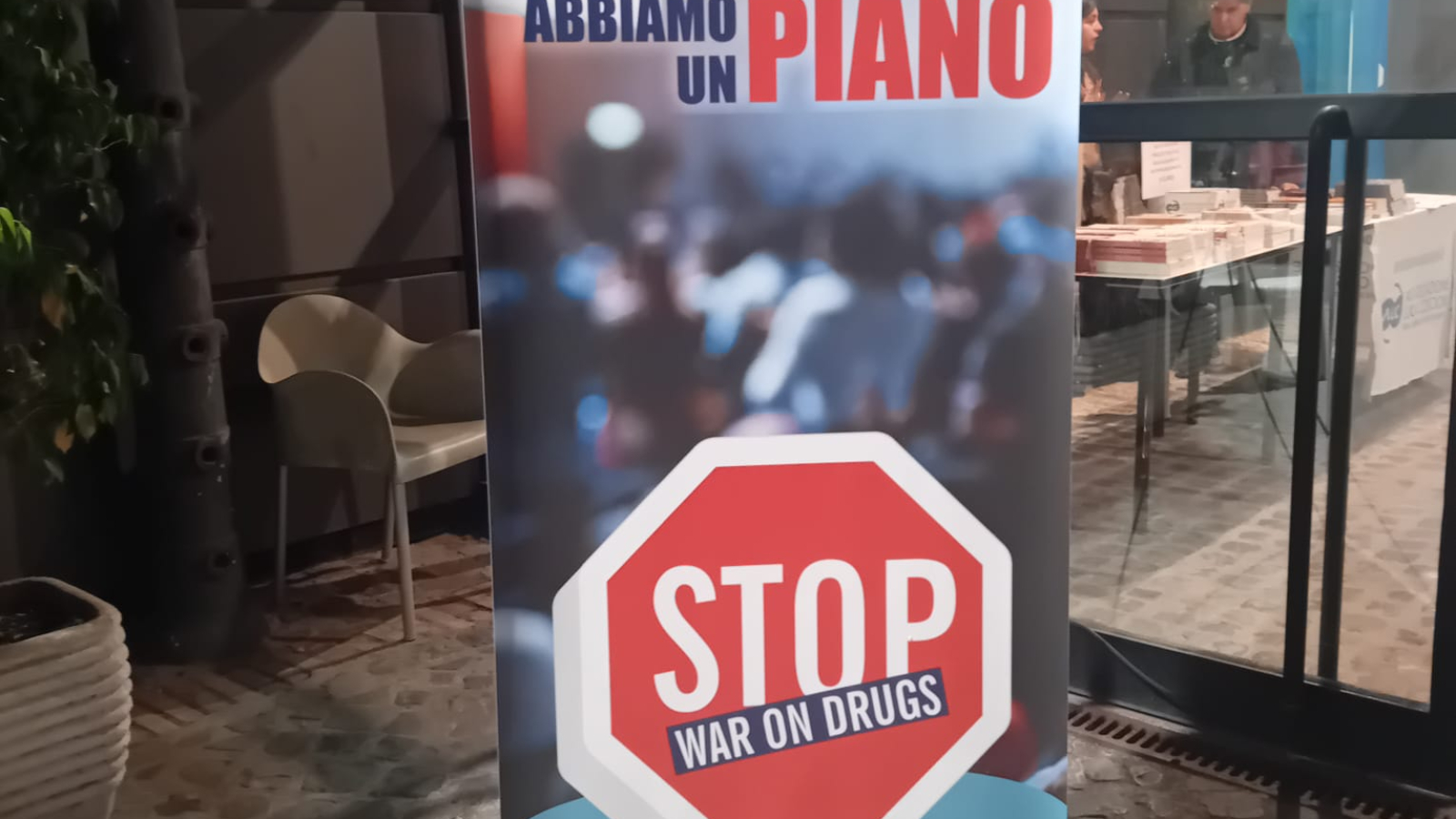
Italy – Counter-conference on Drugs: “Let’s stop the war on drugs, let’s guarantee civil and social rights!” 

Counter-conference on Drugs: “Let’s stop the war on drugs, let’s guarantee civil and social rights!” 
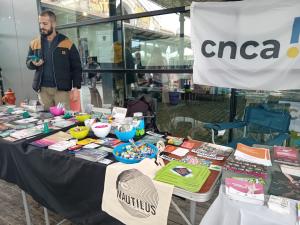
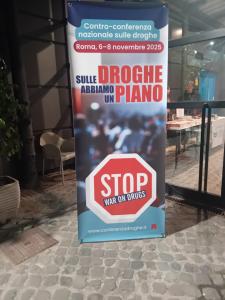
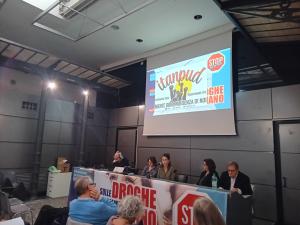
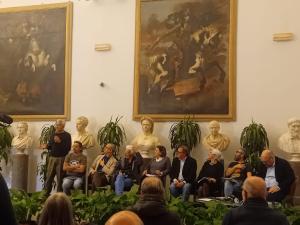
Meeting in Rome between 6th and 8th November, over 200 participants reaffirmed the shared commitment towards human rights, people centred drug policy reform, and closer alignment to the responsible regulation of all drugs.
This sentiment was also shared by Mr Zaved Mahmood, human rights advisor at the United Nations. He underlined that national governments are responsible from promoting the full realisation of the right to health and thus including the utilisation of human rights tools to address drug use in society. Mr Mahmood emphasized the centrality of addressing drug policy in its entirety and apply decriminalisation, depenalisation, and regulation tools in tandem with broader social services such as housing, nutrition, and meaningful gainful employment.
The extensive list of speakers, and key messages focused on the importance of inclusivity, dialogue, and concrete action preventing stigma, and restoring dignity to many. Furthermore, all those present agreed on the pivotal importance to place people who use drugs at the helm and centre of all decisions, discussions, and project implementation concerning their lives.
Various speakers expressed concern at a growing wave of the ‘securitisation’ of borders, and a rise in right wing politics and policies. This was recognised as a newfound risk for people who use drugs, especially people already carrying other stigmatised labels such as migrants, gender queer people, and those facing homelessness.
Whilst recognising that the years 2024/2025 have been particularly significant for international drug policy reform, especially when one considers the broken Vienna consensus on the war on drugs, and the inclusion of Harm Reduction in UN resolutions, speakers recognised that the translation of international dialogue into effective national policies will require much more than just diplomacy. This will also be particularly difficult at a regional level when one considers the extensive and significant funding cuts across the EU, including challenging long standing and new found barriers for civil society organisations providing different harm reduction and other services for people who use drugs.
The UN International Guidelines on Human Rights and Drug Policy was recognised and heralded as a key and most significant document to guide governments in developing and sustaining people centred drug policies and laws. Highlighting the current red-flags by the Italian government, in particular the ‘security law – Legge Sicurezza’ and other laws restricting movement, and the assembly of people on the pretext of ‘protecting and preserving public peace’, the speakers warned that this is not only an attack on people who use drugs, but on the democratic principles and processes of the Italian nation and state. In fact, representatives from the association Meglio Legal were arrested just a few hours before. Their sole crime? Trying to peacefully participate to the Government’s own conference on drugs which was held during the same days.
The contro-conference included also testimonials from countries who have recently regulated some form of supply for recreational cannabis use. Mr Andrew Bonello from Malta, and George Wurth from Germany provided a general overview of the legal provisions, including positive and negative measures directly impacting the cannabis reform.
In conclusion, the contro-conference recognised the centrality of grass-roots movements in advancing the rights of people who use drugs, and ensure government, policies, and social institutions fulfil their role in  advancing human rights for all.
This conference included the participation of the following partners:  
– Forum Droghe
– ITARDD
– ENCOD – European Coalition for Just and Effective Drug Policies
– United Nations Office for Human Rights
– United Nations Special Rapporteur for Health
– International Drug Policy Consortium
– European Drug Policy Alliance
– EuroNPUD, ItalNPUD
– Harm reduction International
– C-European Harm Reduction Network
– Youth Rise
– Metzineres
– European Union Drugs Agency
– Associazione Luca Coscioni
– Multidisciplinary Association for Psychedelic Studies
– Psychedelic Access Research European Alliance
– Psychedelicare.eu
– CNCA
– Associazione Antigone
– CGIL
– Meglio Legale
– German Hemp Association
– ReLeaf Malta
Rete degli Studenti
Meloni_Mussolini

Dangerous authoritarian drift in Italia: Meloni’s attack on Rights and the Hemp Industry

Dangerous authoritarian drift in Italia: Meloni’s attack on Rights and the Hemp Industry

Italian Prime Minister, Giorgia Meloni, has presented a sweeping decree that significantly alters the country’s political and legal landscape. This decree compromises the Human Rights and Civil Liberties of millions of people in the country. It also targets the flowering hemp and CBD industry, threatening thousands of jobs and undermining scientific consensus.

General measures compromising Human Rights and Civil Liberties 

The decree comes into effect immediately, bypassing the ordinary legislative process. The Congress of Deputies, with a far-right and right-wing absolute majority, has 60 days to ratify or reject it. This approach of ruling by decree centralizes executive power and restricts the elected representative’s role, indicating a move toward authoritarian governance.

This rule criminalizes dissent by imposing harsh penalties for civil disobedience. It will affect several social movements: ecologism, LGTBIQ+, syndicalism, etc. Peaceful protests that block roads or occupy public spaces now face prison sentences of up to six years, whereas these offenses were before treated as minor administrative infractions. Furthermore, the law extends punitive measures to unrest in prisons and migrant detention centers, authorizing additional prison terms of up to 5 years of imprisonment even when protests stem from human rights abuses or poor living conditions. This criminalization targets marginalized groups and deters public opposition.

In parallel, the decree grants protections to security forces and intelligence agencies. Police officers under investigation for torture will not be suspended, which raises concerns about increased impunity. The decree also expands the autonomy and secrecy of intelligence services, reducing parliamentary oversight. Coupled with the threat of revoking citizenship from those convicted of certain crimes, this creates a climate of fear and control reminiscent of authoritarian regimes. International bodies, including six UN special rapporteurs and Amnesty International, have condemned the decree for eroding fundamental rights and democratic norms.

Targeting the Hemp and CBD Industry

This decree in the article 18 has an effect on the Italian hemp and CBD industries. The government has moved to classify cannabidiol (CBD) derived from cannabis as a narcotic substance, banning its use in dietary supplements and other ingestible products. This decision contradicts scientific findings and European Union regulations, which recognize CBD’s therapeutic benefits and non-psychoactive properties. ​[On 24 January 2019, the World Health Organisation (WHO) recommended amending Schedule I of the 1961 UN Single Convention on Narcotic Drugs  in order to clarify that cannabidiol (CBD) is not a narcotic drug.]

The decree also seeks to prohibit the sale and consumption of hemp flowers, even those containing negligible levels of THC. Even some representatives of the right wing opposed the decree as not consistent with EU norms and procedures. For instance, the former mayor of Verona, Flavio Tosi, claimed that he was backed by the Popular parties of the European Union and insisted on applying the EU rules even in Italy.

Just to remember, the Giovanardi law which criminalized drug users for several years, was revoked in 2015. After that there was a small opening. Medical cannabis was regulated, and CBD shops and the first CSCs appeared. But Italy was ever a difficult country for cannabis and drugs. For example, Cannapa Mundi in Rome had to stop due to heavy police harassment of the last edition.

That said, the decree was officially published in the meanwhile Indicasativa Trade was running in Bologna. It created a fearful environment even though Bologna is one of the main progressive countries in the country. The concerns at the fair were the sudden prohibition of hemp flowers and the new traffic rules. This last has a tremendous impact on people not driving under the influence but just under detection,  accused of a criminal act, and stripped of their driving license for three years. Industry experts warn that such measures could devastate the sector, which comprises approximately 3,000 companies, employs around 10,000 individuals, and generates an estimated €500 million annually.

Some early cases were raised by lawyers in Milan because the decree lacked the necessary criteria of necessity and urgency, lumping together many different articles without any sense. Similarly, the 2007 decree that amended drug laws by equating cannabis with heroin was struck down in February 2014 by the Constitutional Court, albeit a bit late. It may happen sooner or later with flower prohibition, but leaving many bodies on the ground because this would lead to the destruction of much of the Italian hemp industry.

Conclusion

The recent decree in Italy has sparked significant backlash from global human rights organizations and domestic critics who warn it threatens civil liberties and contradicts international commitments. The concerns about the law are driving an extensive movement of judges, lawyers, political activists, most of the opposition parties, trade unions, social centers, and cannabis workers. They are launching a big demonstration in Rome at the end of May. Due to cannabis repression, this could also become an encounter point for the drug policy reform movement. This demonstration will embrace the populations most impacted by the decree. The cannabis movement should be there. Don’t give up, organize yourselves! Let’s march together.


Italy Bologna Demonstration NO DDL

Italy : Massive demonstrations to say “NO DDL SICUREZZA”

Italy : Massive demonstrations to say “NO DDL SICUREZZA”

In Italy, several demonstrations against the dictatorial proposals of Meloni’s government against cannabis, and civil and human rights were quite big, with for example over 5000 people in Bologna and many others in most towns…

Like our friend Enrico Fletzer argued “It was nice but the right wing goes on like a bulldozer so we have to involve more interest and participation. One big participant of the demonstration was the metal workers union but at the core there were many young people”.  Here is the link to a facebook real posted to witness and some pictures of this huge movement.

Dalla manifestazione regionale NO DDL SICUREZZA di Bologna, 22 Febbraio

, “”!

This decree does not bring security, it brings repression. It hits those who fight for housing, for jobs, for the climate, for social justice. It criminalizes dissent, punishes the weakest, militarizes cities.

But today we gave a clear answer: ̀ ̀ !

Real security is housing, income, rights. Not criminalization and repression.

In the country there will always be those who will continue to fill the squares, to fight inside and outside the institutions.
Because we do not accept a more unjust, more repressive, more unequal society.
⚡️, .⚡️


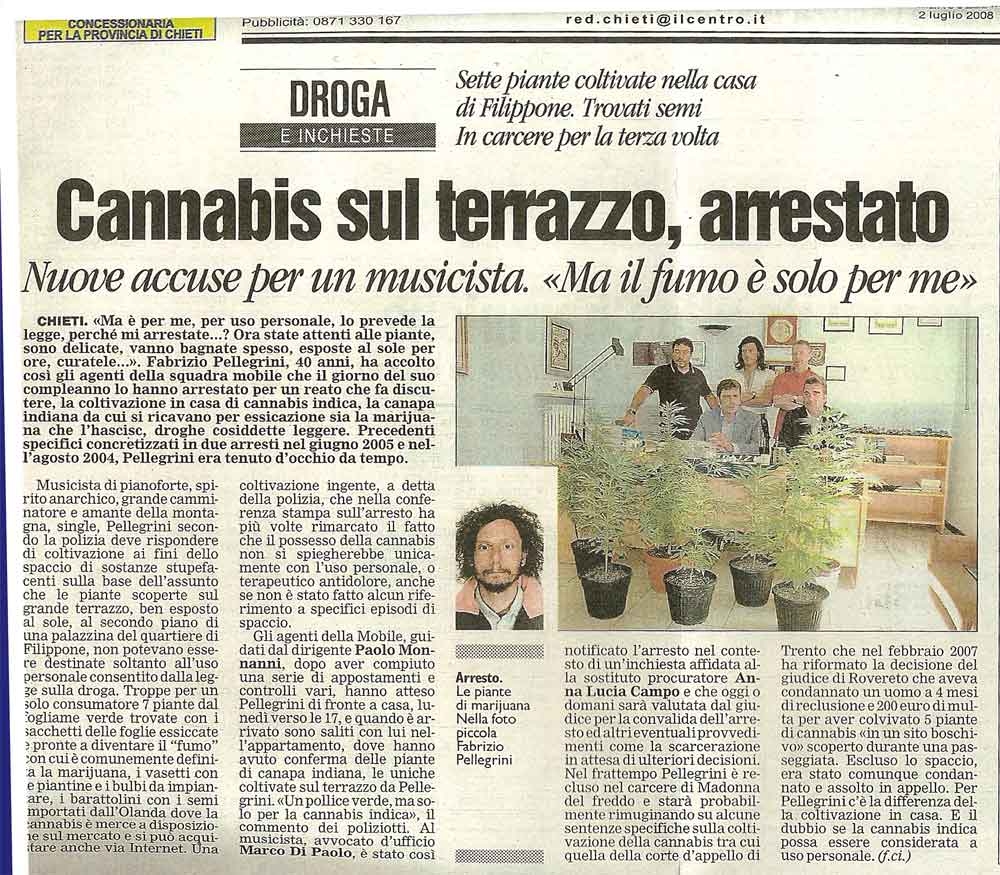
ilcentro-2luglio.jpg

Libertà per i malati

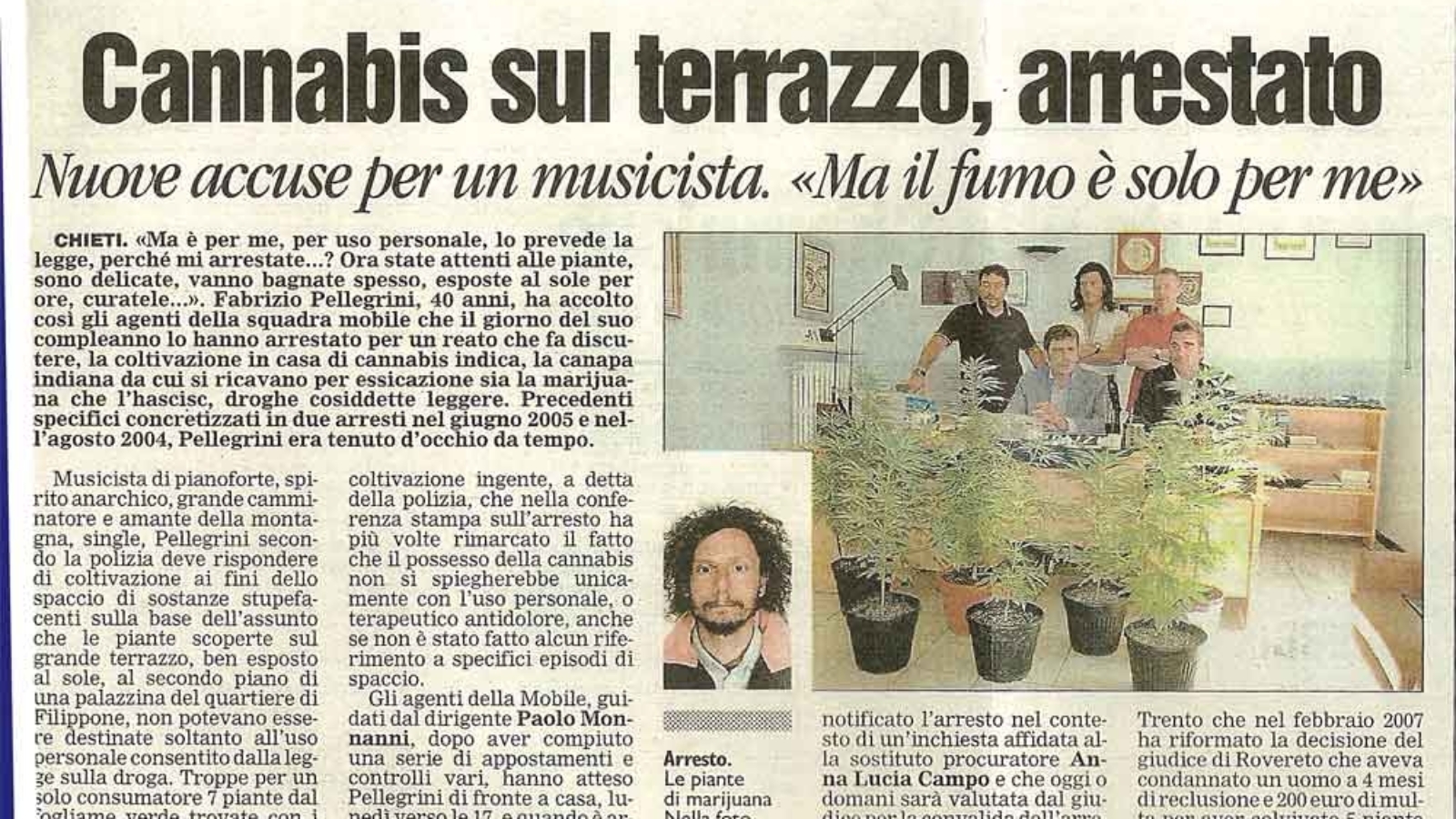
Fabrizio Pellegrini, malato di fibromialgia, é arrestato a Chieti con l’ennesima oscena coreografia che accompagna questi casi. E’ accusato di spaccio per la detenzione di cinque piante di canapa che gli servono per curarsi.

ilcentro-2luglio.jpg

Le sue traversie giudiziarie iniziano ben prima del decreto Turco che ha introdotto fin dal 2007 la possibilità di qualunque medico operante in Italia di prescrivere la cannabis.Con un perdurante tocco di classe perché la legge non autorizza i pazienti a coltivare la propria medicina e quindi a curarsi qualora non dispongano dei mezzi necessari.Ostacolandone di fatto il diritto alla salute e favorendo sempre e comunque il mercato nero, la criminalità più o meno organizzata.
Il tema è controverso. Per alcuni il paziente è re. Per altri si tratterebbe di mantenere comunque un controllo assoluto su una sostanza riconosciuta terapeuticamente più sicura dell’aspirina.Ma è indubbio che il dispositivo rappresenti un formidabile strumento di oppressione per i giovani e le minoranze politiche ed etniche.
Sul filone dell’autodeterminazione dei malati se non quello di noi comuni mortali ormai l’Italia sembra pronta a voltare pagina. Ma non a Chieti, la città scelta da Mussolini per celebrare un processo piuttosto delicato per il nascente regime fascista, quello agli esecutori materiali dell’uccisione del parlamentare socialista Giacomo Matteotti.

Anche nel nostro caso il silenzio dei democratici è stato finora assordante.
Dopo il suo arresto Fabrizio è stato rapato a zero. Un elemento che potrebbe indicare la volontà di spezzarne l’identità di Fabrizio. Prefigurando c trattamenti che le Convenzioni delle Nazioni Unite equiparano alla tortura ma che in Italia sono considerati normali. La situazione del musicista teatino indica, come se ce ne fosse bisogno, un grave vulnus nella nostra democrazia del diritto alla cura e all’autodeterminazione in un paese che tollera ampiamente la tortura. Una tortura rinforzata nel nostro caso da una legge ingiusta che gli impedisce di avere un accesso sicuro alla sua medicina fuori dal circuito carcerario o criminale.

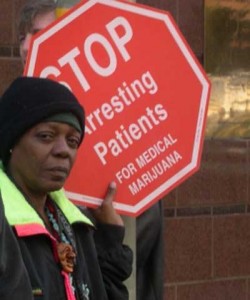
stop-arresting-patiens-250x300.jpg

Fabrizio è detenuto nella città della camomilla come l’aveva definita il giornalista bolognese Alberto Mario Perbellini venuto a Chieti per seguire il processo Matteotti ,un contesto anestetizzato atto ad ospitare il processo agli esecutori materiali di quell’omicidio inspirato dal Duce in persona.
Nel nostro caso il tentativo di narcotizzare l’opinione pubblica è costituita dalla volontà delle autorità locali di impedire ad un cittadino di curarsi, alla faccia dei diritti dell’uomo e del malato. Ma vale anche un’ulteriore considerazione:la permanenza in carcere di Fabrizio Pellegrini è incompatibile non solo con la sua salute ma anche con la nostra democrazia.

Enrico Fletzer

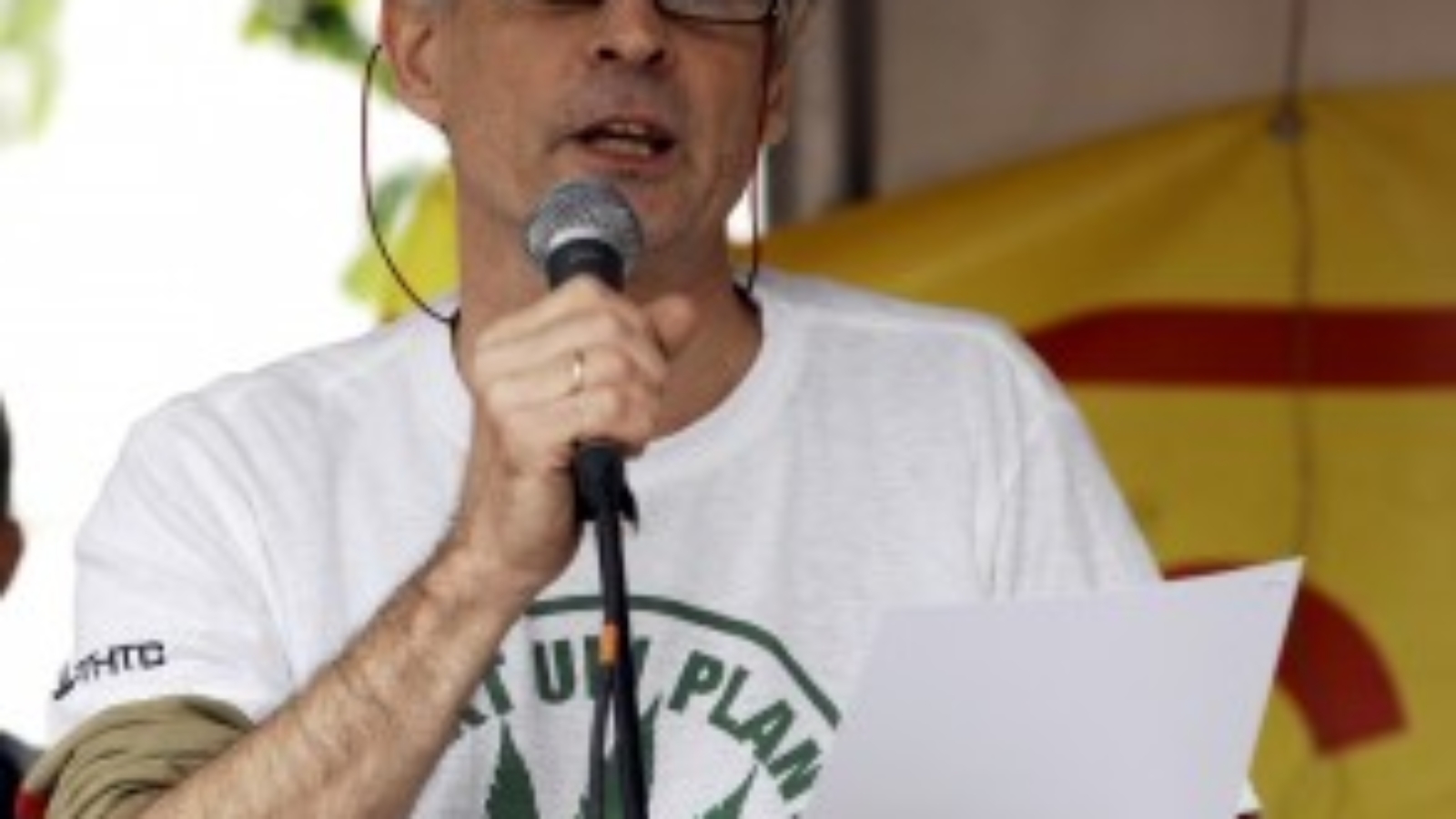
joep_oomen_cannabis_bevrijdingsdag_antwerpen_2015_foto_db_3156-294x300.jpg

Un memoriale on line per mostrare il sostegno è stato aperto qui

Un memoriale online per mostrare il sostegno è stato aperto qui.

ANVERSA – Venerdì 18 marzo 2016, Joep Oomen è deceduto inaspettatamente nella sua casa di Anversa, in Belgio.Da attivista ha combattuto per oltre un quarto di secolo per politiche umane e giuste sulle droghe e per terminare la guerra alle droghe. Joep è stato cofondatore di numerose ONG dedicate alla riforma delle politiche sulle droghe tra cui Encod,il Cannabis Social Club Trekt Uw Plant ad Anversa e la Unione per l’abolizione della proibizione della cannabis (VOC)nei Paesi bassi.

Continue Reading