ENCOD demonstration CND69 French Dutch Paradox

Sunny premiere of travelling cannabis policy exhibition at CND in Vienna

ENCOD Press release 12. March 2026Press release ENCOD - VOC

Press release march 12th, 2026

Sunny premiere of travelling cannabis policy exhibition at CND in Vienna

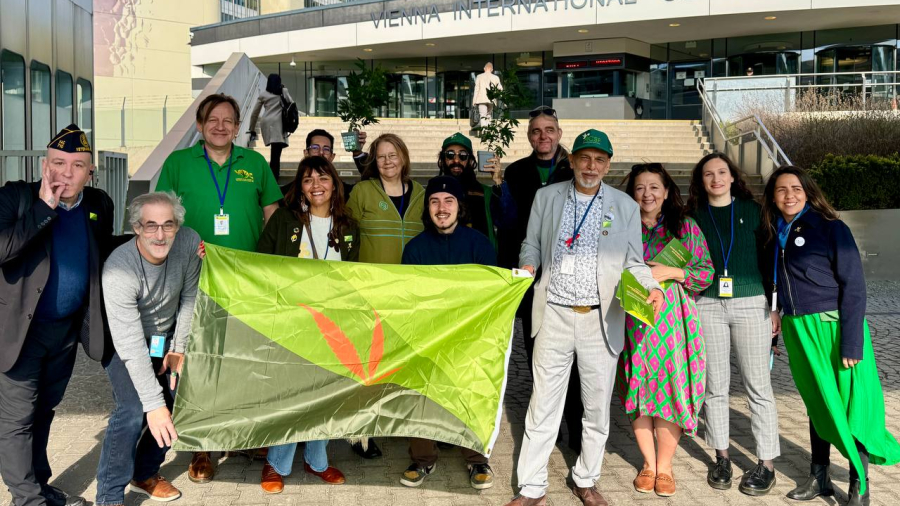
VIENNA – International delegates taking part in the annual Commission on Narcotic Drugs (CND) Vienna were
welcomed by activists from seven countries and a unique exhibition on cannabis policy in France and the
Netherlands on Thursday.

The exhibition, called “1976-2026 The French/Dutch Paradox in the Global Drug War”, centers around 50 years of
Dutch cannabis tolerance policy and 50 years since a French appeal for decriminalization of cannabis by a group of
prominent French citizens.

Activists from ENCOD, the European coalition for just and effective drug policies, and VOC, the Dutch union for the
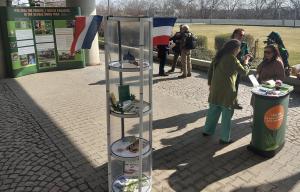
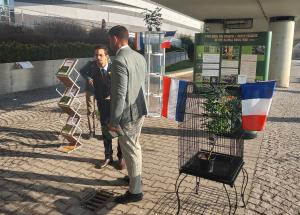
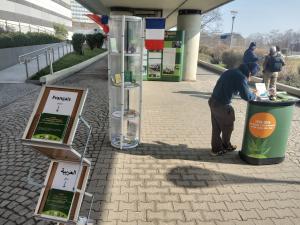
abolition of cannabis prohibition, handed out over 500 exhibition guides to delegates and other CND visitors. A big
cage containing a live cannabis plant proved to be the most popular exhibit, with many people taking pictures and
selfies with it.

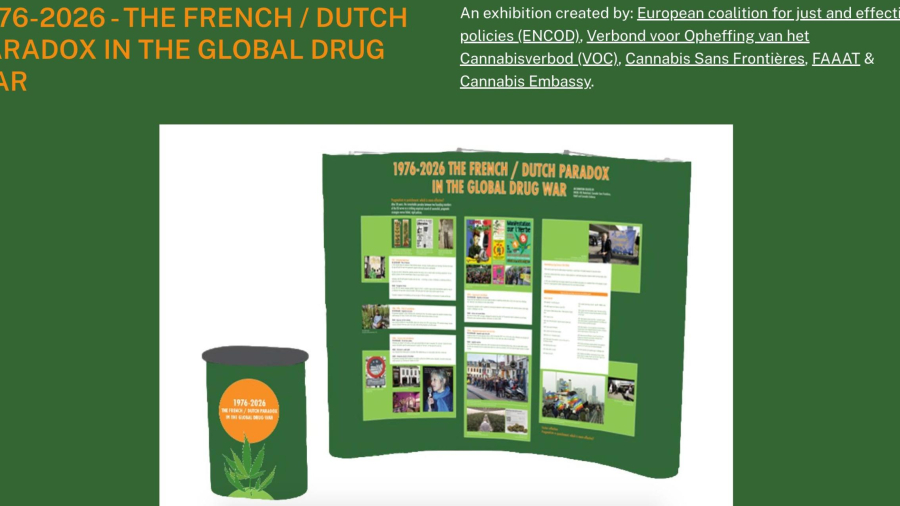
On a colorful curved wall, the story of the two diverging policies is told. One of the paradoxes is the fact that
despite having a very strict prohibition policy on cannabis, France is the European champion of cannabis
consumption. The Dutch cannabis coffeeshops have not led to similar high consumption rates, while providing safe
access for adult consumers and diminishing the “forbidden fruit effect” for young people.

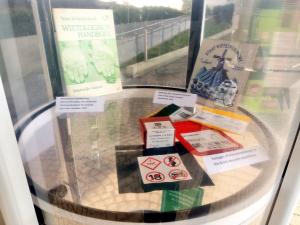
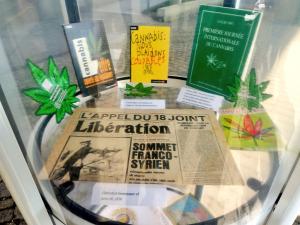
A display case showed artefacts from half a century of French and Dutch cannabis culture and activism. Among the
objects was an original copy of the French paper Liberation from June 18, 1976, containing the appeal for
decriminalization, L ́Appel du 18 Joint. Other highlights included one of the first Dutch guides for growing your own
cannabis from 1987, and a Delft blue tile commemorating the start of the Dutch cannabis closed chain experiment
in 2025.

The exhibition led to some lively discussions between activists, delegates and other visitors. Derrick Bergman,
chairman of VOC: “This is exactly what we had hoped for: stimulating debate and discussion about prohibition
versus regulation of cannabis.

” ENCOD chairman Farid Ghehioueche: “We ́re proud of this exhibition, that will travel throughout Europe during the rest of the year. Our message is that prohibition is no solution. Regulation with respect for human rights is the way forward.

After Vienna, the exhibition will travel to Bilbao the 17 -19 April 2026 followed by Berlin, Paris, Brussels,
Amsterdam, The Hague, Prague and Eindhoven. Exhibition website: www.frenchdutchparadox.org.

The only negative occurrence of the day was an outrageous article with an equally outrageous AI generated image
on the website Europeantimes.news. ENCOD and VOC strongly denounce this fake news story, titled “Cannabis
Smoke at UN Drugs Summit Sparks Outrage in Vienna”. The claim that CND participants “encountered a cloud of cannabis smoke before they even reached the entrance” is a blatant lie.


ENCOD website: www.encod.org
VOC website: www.voc-nederland.org

Spokesperson: Farid Ghehioueche, ENCOD chairman, phone: +33 751 350 234


Pictures from the demonstration FrenchDutchParadox

Exhibition Website frenchdutchparadox.org

Travelling exhibition on French/Dutch cannabis paradox to premiere at United Nations in Vienna


VIENNA – A new travelling exhibition comparing the divergent cannabis policies of France and the Netherlands will premiere in Vienna on March 12, coinciding with the annual meeting of the UN Commission on Narcotic Drugs (CND).

The year 2026 marks a dual 50th anniversary: the birth of the Dutch tolerance policy for cannabis, which paved the way for their world-famous coffeeshops, and the publication of ‘L’Appel du 18 Joint’, a plea by a group of prominent French citizens for decriminalization of cannabis.

The exhibition, ‘1976-2026 – The French/Dutch Paradox in the Global Drug War’, explores half a century of cannabis policy within these two founding members of the European Union, contrasting pragmatic regulation with rigid prohibition.

Visitors can trace the evolution of the Dutch model, up to the current experiment with regulated cannabis cultivation, supplying around 80 coffeeshops. The contrast with France is stark. The 1976 appeal has evolved into a French “420”, with demonstrations for legalization all over France on June 18. Yet the law remains strict and repression persists. Despite decades of criminalisation and mass arrests, France continues to see the highest cannabis consumption rates in Europe.

What’s on display? The heart of the exhibition is a narrative wall featuring photos, illustrations and English texts. A display case contains historical artefacts depicting Dutch and French cannabis culture. There’s a live cannabis plant in a cage and a section dedicated to the late Joep Oomen (1961-2016), drug reform activist extraordinaire and co-founder of NGOs Encod and stichting VOC.

The project is a collaboration between Encod (European coalition for just and effective policies), stichting VOC, Cannabis Sans Frontières, FAAAT and the Cannabis Embassy.

Nine cities in seven countries

Following its Vienna debut, the exhibition will travel to Bilbao, Berlin, Paris, Brussels, Prague, Amsterdam, The Hague and Eindhoven. The goal is to show it in nine cities in seven countries. Leaflets with translations of the exhibition texts in five languages are available, as well as a comprehensive 24-page guide featuring further information and imagery.

Vienna: March 12

The exhibition will be stationed in front of the Vienna International Centre (VIC) on Thursday March 12. Board members from Encod and stichting VOC will be on site to talk to visitors, international delegates and journalists.


Website: www.frenchdutchparadox.org

Gaby Kozar, Encod coordinator (Vienna): gaby@encod.org Phone: +43 699 123 790 86

More information: www.voc-nederland.org


THE FRENCH / DUTCH PARADOX IN THE GLOBAL DRUG WAR 

LOGO centenary of Cannabis Prohibition 1925-2025

CND68 – ENCOD side event “1925-2025 : One centenary of Cannabis as a narcotic drug under international control”

Commission on Narcotic Drugs – 68th session

Tuesday March 11th, 2025

10:00 – 11:00 AM (Vienna) – ROOM : MOE05 

1925-2025 : One centenary of Cannabis as a narcotic drug under international control


This side event, in link with an exhibition, aims to present the long journey of cannabis from 1925 to the present day, passing by the Single Convention and its recent change of scope related to its scheduling in 2020.

Looking back at 100 years of negative history –since the 1925 Geneva Opium Convention first brought “Indian hemp” under international drug control. Meanwhile, cannabis also entered the International Pharmacopoeia. 

Let’s re-examine this dual history in light of the millennia of positive interactions with Cannabis sativa L. by all human societies. During 99% of human history, cannabis was neither prohibited nor problematic.

ENCOD, with its partners, invites you to a very special side event celebration. 

In partnership with :

ACURA / Santo Amor, Cannabis Sans Frontières, Cannabis Embassy, DRC-net, FAAAT.net – FDM, Fields of Green For ALL, Hempoint, NORML France, Veterans Action Council.

Register previously to follow us Online : http://bit.ly/3EZV1MY ; 

Contact us :  <office@encod.org> ; 00 33 751 350  234  ;


ENCOD Side Event Leaflet CND68 – FULL_VF

ENCOD supports VLD mail action to SPÖ and ÖVP.

In Austria, the government is subject to a long deal between different political parties to form a coalition.

In order to ensure that their program and coalition’s contract includes cannabis legalisation, some activists with Verein für liberale Drogenpolitik are aiming to influence this coalition’s deal by sending letters :   if you’re an austrian citizen or you’re living in Austria, please just use this sample letter and mail action available on this webpage.

https://mailaktion.hanfheimat.at/

IMG_3397-1

Wiener Aufruf // Vienna Call – Change of the existing drug policy in Austria

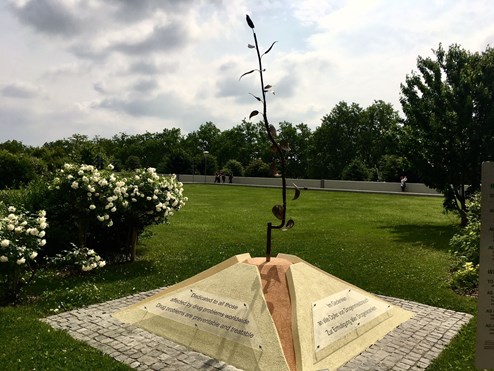
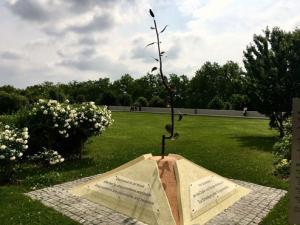
On the world-drug day, June 26th, we started a citizens’ initiative in Austria. We decided that first signatory should be Mr. Josef Rohaczek, a retired criminal police officer who has been fighting for fair drug laws for a long time and is also running the Elternkreis (elternkreis.at) who put the “tree of hope” in front of UN building.
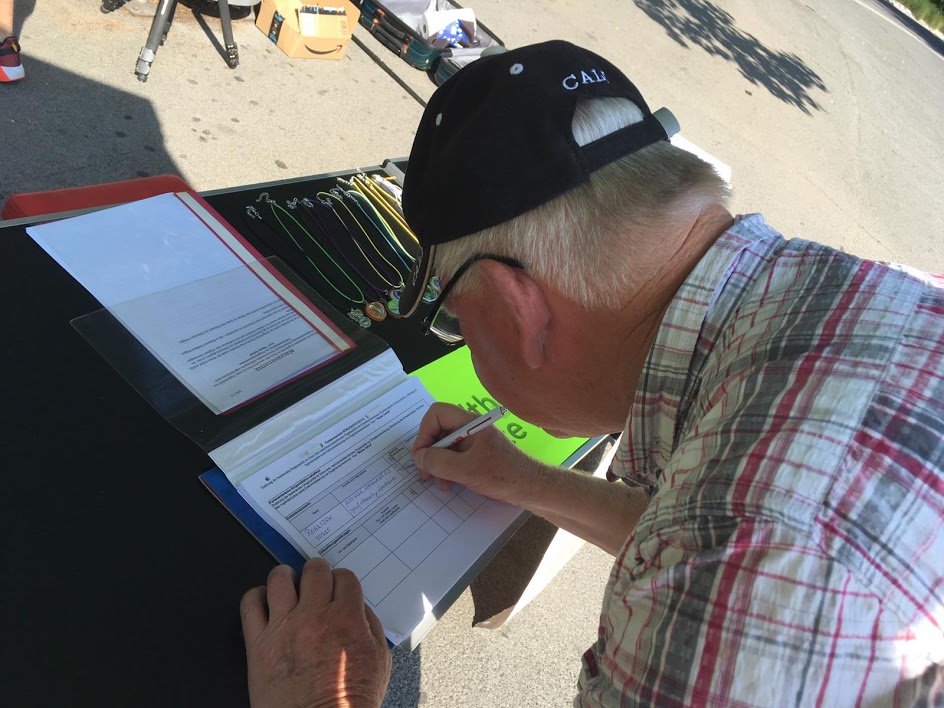
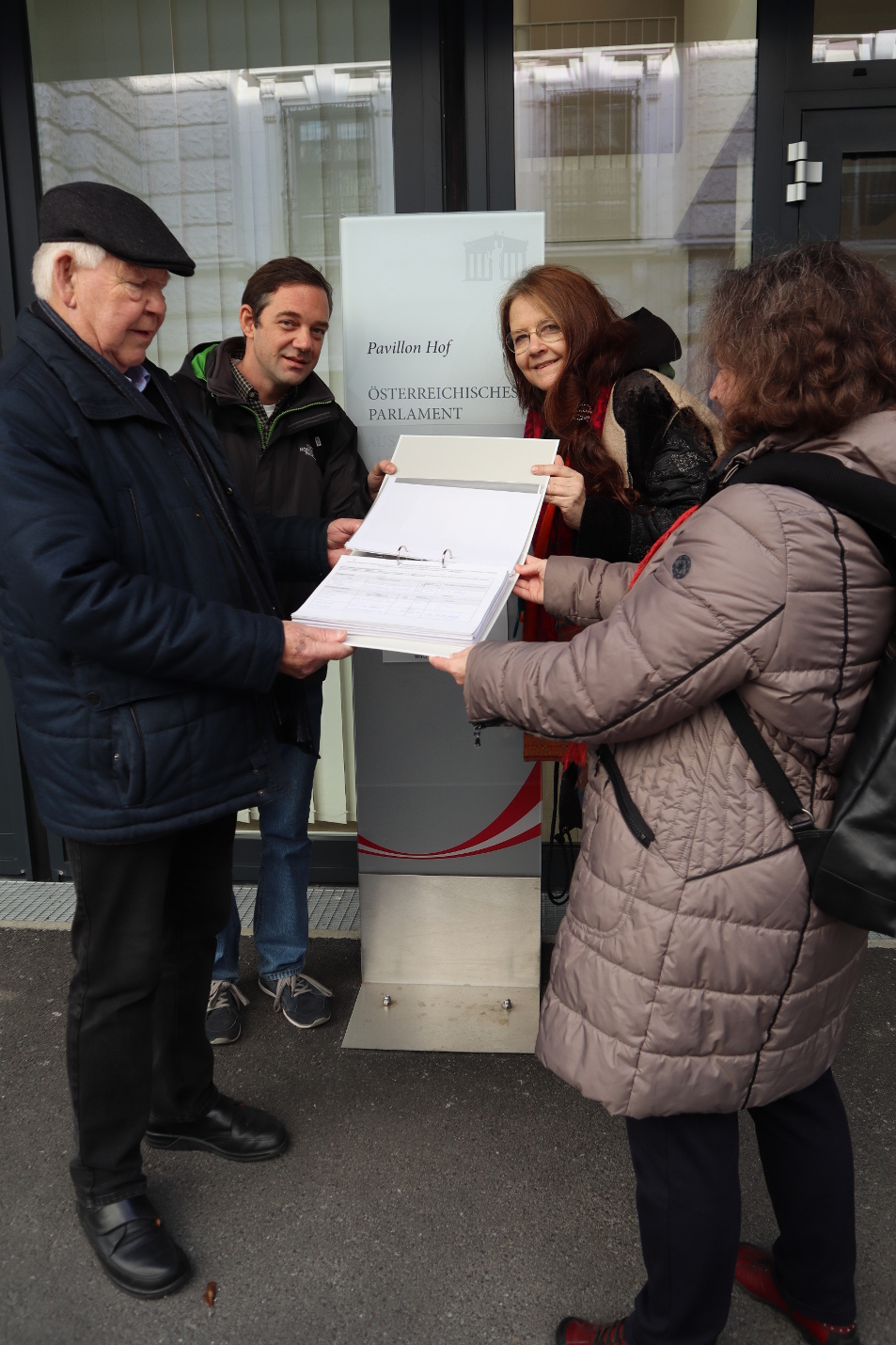
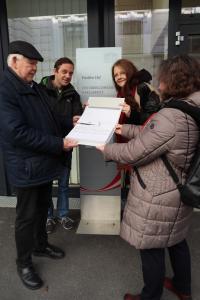
Together with Mr. Rohaczek and Mr. Christoph Fasching and with the help of other ENCOD activists we collected the necessary signatures in order to present the CI to the Parliament.

We received a first statement form the Ministry of Social Affairs, Health, Care and Consumer Protection, which we also commented insisting on a compromise between abstinence and treatment. The next meeting of the committee will be on July 1st (see the updates below).

Please find here some excerpts we translated as well as the link to the original. Only Austrian citizens can sign!

Summary / excerpt of the Citizens‘ initiative „Wiener Aufruf“

(Original: https://www.parlament.gv.at/PAKT/VHG/XXVII/BI/BI_00019/fname_775632.pdf)

Changes to the existing drug policy in the sense of a drug policy that complies with human rights by minimizing harm, eliminating the black market, increasing the protection of minors and decriminalizing people who use drugs.
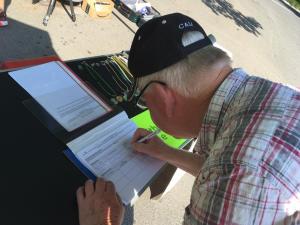
This issue was supported by 781 citizens with their signature until it was brought into the National Council. (Note: at least 500 legally valid signatures must be available for submission to the National Council.)

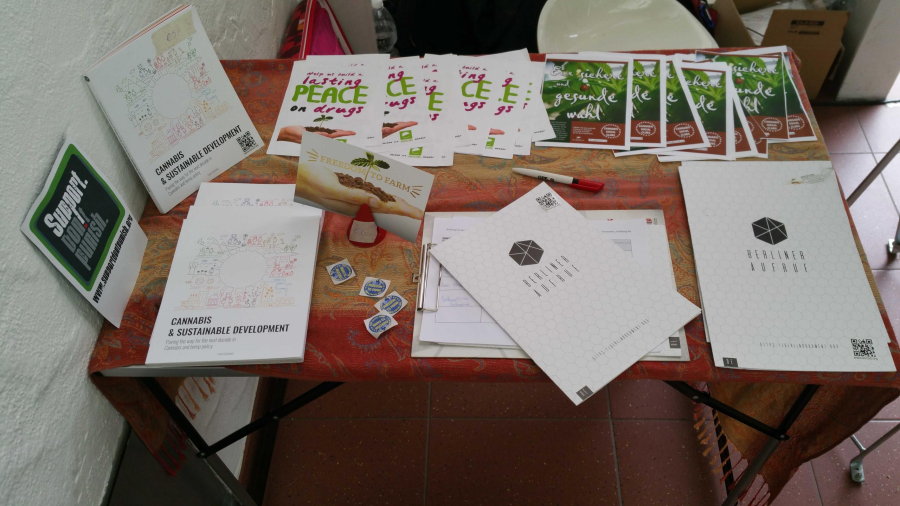
The National Council is requested to implement a drug policy that complies with human rights in accordance with the attached “Wiener Aufruf”. This refers to the “Berliner Aufr” in a meaningful way, but is formulated in secular terms. (The “Berlin Call” is available online at https://berlindokument.org in various languages).

The global drug war has failed. The number of drug users has not decreased, neither the space used to cultivate plants for drug production. Without effective drug control strategies, marginalization, poverty and inequality in society will continue. Attempting to make the world drug-free has caused harm to already marginalized social classes and has not led to a reduction in drug use. The achievement of the Sustainable Development Goals (SDGs) is also endangered by environmental pollution due to the illegal and non-environmentally friendly cultivation of plants for drug production and their further processing. It must be guaranteed by law that research with currently still illegalized substances in the sense of health promotion and maintenance is permitted. Many of the illegalized substances, such as various psychedelics, are already used successfully in other countries to treat mental and neurological diseases.

Prohibition is a political mistake and leads to a deadly ideology.
Our citizens’ initiative is targeting the global drug war, which the former UN secretaries-general Ban Ki-Moon and Kofi Annan have already declared failed. Social damage is predictable and unnecessary. There is clear evidence of the link between illicit drug trafficking and an increase in violence, conflict, crime and corruption, and reduced security for citizens. The fight against drug-related crime and corruption is essential for the promotion of human development, and consequent further development (of this idea / conviction) leads to the demand for the decriminalization of all people who use drugs.

The United Nations’ guidelines give member states the freedom to decide how they deal with drug-related offences. The EU limits itself to making recommendations within the framework of the subsidiarity principle. Different drug concepts are used in the 28 EU Member States, each of which has particular characteristics due to its geographical location, the internal dynamics of illegal markets and the capacity of companies to mitigate damage. We need new standards based on existing global leases on human rights, public health and development.

With regard to drugs, prohibition has exhausted all possibilities and must commit to an obvious failure of the prevailing paradigm in the drug control system. This is forcing nations to rethink the wording of some outdated concepts and control mechanisms.

The social approach is a prerequisite for the implementation of a model for drug regulation. To do this, a network of harm reduction organizations must be set up to address certain aspects such as ensure information about drug use, prevention, understanding of drug risks and safe use of the drug. During this process, a balance must be struck between the non-stigmatization of consumers and the non-banalization of substances.

Examples such as:

• Clean or safe drug consumption rooms where people are left with their dignity and consumers can thus take better care of themselves and lead a normal, healthy life

• Cannabis social clubs, non-profit associations which provide their members and patients with clean and affordable cannabis (in compliance with strict rules of conduct)

• Guided ceremonies where psychedelic plants can be safely consumed

The aim is to find a new compromise between medical benefit and problematic consumption, namely the conscious use of drugs. This requires respectful treatment of people who use drugs and, of course, great care should be taken when regulating drugs and changing the law. So it is certainly advisable to start pilot projects that allow first insights into the changed situation. You can then adjust step by step and move forward. Of course, not all types of illegalized substances can be equated. Here is our trust in the experts who develop and carry out these projects. The activists in Austria are of course happy to offer their wide-ranging knowledge here. Harm reduction can only be achieved through education and an expansion of addiction prevention. The threat of the harshness of the criminal code and the associated creation of further criminal structures is therefore missing.

In order to keep the numerous CBD shops from closing, training measures for the staff would be appropriate to ensure optimal advice. Cannabinoids should not only be available in pharmacies; this would put too much strain on the economy due to the high prices. A certified job description “cannabinoid consultant” would be an enrichment of the labour market. State control also has a significant impact on ensuring the purity of the substances (ad. Harm reduction) and thus protecting consumers. Furthermore, it makes sense in terms of transparency and security binding to create rules for the declaration of the ingredients, as well as to print warning notices on the substances.

The norms of human rights must be the basis of a human drug policy. The upcoming reform must focus on reducing the negative consequences of current drug policy. The focus must be to ensure the protection of minors and at the same time to reduce the criminal, global drug wholesale trade and thus also the black market. Austria has always been a pioneer, the principle “therapy instead of punishment”. However, this is limited to “lawbreakers”, where, according to our approach, nobody is breaking the law. Establishing a business line is to be advocated, since this approach would generate tax revenue and jobs instead of threatening punishments. If all these arguments are taken into account, decriminalization of Drug users can be tackled as Austria’s contribution to ending the global drug war.


At the July 1st meeting of the Committee on Petitions and Citizens’ Initiatives, our suggestion was taken and the following was decided:
Citizens’ Initiative No. 19 regarding “Change of the existing drug policy in the sense of a drug policy that complies with human rights by minimizing harm, eliminating the black market, increasing protection of minors and decriminalizing drug users “Vienna Call” – Obtaining opinions from the home and judicial departments.
Electronic approval is still possible!
For Austrian citizens only!
https://www.parlament.gv.at/PAKT/PR/JAHR_2020/PK0724/#XXVII_BI_00019

 

00-20191013_header-1

Cultiva 2019 (AT) was a target of an intensive police action


This year’s Cultiva took place from 11th to 13th October 2019. But this time with less enthusiasm. This can be attributed to increased police controls, which affected almost 200 trade fair visitors this year. Hemp, a versatile plant that has been in great demand for more than 4,000 years, has been enjoying increasing popularity in medicine for several years now. A lot of countries around Austria decriminalized cannabis, but instead of supporting the prosperity of the citizens, a hunt is launched that destroys families, health and other livelihoods. “This is a violation of human rights,” comments ENCOD’s EC with anger. ENCOD is one of the NGOs who participated with an information stand at Cultiva for several years and educates interested people about drug policy. According to insider information, medical officers rent hotel rooms in the same venue with their drug dogs and catch visitors after closing time. Two years ago there were even racist comments made by Austrian Police officer to a group of visitors from Slovenia: ‘They should leave Austria and never set foot in the country again.’ Such measures are not exactly a model for a state that is on the first place of quality of life. Quality of life means prosperity and prosperity is defined with happiness, health, love and money. As for the first three values, the country seems to be increasingly impoverished. It is time for citizens to take certain actions into their own hands.

Police department of Lower Austria published on Oct. 14th 2019 a press release with the following records:

161 drivers were impaired by (illegal) substances

22 drivers had to pay a fine

6 drivers refused examination by public medical officer

15 drivers had symptoms of fatigue


Confiscated products:

710 g cannabis, 36 joints, 11 grinders, XTC tablets, magic mushrooms and a knife.

The actions of the police are outrageous and point to several important issues related to cannabis. There is an urgent need to define the allowed levels of THC in blood since the cannabinoid stays in the body for a much longer time than the acute effects last. Medical users (even German patients who have a prescription and are allowed to drive in Germany) were humiliated, mistreated and taken by the police as criminals.

The “City Back Driver” project was founded by CIA-TV (and support of ENCOD) to redirect trade fair visitors back to the urban areas for a voluntary donation. Of course, the drivers are “clean”. The action has been enforced on Sunday evening, as taxi drivers joined the project. More solidarity and humanity are needed in this world. If there is a fair next year it’s time again and you can sign up as a City Back Driver (and maybe From City Driver too).

If you still have interesting reports and information from the Cultiva, send it to office@encod.org.