photo_5918271257089002116_y

From Protest to Practice: Klub Karl and the Quiet Maturation of Germany’s Cannabis Clubs

Report from Chemnitz

Just a short walk from the imposing Karl Marx monument in Chemnitz —a 7-meter-high bronze head—sits a smaller sign of social change: Founded in 2022, Klub Karl is one of Germany’s first Cannabis Social Clubs (CSCs), but it can not grow a single plant yet, due to administration process. What the club does grow is trust, infrastructure, and preparation. And that’s not to underrate.

Roots That Go Back Decades

Despite its recent founding, Klub Karl didn’t appear out of nowhere. The core members are not newcomers to cannabis. Many have been involved in cultivation, advocacy, and harm reduction work since the 1990s, often at the edges of legality, sometimes in open defiance of it.

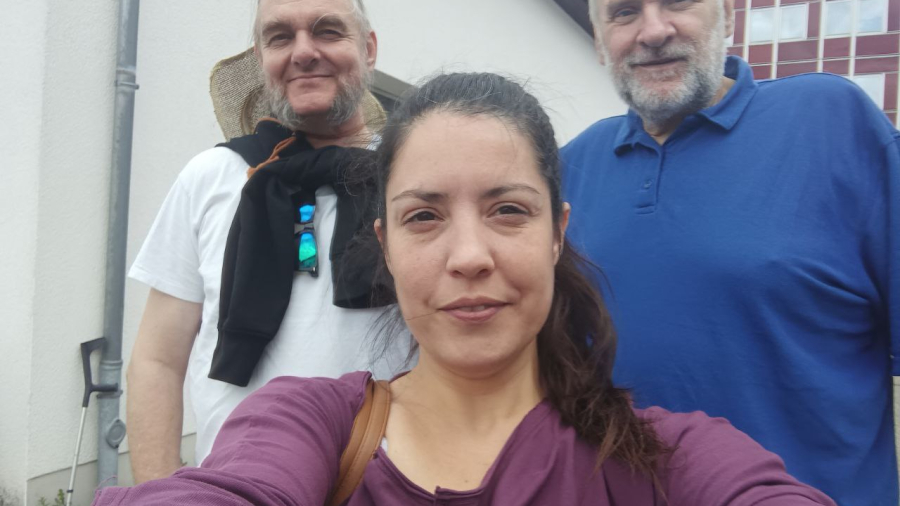
Gerfried Düregger is the president and co-founder of Klub Karl, a Cannabis Social Club in Chemnitz. A former wholesale merchant, he turned to medical cannabis in 2011 as part of his treatment for a chronic illness—a therapy that, in his words, gave him his life back. This experience led him to co-found the Austrian patient advocacy group ARGE CANNA in 2014 and to become a committed educator and advisor on medical cannabis. Since 2022, he and Jacqueline Meurer have worked to establish Klub Karl as a model of responsible, community-based cultivation under Germany’s new cannabis legislation. Düregger also represented the club at the founding of the German Cannabis Social Club Association (CSCD) and continues to advocate for patient rights and evidence-based drug policy at the European level.

After decades of prohibition it is the first time that the state of Germany says yes, you can. But only if you do it right. Doing it right, in this context, means navigating a complex new legal framework introduced by Germany’s cannabis law in 2024, following the rules of the KCanG. The law allows for cannabis to be grown and shared through nonprofit clubs—up to 500 adult members each—starting from July 2025. In practice, that means a lot of paperwork, planning, money, and patience.

Not Just Waiting—Preparing

Currently, Klub Karl is awaiting its official cultivation license from the Saxony state authorities—a process that, in their case, has moved relatively quickly thanks to a good working relationship with local regulators. As a final step once the license is granted, the club will have three months to appoint an official prevention officer, as required by law. 

Everything else is ready. The cultivation facility is located in an industrial area well-suited for such operations, and is fully prepared for indoor cannabis production. The site features secure infrastructure, including a fenced perimeter, motion sensors, and 24/7 video surveillance. Klub Karl plans to operate under the license framework for at least seven years, with a long-term commitment for quality and compliance. It places heavy emphasis on education and internal standards.

Bureaucracy as a Test of Patience

Since the law passed, clubs across Germany have been waiting for clear application procedures. Some waited a long time. In Chemnitz, the official window to apply opens July 1, 2025. Klub Karl already has their paperwork drafted—dozens of pages outlining how they’ll secure their grow site, track every gram of product, and educate their members.

The bureaucratic process—and the financial burden of maintaining a fully equipped facility while waiting for the cultivation license—pose significant challenges. Keeping a secured, operational site ready for cannabis production without generating any revenue requires not only careful planning but also substantial financial backing. Without solid capital behind them, many associations may struggle to reach the final stage. The law may be in effect, but the high entry costs and lengthy waiting periods mean that not everyone will have the capabilities to grow legally.


A Different Vision of Cannabis

Unlike the commercial cannabis models emerging in other countries, Klub Karl has no interest in branding or marketing. It is structured as a nonprofit association, with a strong emphasis on collective responsibility and democratic participation. Every member has a voice in how the club operates, and every euro collected is reinvested directly into cultivation, education, and compliance. The focus here is not on lifestyle or trend, but on access, quality, harm reduction, and accountability. This approach reflects a deeper philosophy: that cannabis, when removed from the profit motive, can be integrated into society in a safer and more constructive way.

As of mid-2025, Klub Karl remains in a waiting phase. The official license application approval could be received in July, but there is no guarantee how quickly it will be. It could take weeks or even months. For the people behind the club, this waiting period is not unfamiliar. Many of them have spent decades—some since the 1990s—engaged in activism, informal cultivation, or advocacy under the shadow of prohibition. Compared to that long history, a few more months is tolerable. In the meantime, they continue refining internal processes, supporting the formation of new clubs across Germany, and building a foundation for long-term sustainability.

There is no rush, no marketing campaign, no grand announcement. Under the silent gaze of Karl Marx’s monumental bronze head, the people of Klub Karl are not promising a cannabis revolution. What they are building is slower but potentially more enduring: a legal, local, and community-driven model for cannabis distribution in Germany. It is cautious by design, rooted in decades of lived experience, and motivated by something rarer than hype—responsibility.

 

Responsibility ping-pong in the German capital

Responsibility ping-pong in the German capital

Since 1 July 2024, cultivation associations in Germany have been able to apply for permission to cultivate cannabis to supply their members in accordance with the Consumer Cannabis Act. Over 300 applications have now been submitted to the relevant authorities across Germany, and around 25 of these have been granted a licence. The state of Lower Saxony is the front-runner when it comes to granting licences.

Number one in the ranking of federal states that delay or openly refuse to grant licences is the capital of the stoners: Berlin.

The Bavarian Prime Minister Markus Söder of the CSU has publicly announced that he will hunt down cannabis users wherever possible, that they are not welcome in his state and is massively delaying the granting of licences. A special authority has been set up, at a cost of 36 million euros, and they are pretending to comply with a federal law, although no licence has yet been issued. A lawsuit against the federal state is in preparation, initiated by an alliance of the SPD, Die Linke and DHV.

In Berlin, the health senator Dr Czyborra claims in a statement from July* that she has been negotiating with the districts since 2023 about the granting of permits for cultivation communities and says that the districts have refused. The districts, in turn, say that the Senate did not want to provide them with any resources for the task, which makes the refusal understandable in view of the tight budgets and staff shortages.

Added to this are the local addiction support centres, which, together with the youth care organisations, allow themselves to be driven by conservative doctors and put the protection of minors first. They are not responsible for ‘the regulation of addictive substances’. Discussions usually follow the same pattern: as soon as it comes to making cultivation associations possible in concrete terms, the medical profession is cited as a reason to hide behind the protection of minors (we can already see how harmful cannabis is for young people), and all attempts at constructive cooperation are blocked.

‘We are waiting for the Senate and are not responsible,’ is the unanimous opinion of the mayors from 12 districts. Everyone is afraid of doing something wrong, the funding remains unclear and the necessary resources are not available.

There has been talk in the media of transferring the authorisation procedure to the State Office for Health and Social Affairs, starting with the Senate. In an early statement, the LaGeSo announced that it was not willing to take on this task and was not responsible for it as it does not fall within its area of competence. The acceptance of applications was still rejected in August, and we have received emails to this effect. 

So it was a positive surprise when LaGeSo invited Olli Waack-Jürgensen, representing the umbrella organisation German Cannabis Social Clubs, together with Georg Wurth from the German Hemp Association to a meeting at short notice. Olli was welcomed by the prevention officer of the CSC High Ground Berlin e. V., Georg came with his press officer. Our interlocutors were the head of LaGeSo, Dr Merx, the head of the department in which the authority responsible for permission procedures is to be set up, Dr Pelz, as well as the head of the LaGeSo press department and the future head of the permission authority department.

The discussion lasted over 90 minutes and was factual, pragmatic and open. The LaGeSo would like to ‘implement a federal law’ and has received questions and catalogues from other federal states in preparation. ‘We want harmonious applications’ was said, which presumably means not as disproportionate as in Hamburg or Bavaria, for example, but orientated towards the requirements of Section 11 KCanG. They want to work with us, which we do not reject, on the contrary. We welcome this step and will seize the opportunity.

In order to be able to process the authorisation procedure with legal certainty, the authority needs a statutory order from the Senate. The Senate had claimed that this would require an amendment to the law. In Berlin, this change means that it can take a long time. Legislative procedures take an average of 40 months here, and although an amendment to the law takes less time, it is significantly longer than a statutory order. Frustrated, clubs have already turned away and are trying their luck in the federal state of Brandenburg. Now we have learnt that a statutory instrument is sufficient, and that is good news, because the statutory instrument is significantly quicker than the amendment to the law and is more favourable to the clubs.

LaGeSo expects to be able to start work on 1 January 2025, and the job advertisements for the four positions in the future licensing authority are already public. The districts will be responsible for monitoring the AVs.

The clubs can be job engines for those without opportunities on the regular labour market; the sooner they can start working, the sooner the social security funds will be relieved. Most AVs are already in the starting blocks and want to get started. 

The blockade strengthens the illegal market, hinders evaluation and stigmatises adult cannabis users, which should end with the KCanG.

It is now up to the Senate to decide when the authorisation procedure can finally start in Berlin. The boards of the AVs are not prepared to wait just one day longer than necessary and are demanding precise information on when the authority can begin its work. The legal decree must be issued immediately; any further delay is an affront to dozens of clubs, their members and boards.

The monkey dance around cannabis, it really must be said, must end. The KCanG, which was passed in the Bundestag by over 60%, must be implemented across the board without delay. 

It’s not up to us, we are ready.


OWaack


*Press release Senate:

https://www.berlin.de/sen/wgp/presse/2024/pressemitteilung.1476859.php

2019-Banner-150x300-04-1080px-web-614x346

A seed for a better future: A proposal for a European regulation of cannabis use

We are proud to present our proposal, addressed to the European Commission, the European Parliament and the governments of the Members States represented in the European Council, related to cannabis use for recreational purposes and the decriminalization of minor offences related to illicit drugs.

The proposal defines the opportunities the European Union has to regulate the personal use of illicit drugs, as well as the cultivation or possession for such purposes in order to respect basic rights of the users. It presents the trends and legal possibilities to regulate cannabis supply systems, as well as provides arguments for the decriminalization of illicit drug use in the European Union.

It is necessary to give a voice to the civil society through the participatory tools in the Member States and to explore new models of regulation that are based on human rights and harm reduction.

For more information see: SUMMARY PROPOSALS FOR THE REGULATION OF CANNABIS FOR RECREATIONAL PURPOSES IN THE EUROPEAN UNION

arton4117

VERHALTENSKODEX FÜR EUROPÄISCHE CANNABIS SOCIAL CLUBS

9. Dezember 2011

Hiermit präsentiert die Encod einen Verhaltenskodex für europäische Cannabis Social Clubs. Dieser Verhaltenscodex wurde von Encod Mitgliedern aus Österreich, Belgien, Tschechische Republik, Frankreich, Deutschland, Griechenland, Italien, Spanien und dem Vereinigten Königreich ausgearbeitet. Einige betreiben bereits CSC legal in ihrem Land, andere sind im Aufbau um die Gründung vollziehen zu können, sobald die jeweils gültigen Gesetze den Anbau von Cannabis für den persönlichen Gebrauch erlauben. Um mehr zu erfahren, kontaktieren Sie uns bitte.