photo_5918271257089002116_y

From Protest to Practice: Klub Karl and the Quiet Maturation of Germany’s Cannabis Clubs

Report from Chemnitz

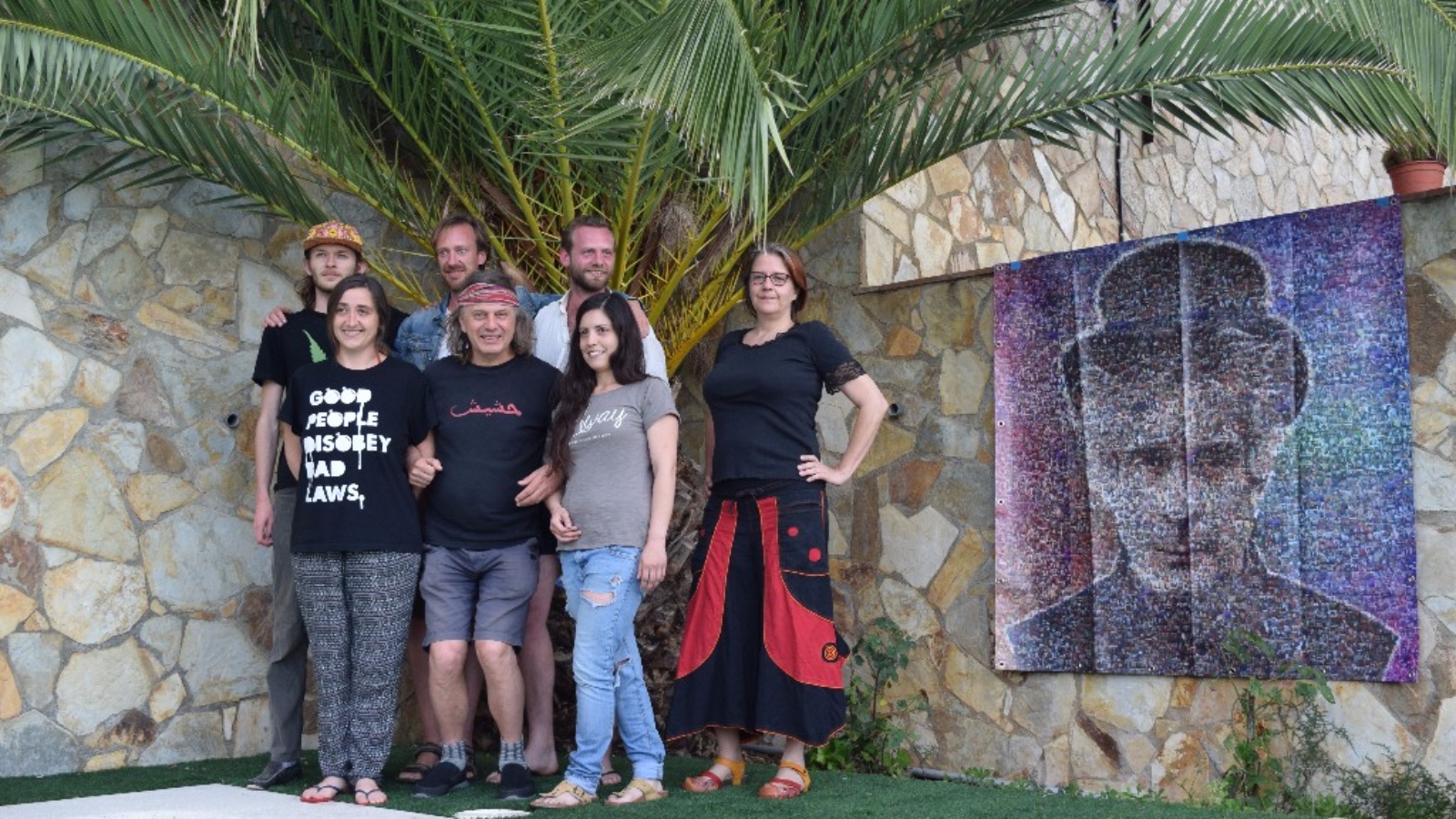
Just a short walk from the imposing Karl Marx monument in Chemnitz —a 7-meter-high bronze head—sits a smaller sign of social change: Founded in 2022, Klub Karl is one of Germany’s first Cannabis Social Clubs (CSCs), but it can not grow a single plant yet, due to administration process. What the club does grow is trust, infrastructure, and preparation. And that’s not to underrate.

Roots That Go Back Decades

Despite its recent founding, Klub Karl didn’t appear out of nowhere. The core members are not newcomers to cannabis. Many have been involved in cultivation, advocacy, and harm reduction work since the 1990s, often at the edges of legality, sometimes in open defiance of it.

Gerfried Düregger is the president and co-founder of Klub Karl, a Cannabis Social Club in Chemnitz. A former wholesale merchant, he turned to medical cannabis in 2011 as part of his treatment for a chronic illness—a therapy that, in his words, gave him his life back. This experience led him to co-found the Austrian patient advocacy group ARGE CANNA in 2014 and to become a committed educator and advisor on medical cannabis. Since 2022, he and Jacqueline Meurer have worked to establish Klub Karl as a model of responsible, community-based cultivation under Germany’s new cannabis legislation. Düregger also represented the club at the founding of the German Cannabis Social Club Association (CSCD) and continues to advocate for patient rights and evidence-based drug policy at the European level.

After decades of prohibition it is the first time that the state of Germany says yes, you can. But only if you do it right. Doing it right, in this context, means navigating a complex new legal framework introduced by Germany’s cannabis law in 2024, following the rules of the KCanG. The law allows for cannabis to be grown and shared through nonprofit clubs—up to 500 adult members each—starting from July 2025. In practice, that means a lot of paperwork, planning, money, and patience.

Not Just Waiting—Preparing

Currently, Klub Karl is awaiting its official cultivation license from the Saxony state authorities—a process that, in their case, has moved relatively quickly thanks to a good working relationship with local regulators. As a final step once the license is granted, the club will have three months to appoint an official prevention officer, as required by law. 

Everything else is ready. The cultivation facility is located in an industrial area well-suited for such operations, and is fully prepared for indoor cannabis production. The site features secure infrastructure, including a fenced perimeter, motion sensors, and 24/7 video surveillance. Klub Karl plans to operate under the license framework for at least seven years, with a long-term commitment for quality and compliance. It places heavy emphasis on education and internal standards.

Bureaucracy as a Test of Patience

Since the law passed, clubs across Germany have been waiting for clear application procedures. Some waited a long time. In Chemnitz, the official window to apply opens July 1, 2025. Klub Karl already has their paperwork drafted—dozens of pages outlining how they’ll secure their grow site, track every gram of product, and educate their members.

The bureaucratic process—and the financial burden of maintaining a fully equipped facility while waiting for the cultivation license—pose significant challenges. Keeping a secured, operational site ready for cannabis production without generating any revenue requires not only careful planning but also substantial financial backing. Without solid capital behind them, many associations may struggle to reach the final stage. The law may be in effect, but the high entry costs and lengthy waiting periods mean that not everyone will have the capabilities to grow legally.


A Different Vision of Cannabis

Unlike the commercial cannabis models emerging in other countries, Klub Karl has no interest in branding or marketing. It is structured as a nonprofit association, with a strong emphasis on collective responsibility and democratic participation. Every member has a voice in how the club operates, and every euro collected is reinvested directly into cultivation, education, and compliance. The focus here is not on lifestyle or trend, but on access, quality, harm reduction, and accountability. This approach reflects a deeper philosophy: that cannabis, when removed from the profit motive, can be integrated into society in a safer and more constructive way.

As of mid-2025, Klub Karl remains in a waiting phase. The official license application approval could be received in July, but there is no guarantee how quickly it will be. It could take weeks or even months. For the people behind the club, this waiting period is not unfamiliar. Many of them have spent decades—some since the 1990s—engaged in activism, informal cultivation, or advocacy under the shadow of prohibition. Compared to that long history, a few more months is tolerable. In the meantime, they continue refining internal processes, supporting the formation of new clubs across Germany, and building a foundation for long-term sustainability.

There is no rush, no marketing campaign, no grand announcement. Under the silent gaze of Karl Marx’s monumental bronze head, the people of Klub Karl are not promising a cannabis revolution. What they are building is slower but potentially more enduring: a legal, local, and community-driven model for cannabis distribution in Germany. It is cautious by design, rooted in decades of lived experience, and motivated by something rarer than hype—responsibility.

 

Register in encod.org (3)

Be Part of the Green Shift: Professional Training for Germany’s Cannabis Clubs

Germany’s cannabis sector is entering a new era. With the regulation of Cannabis Clubs underway, the time has come to educate and professionalize those who will lead this transformation.

Join us on Wednesday, June 18, 2025, in Berlin for
“Be Part of the Green Shift: Professional Training for Germany’s Cannabis Clubs”—a unique event that brings together international experts, regulators, and key stakeholders to provide the tools, knowledge, and strategies needed to build a safe and sustainable cannabis community.

Who Should Attend?

  • Cannabis clubs (existing or forming)
  • Cultivators and distributors
  • Legal and healthcare professionals
  • Researchers and academics
  • Regulators and policy makers

What Will You Learn?

Over three intensive hours, three internationally renowned experts—each with over 20 years of experience in Spain’s cannabis club model—will lead a practical and high-impact training focused on club management, legal compliance, quality control, harm reduction and prevention strategies.


Why You Shouldn’t Miss This

✔️ Exclusive, experience-based training from European leaders
✔️ Tailored content for the German regulatory context
✔️ Direct networking with key industry players
✔️ Completely free access thanks to European funds and event sponsors (estimated value: €320)

Event Details

    Date: Wednesday, June 18, 2025
Time: 6:00 PM – 9:00 PM
Location: Bergmannkiez, Kreuzberg, Berlin, Germany (exact venue TBA via email)
  Cost: FREE with registration (limited spots available)

Presented by: ConFAC (Spanish Confederation for Cannabis Social Clubs), ENCOD (European Coalition for Just and Effective Drug Policies) and RdR LAB

Duration: 3 hours

Time Session

18:00 – Welcome & Introduction

18:10 – Lessons for Club Management in a changing landscape – Ana Afuera

18:50 – Harm Reduction Strategies – Mireia Ambròs

19:30 – Coffee Break

20:00 – Cannabis Clubs: From Stigma to Social Value – Patricia Amiguet

20:40 – Kykeon Analytics Presentation – Stanislav Visochin

20:50 – Close and Networking Session

✅ Register Now!

Click here to register via Google Forms

Don’t miss this unique opportunity to prepare for the future of cannabis in Germany.
Be part of the shift. Be part of the change.


German Cannabis Clubs Workshop

German Cannabis Clubs workshop

German Cannabis Clubs workshop
ENCOD and ConFAC are pleased to present a workshop tailored for German cannabis associations. This workshop aims to address specific aspects of cannabis regulation, harm reduction, and best practices within the framework of cannabis clubs. The workshop will provide valuable insights into the controlled substance system and harm reduction strategies. It offers a platform for exchanging best practices and experiences among participants.

Target audience:
Leaders, staff, and stakeholders of cannabis clubs in Germany.

Workshop goal:
To provide practical tools and knowledge about risk reduction strategies, legal frameworks, and best practices to enhance the functioning of cannabis clubs and promote safe and sustainable cannabis consumption practices.

Date: Wednesday, 5th March 2025 from 18:00h to 20:00h

More information: ana@encod.org

Registration here

Erec Hand & Topbud 2018-111

Germany plans to legalise cannabis: The beginning of the end of cannabis prohibition in Europe?

Cannabis will soon be legally available for consumption in Germany. Last week, the newly elected coalition of SPD, Greens, and FDP agreed on this in their coalition agreement. The distribution will be controlled in licensed shops and only to adults. Although in Austria the legalisation of cannabis seems to be a long way off, many assume that the German way will have an impact on the domestic drug policy in the long run.

Internationally, there are different models of legalisation or decriminalisation of cannabis for consumption purposes. For example in Canada, in parts of the USA, in Uruguay, Portugal, or the Czech Republic. While in Canada cannabis can be bought legally in shops or over the internet, in Portugal possession of cannabis is illegal but not prosecuted.

Natasa Konopitzky talks to toxicologist Fabian Steinmetz and lawyer Martin Feigl about the effects of cannabis prohibition, the consequences of legalisation, and the future of drug policy in Europe.

Listen to the interview (in German) here.


IMG_4433-1

Translating cannabis legalization into numbers

The economists Justus Haucap and Leon Knoke published an updated report on the economic consequences of cannabis legalization in Germany.

A summary of their findings: the country could profit almost 5 billion € by collecting taxes (sales, trade, income, social security) and from savings of the police/court/prison system.

Download the full 2021 report here (in German).
Access the report from 2018 here (in German).

2019-Banner-150x300-04-1080px-web-614x346

A seed for a better future: A proposal for a European regulation of cannabis use

We are proud to present our proposal, addressed to the European Commission, the European Parliament and the governments of the Members States represented in the European Council, related to cannabis use for recreational purposes and the decriminalization of minor offences related to illicit drugs.

The proposal defines the opportunities the European Union has to regulate the personal use of illicit drugs, as well as the cultivation or possession for such purposes in order to respect basic rights of the users. It presents the trends and legal possibilities to regulate cannabis supply systems, as well as provides arguments for the decriminalization of illicit drug use in the European Union.

It is necessary to give a voice to the civil society through the participatory tools in the Member States and to explore new models of regulation that are based on human rights and harm reduction.

For more information see: SUMMARY PROPOSALS FOR THE REGULATION OF CANNABIS FOR RECREATIONAL PURPOSES IN THE EUROPEAN UNION

11156236_10204049384467030_3903130270563314857_n.jpg

Freispruch für den Cannabis Social Club Maribor wegen Drogenhandels in Slowenien

Anfang 2015 überfiel die Polizei den CSC Maribor auf der Grundlage einiger Berichte eines oder mehrerer Bürger, die besagten, dass Sanjin Jašar Cannabis verkaufe und kranke Menschen glauben mache, dass Cannabis eine Heilung für ihre Krankheit sei. Die Polizei fand etwa 7 Kilo Cannabis, 200 ml THC und CBD-Extrakt, 44 Pflanzen und Geräte für 6 Growboxen, welche auf Abholung durch Patienten warteten.

Continue Reading

pflanzen-entdeckt-cannabis-club-gruender-in-haft.jpg

CSC-Gründer in Haft in Österreich

Kurz nach einer nicht rechtskräftigen Verurteilung fand die Polizei bei dem 58-Jährigen erneut Cannabispflanzen.

Knapp vier Wochen nach einer Verurteilung am Salzburger Landesgericht befindet sich der Obmann des Cannabis Social Club in Haft. Die Polizei fand in der Wohnung des 58-Jährigen 37 Cannabispflanzen, zudem Cannabiskraut und Öl. Der Mann war am 2. Februar 2017 wegen des Anbaus von 109 Cannabispflanzen nicht rechtskräftig zu zwei Monaten bedingter Haft verurteilt worden. Bereits vor Gericht kündigte er an, mit dem Anbau von Cannabis weitermachen zu wollen.

Continue Reading