In the past two months, our team was busy organizing a conference on the recreational use of cannabis in collaboration with the Maltese MEP Cyrus Engerer and his team.
Check out the teaser for the conference below, and we hope you tune in on the 19th of April at 10.30 (CET) to watch the conference online.
SKY, The Finnish Cannabis Association, has been founded in 1991 in order to influence drug policy in a way that cannabis cultivation and possession are permitted for adults and production and distribution become regulated.
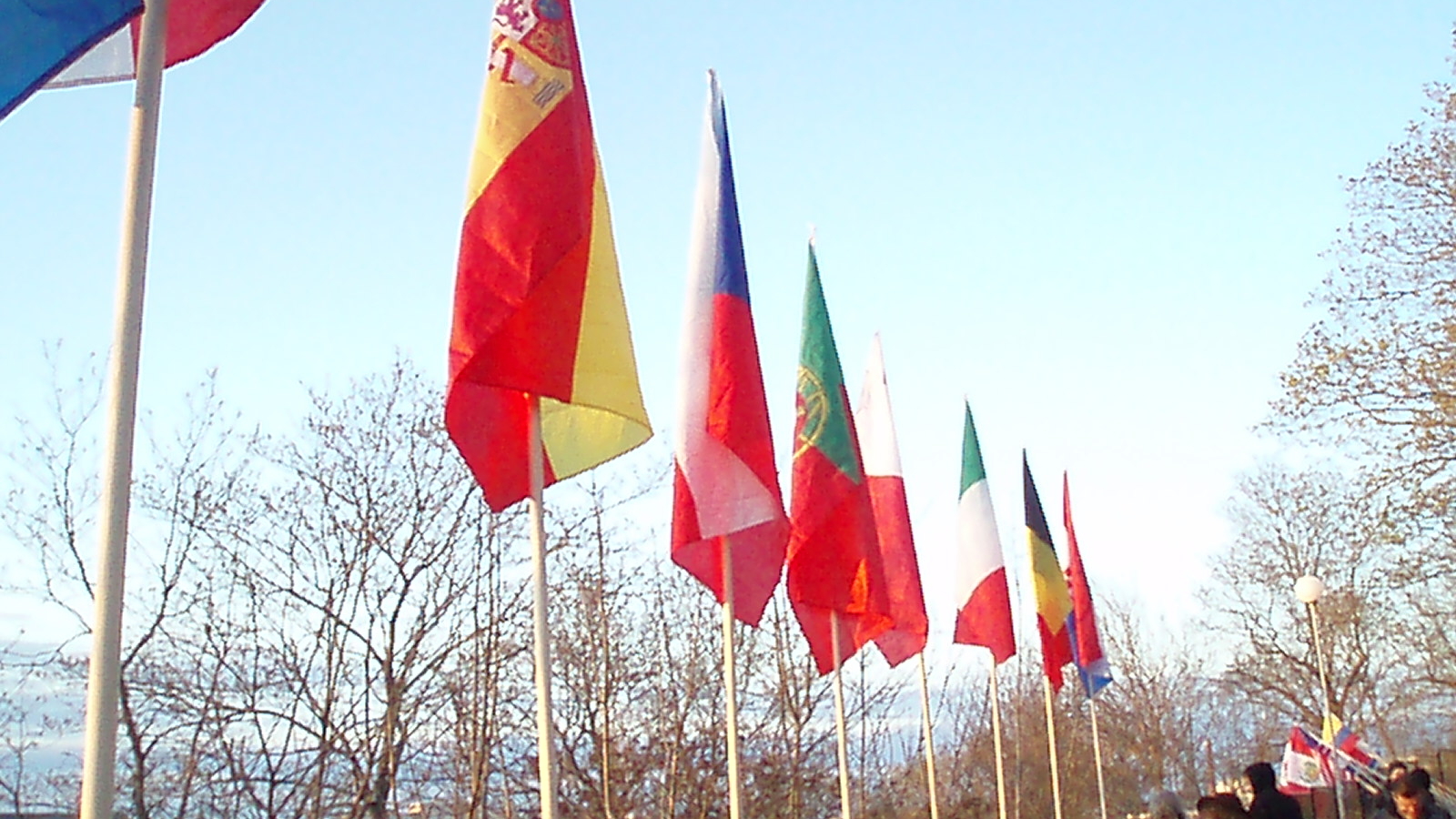
As a veteran organization, it has a long experience with public appearances like the Wind Direction Action in 2020, an installation that showcased flags of countries that have already taken at least the first steps to a more reasonable drug policy.
Like many groups of civil society SKY suffered from a serious lack of funding, people stopped being interested when legalization did not happen instantly. But with a recent action SKY managed to regain attention, bringing an increase in membership, especially young people who have joined to strengthen their ranks.
SKY has initiated a successful citizens initiative to decriminalize cannabis use, for which they gathered 60.000 signatures. The initiative would stop punishing for using cannabis, allow a person to possess 25 grams, and grow 3 plants. It was presented to Finland’s parliament on November 5th 2020, it is receiving a lot of media coverage and has reinvigorated the discussion within society. There will be a law committee hearing about the initiative on February 17th 2021. For updates and developments on the citizen’s initiative click here.
SKY is a long-standing member of ENCOD.
ENCOD defends the freedom of persons to take an informed decision concerning the use of psychoactive substances and also supports ibogaine treatments but we emphasize that they have to be done in a secure context. We support the self-determination and empowerment of the people using all substances.
Therefore, we condemn the prosecution of Sara Glatt, who since many years practices ibogaine treatment to help the persons who want to stop using substances like heroin, methadone, cocaine, alcohol and amphetamines.
In the scientific literature, the withdrawal symptoms appear to be almost not existent after an ibogaine flood-dose although a complete medical check-up is needed since the treatment can be potentially fatal for persons with cardiovascular diseases or due to drug interactions during the session.
The treatment is not a magic silver bullet but allows the individuals to recover easier with proper after-care and sufficient personal motivation. The possible dangers are accounting for approximately 1 casualty every 300 patients. Being in the grey area does not mean to be responsible for the post-treatment patients or of treatments that were not activated.
500 years after the last witch trials in the Netherlands, the Dutch media call Sara the witch of Kockengen, the small village where she lived before she was arrested. We call out for a fairer trial under the motto “In dubio pro strigae” [In doubt for the witches].
According to the renown Dutch scientist Peter Cohen, the injustice of Sara Glatts’ conviction to 8 years in prison is based on the interpretation of the death of a person from Sweden, inside Sara’s house. This person came voluntarily but was refused both Iboga and an Iboga treatment by Sara because of her bad physical condition and because she came all alone (against Sara’s rules). The death of this person was nevertheless attributed to Iboga that the person somehow acquired inside the house where besides Sara also other people lived. In short, attributing this death to Sara’s responsibility is based on 2 weak interpretations:
1) it is scientifically impossible to make Iboga the CERTAIN cause of this death against the background of the person’s weak physical condition
2) it remained unknownwho supplied the Iboga that entered the system of the Swedish person.
The attribution of this death to Sara Glatt’s responsibility is a consequence of the dominant (negative) perspective and narratives around drugs in general and Iboga specifically. I see this as resulting in a witch hunt, of which Sara is now a victim. Her conviction is a sloppy result of this process and does not satisfy a test of objectivity or even fairness. Without the weak interpretations, and with a bit more respect for all the unknowns and uncertainties around this death, Sara would have been free now. ENCOD requests that the doubts and uncertainties in this case will not be massively interpreted in Sara Glatt’s disadvantage. Where such serious doubts and uncertainties exist, objectivity and fairness should prevail.
The genesis of the decision of today’s 63rd Reconvened Conference on Narcotic Drugs of the UN is certainly due to the perseverance of the international activists of ENCOD, FAAAT and the US Veterans for Safe Access and many other friends who from Mexico to Barcelona raised the cannabis issue and the legitimacy of the past control system which has been highly exaggerated as to cannabis issues.
For the first time, some poor and underprivileged activists of the civil society forced the WHO in Geneva after 5 years of intense work to make up their minds on the therapeutical potentials of the plant. It has been a long trip to stimulate and finally, the experts sent their recommendations to the drug authorities of the UN in Vienna. This long trip is not over yet. But considering it by some aspect quite unrealistic in some corridor discussions at the ENCOD GA in Slovenia, the actual result of 2nd of December 2020 is a real breaking point and a light in the darkness of the past century of cannabis prohibition.
As a matter of fact, the cannabis issue has been buried by a century of ignorance and bigotry starting with the fascist-racist imprinting of the Italian medical delegation at the 1925 meeting of the League of Nations that started to pose the cannabis issue as a threat to the white race throughout all the years where the science achieved seminal results in the cannabis research which were never taken to knowledge hitherto by the state community.
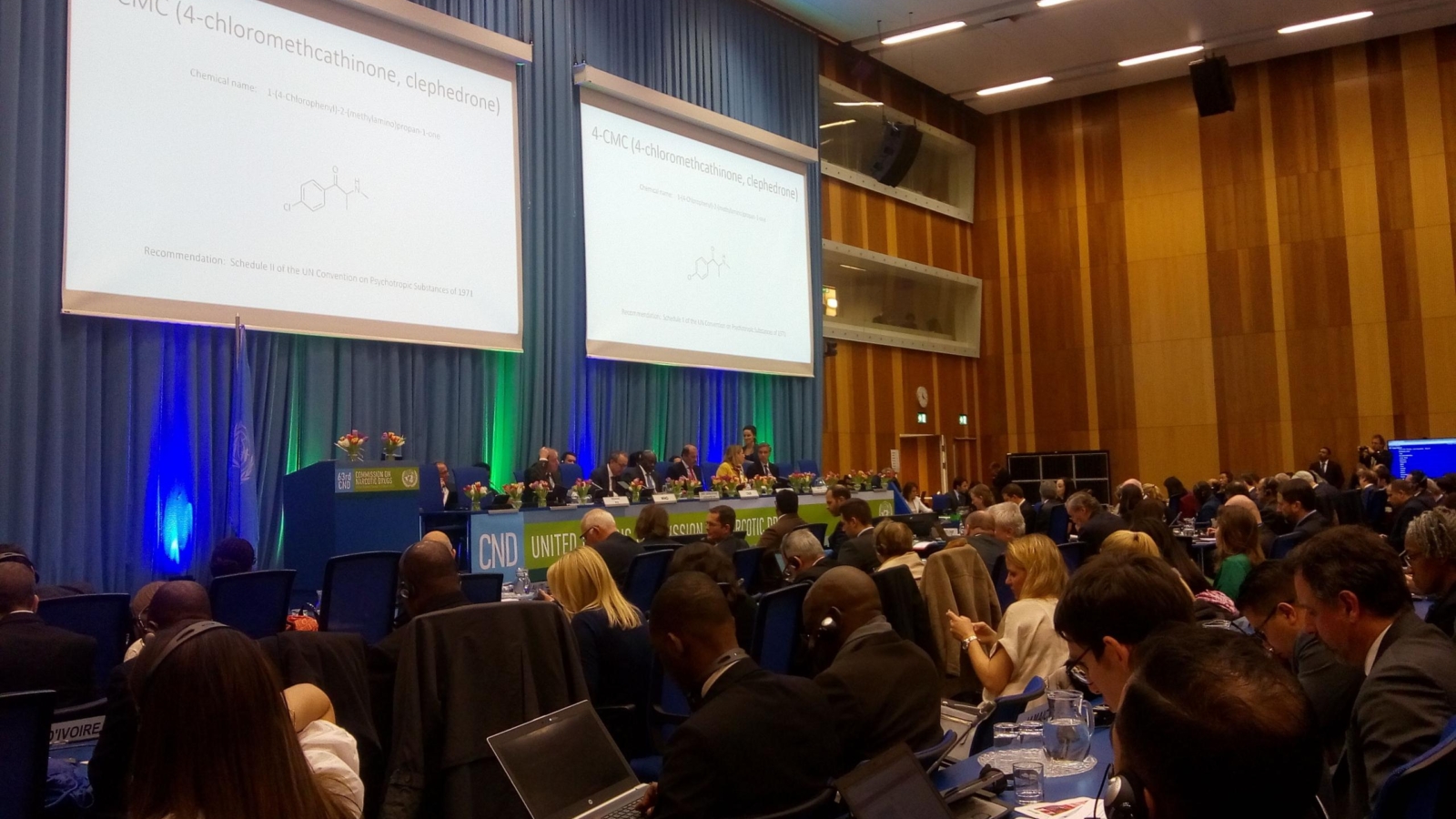
All efforts to reconsider cannabis as to the outdated 1961-1971 Single Convention on narcotic and psychotropic substances were postponed several times and discussed finally today at the 63rd Conference on Narcotic Drugs of the United Nations closing on the 6th of March 2020 and reconvened on 2-4th of December to establish the viability of cannabis in the global pharmacopoeia after the UN treaties in 1961 assessed its forfeiture in the medical applications despite the fact that most cannabis-related scientific the research was still to be done.
Two statements of civil society were sent to the CND, one lead by Encod (Vote Yes) with 195 signatures representing 53 nations stressing the need of the full recognition of the therapeutical potential of the cannabis plant and last but not least, the appeal, subscribed by Forum Droghe of Italy and others like Science for Democracy, that highlighted the importance of science-driven policies on this respect.
As a result, cannabis was taken out of schedule IV with the consent of 27 nations voting yes and 24 against. It is a historical change in the rather elephantine structure of the global drug control mechanism. Cannabis is still considered (mainly for political reasons, as admitted the WHO experts) as dangerous as heroin and fentanyl being left in schedule I. But the result will accelerate society to evaluate the empowerment of just and effective drug policies. The other proposals were rejected like the insert Dronabinol, the non-proprietary name of THC, from schedule II to schedule I. Also, the question of CBD was rejected and similar dispositions on extracts based on THC. There have been countries that rejected those recommendations being rather liberal on cannabis like Canada. Hungary seems out of control and meanwhile so obsessed that they opted against a major restriction of cannabis in schedule I as to pure THC remaining in Schedule II whereas the flowering tops remain notably in Schedule I.
Most probably the latitude of the single nations will grow and accomplishing the declarations of the former Bush and Obama drug czar John Brownfield whose doctrine allows the US to do whatever they might dispose of as to cannabis but tend to oblige the other nations to follow the flawed daily grind of the UN we have just attended today.
In the meanwhile and at the centre of our political agenda a simple and basic slogan:
we are glad to publish the report Civil Society and Drug Policy 2020: An overview of European Drug Policy Reform and the Role of Civil Society. The report points out the need to overcome drug use criminalization in those European countries where actions related to personal use continue being criminal offences. It emphasises the urgency of cannabis regulation in some countries. Additionally, it describes the European PWUD movement, its claims and protest tools.
Starting today, the Commission on Narcotic Drugs (CND) is having the Reconvened 63rd session where countries are expected to vote on cannabis rescheduling, besides that the European Union is carrying out the definition of the new Drug Agenda 2021 – 2025, which the European Council and Parliament will debate in the coming weeks. This report tries to convey the vision of Civil Society to public decision-makers to generate a drug policy that protects the rights of individuals and Public Health.
We want to thank all the contributions and support from Civil Society stakeholders to make it possible.
End of July EIHA shocked us all with a press article about some upcoming decisions of European Commission regarding CBD.
Gossips and rumours started, nobody really knew what it was about.
ENCOD members are private persons, PWUDs, shops, NGOS, etc., they all have common but also different interests. Together with our members and co-activists we came up with this letter to state our opinion.
We hope we expressed what is really important and hope that the European Commission will understand the needs of people concerned and decide accordingly.
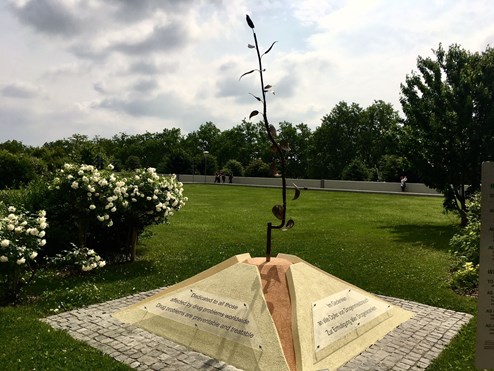
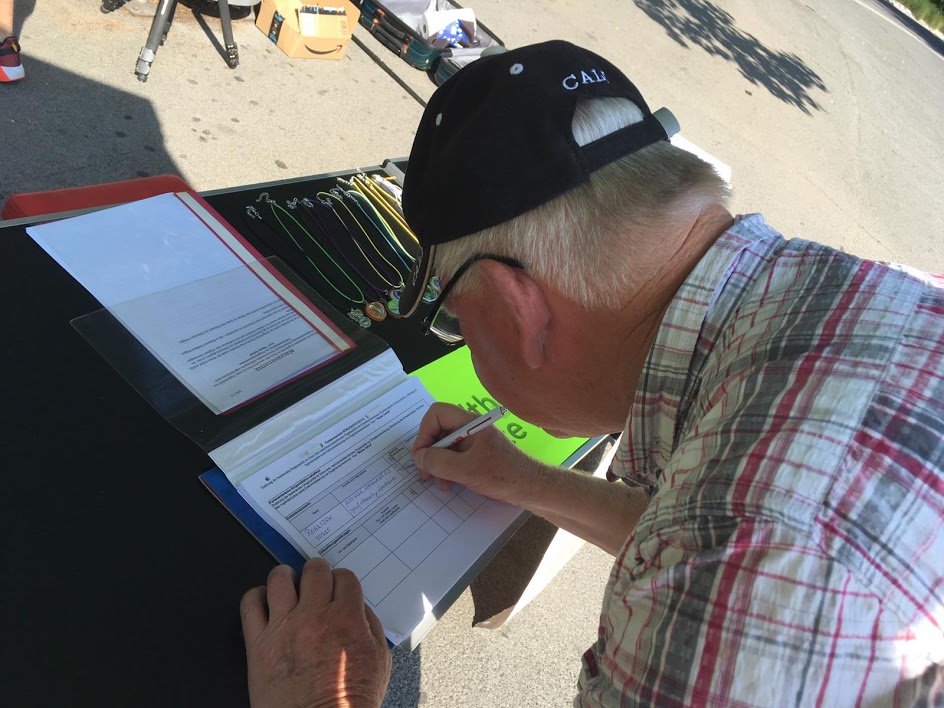
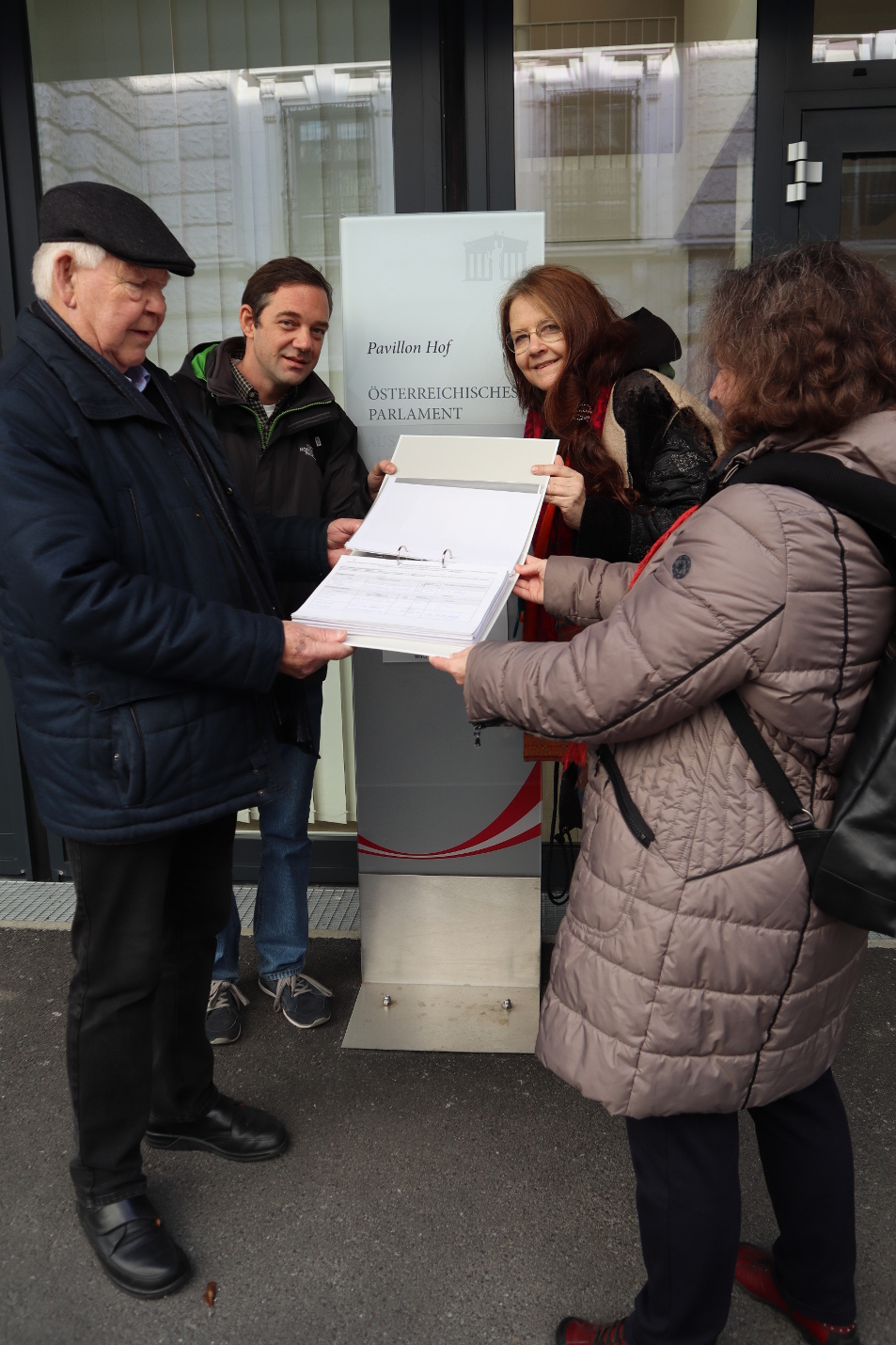
On the world-drug day, June 26th, we started a citizens’ initiative in Austria. We decided that first signatory should be Mr. Josef Rohaczek, a retired criminal police officer who has been fighting for fair drug laws for a long time and is also running the Elternkreis (elternkreis.at) who put the “tree of hope” in front of UN building.
Together with Mr. Rohaczek and Mr. Christoph Fasching and with the help of other ENCOD activists we collected the necessary signatures in order to present the CI to the Parliament.
We received a first statement form the Ministry of Social Affairs, Health, Care and Consumer Protection, which we also commented insisting on a compromise between abstinence and treatment. The next meeting of the committee will be on July 1st (see the updates below).
Please find here some excerpts we translated as well as the link to the original. Only Austrian citizens can sign!
Summary / excerpt of the Citizens‘ initiative „Wiener Aufruf“
Changes to the existing drug policy in the sense of a drug policy that complies with human rights by minimizing harm, eliminating the black market, increasing the protection of minors and decriminalizing people who use drugs.
This issue was supported by 781 citizens with their signature until it was brought into the National Council. (Note: at least 500 legally valid signatures must be available for submission to the National Council.)
The National Council is requested to implement a drug policy that complies with human rights in accordance with the attached “Wiener Aufruf”. This refers to the “Berliner Aufr” in a meaningful way, but is formulated in secular terms. (The “Berlin Call” is available online at https://berlindokument.org in various languages).
The global drug war has failed. The number of drug users has not decreased, neither the space used to cultivate plants for drug production. Without effective drug control strategies, marginalization, poverty and inequality in society will continue. Attempting to make the world drug-free has caused harm to already marginalized social classes and has not led to a reduction in drug use. The achievement of the Sustainable Development Goals (SDGs) is also endangered by environmental pollution due to the illegal and non-environmentally friendly cultivation of plants for drug production and their further processing. It must be guaranteed by law that research with currently still illegalized substances in the sense of health promotion and maintenance is permitted. Many of the illegalized substances, such as various psychedelics, are already used successfully in other countries to treat mental and neurological diseases.
Prohibition is a political mistake and leads to a deadly ideology.
Our citizens’ initiative is targeting the global drug war, which the former UN secretaries-general Ban Ki-Moon and Kofi Annan have already declared failed. Social damage is predictable and unnecessary. There is clear evidence of the link between illicit drug trafficking and an increase in violence, conflict, crime and corruption, and reduced security for citizens. The fight against drug-related crime and corruption is essential for the promotion of human development, and consequent further development (of this idea / conviction) leads to the demand for the decriminalization of all people who use drugs.
The United Nations’ guidelines give member states the freedom to decide how they deal with drug-related offences. The EU limits itself to making recommendations within the framework of the subsidiarity principle. Different drug concepts are used in the 28 EU Member States, each of which has particular characteristics due to its geographical location, the internal dynamics of illegal markets and the capacity of companies to mitigate damage. We need new standards based on existing global leases on human rights, public health and development.
With regard to drugs, prohibition has exhausted all possibilities and must commit to an obvious failure of the prevailing paradigm in the drug control system. This is forcing nations to rethink the wording of some outdated concepts and control mechanisms.
The social approach is a prerequisite for the implementation of a model for drug regulation. To do this, a network of harm reduction organizations must be set up to address certain aspects such as ensure information about drug use, prevention, understanding of drug risks and safe use of the drug. During this process, a balance must be struck between the non-stigmatization of consumers and the non-banalization of substances.
Examples such as:
• Clean or safe drug consumption rooms where people are left with their dignity and consumers can thus take better care of themselves and lead a normal, healthy life
• Cannabis social clubs, non-profit associations which provide their members and patients with clean and affordable cannabis (in compliance with strict rules of conduct)
• Guided ceremonies where psychedelic plants can be safely consumed
The aim is to find a new compromise between medical benefit and problematic consumption, namely the conscious use of drugs. This requires respectful treatment of people who use drugs and, of course, great care should be taken when regulating drugs and changing the law. So it is certainly advisable to start pilot projects that allow first insights into the changed situation. You can then adjust step by step and move forward. Of course, not all types of illegalized substances can be equated. Here is our trust in the experts who develop and carry out these projects. The activists in Austria are of course happy to offer their wide-ranging knowledge here. Harm reduction can only be achieved through education and an expansion of addiction prevention. The threat of the harshness of the criminal code and the associated creation of further criminal structures is therefore missing.
In order to keep the numerous CBD shops from closing, training measures for the staff would be appropriate to ensure optimal advice. Cannabinoids should not only be available in pharmacies; this would put too much strain on the economy due to the high prices. A certified job description “cannabinoid consultant” would be an enrichment of the labour market. State control also has a significant impact on ensuring the purity of the substances (ad. Harm reduction) and thus protecting consumers. Furthermore, it makes sense in terms of transparency and security binding to create rules for the declaration of the ingredients, as well as to print warning notices on the substances.
The norms of human rights must be the basis of a human drug policy. The upcoming reform must focus on reducing the negative consequences of current drug policy. The focus must be to ensure the protection of minors and at the same time to reduce the criminal, global drug wholesale trade and thus also the black market. Austria has always been a pioneer, the principle “therapy instead of punishment”. However, this is limited to “lawbreakers”, where, according to our approach, nobody is breaking the law. Establishing a business line is to be advocated, since this approach would generate tax revenue and jobs instead of threatening punishments. If all these arguments are taken into account, decriminalization of Drug users can be tackled as Austria’s contribution to ending the global drug war.
At the July 1st meeting of the Committee on Petitions and Citizens’ Initiatives, our suggestion was taken and the following was decided: Citizens’ Initiative No. 19 regarding “Change of the existing drug policy in the sense of a drug policy that complies with human rights by minimizing harm, eliminating the black market, increasing protection of minors and decriminalizing drug users “Vienna Call” – Obtaining opinions from the home and judicial departments. Electronic approval is still possible! For Austrian citizens only! https://www.parlament.gv.at/PAKT/PR/JAHR_2020/PK0724/#XXVII_BI_00019
Press Release: The Legalization of Cannabis on the Chamber of Deputies’ Agenda: Reach out to Your Representative!
Prague – May 29, 2020
The Chamber of Deputies of the Parliament of the Czech Republic has supported and will debate a bill put forward by Pirate Party Deputy, Tomáš Vymazal, regarding regulation measures for the cultivation and possession of cannabis for personal use.
In the arena of cannabis legalization, we reached a historical turning point when 141 Deputies out of the 194 present voted to merge a first reading debate on two narcotic substance policy bills. The first bill, set forth by the government, addresses the export of medical cannabis, while the second bill, proposed by the Pirate Party, modifies the possession and self-cultivation of cannabis for personal use. Both proposals are to be debated as part of the ongoing 49th session during the first week of June.
The Pirate Party amendment, which was first introduced in the lower house in November 2018, remained listed under document no. 331 in the register of the Chamber of Deputies and largely ignored until this May, when the initiative of Deputies Tomáš Vymazal (Pirate Party) and Patrik Nacher (ANO)helped secure the discussion of the bill in the first reading. The Legalizace.cz association, which has contributed to the creation of the amendment bill allowing adults to cultivate, process, and possess small amounts of cannabis for personal use without facing criminal sanctions, welcomes and supports the interest of the Chamber of Deputies in this area.
A long-term goal of Legalizace.cz is advocating for legal self-cultivation of cannabis for personal use, and the association is using all available means in an effort to end the absurd war against cannabis and its users. “The prohibition of cannabis constitutes a significant violation of basic human rights and is not achieving its declared goals. The repressive policies comprise a burden to the state budget, they waste the time of prosecutors in criminal proceedings, and make it unbelievably complicated for ill people to access a medicinal herb,” says Robert Veverka, the chair of the Legalizace.cz association, listing arguments in favor of the regulation of cannabis. “The real danger concerning cannabis is its illegality, which leads to the prosecution and penalization of people whose possession or cultivation of cannabis has harmed no one nor caused any damage,” Veverka adds.
The coming days thus offer a unique opportunity to make progress in the legislative regulation of cannabis in support of adults who have the right to grow any plant in their own garden for personal use. Legalizace.cz is urges those who care about the fate of cannabis to reach out to their parliamentary representatives and ask them to support the amendment bill on narcotic substances during the upcoming first reading.
This years CND took place in the shadow of the Corona virus. Many delegates did not attend the meeting and certain decision making was postponed. Nonetheless, the whole Encod Executive Committee attended the event. Hereby, we want to give you a short overview of some of the discussions that took place throughout the week.
On the 3rd of March WHO organized an informal dialogue that was well attended by many of our colleagues. Kenzi Riboulet-Zemouli opened the session with a proposal to the WHO to consider and give more weight to the traditional use of psychoactive substances in its guidelines and recommendations.
Concerning addiction the WHO pointed out the importance to consider a broader, bio-psycho-social model of addiction. However, it was indicated that there is currently no system in place that would monitor it in individual countries. A call was made to report any violations of human rights or misinterpretations of the standards directly to WHO program in Geneva for evaluation. The WHO is also eager to work together with the civil society in programs of prevention of substance use, irrelevant to the substance’s legal status. In general, the tendency of drug policy should be, according to the WHO, to prevent imprisonments, especially of people with mental health problems.
With regard to cannabis, the expert committee reviewed CBD and other cannabis substances and recommended that CBD products with less than 0,2 % of THC should not be controlled. The voting was scheduled to happen in the following days, however, it got postponed to December 2020. There have been 300+ questions about this issue and a lot of exchange between the different stakeholders. WHO stated that they are available for further dialogue, but many questions have already been answered. Their position is that CBD doesn’t cause dependence per se and it is not a psychoactive substance. There are medicines produced with only traces of THC in 40 countries, which are marketed in the US and EU for treatment of resistant epilepsy and there is enough scientific data supporting that. The WHO committee pointed out that it is not in their domain to consider industrial or food use, they are looking specifically into medical use only.
On the question, if it is necessary to launch global campaign on opioid overdose deaths, the response of WHO was that even though it is not an issue in each country in the world, it still is a significant threat and deserves a global response. Availability of Naloxone was pointed out as an important and necessary intervention. Opioids remain one of the main killers when it comes to drug use and there are insufficient programs to deal with this crisis. Substitution therapy was identified as the first treatment modality.
On the question, if WHO believes that cannabis causes greater harm than legal drugs such as tobacco and alcohol, the reply was somehow vague. The 41st expert committee said that cannabis can have harms and it, therefore, recommends that cannabis is scheduled. According to the WHO cannabis caused thousands of traffic accident related deaths, it is definitely addicting and some illnesses have been identified as being caused by cannabis such as certain types of prostate cancer.
Particularly, the last statement on cannabis causing thousands of deaths was taken with reservation (at least by a part) of the audience. We still have a long way to go in the fight for just and effective drug policy. It is time that the civil society, including the harm reduction community, have a say about the upcoming regulation of the European cannabis market. If not, we miss an important historical opportunity to shape our future. A good example of collaboration between decision makers and the civil society was caught on tape by Drug reporter. For more information check out the video below.
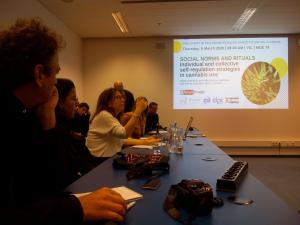
Cannabis was a reoccurring topic and well attended at the side-events of the CND. We had the opportunity to listen to presentations discussing the value of cannabis in medicine as well as Cannabis social clubs, as an efficient and viable self-regulation practice, were presented.
Encod and the Nonviolent Radical Party co-organized a side-event on Friday morning on heroin and ibogaine-assisted treatments in the era of the opiods crisis. Professor Carla Rossi and Christopher Hallam were talking about heroin-assisted therapy as an effective harm reduction treatment. Maja Kohek was presenting the work and studies done in ICEERS on iboga(ine) as a treatment for substance dependence.
The “Empowering women” side-event was canceled. However, a spontaneous meeting took place after all attended by representatives of SSDP and Encod as well as other participants from South Africa, Canada, Bolivia, Austria, Myanmar, the Netherlands and USA.
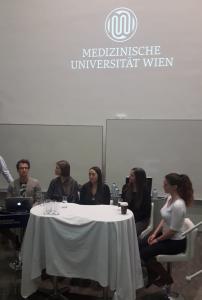
Thursday evening we attended a panel discussion on “Psychedelic Science – A Paradigm Shift?” at the Medical University of Vienna organized by the Center for Addiction Research & Science and SSDP Vienna where four women were talking about the opportunities and challenges that lie ahead in the field of psychedelic science, mental health and drug policy reform.
We invite our Spanish speaking members to check out the comment on the CND for the Marihuana Television made by Ana Afuera.

 On the 3rd of March WHO organized an informal dialogue that was well attended by many of our colleagues. Kenzi Riboulet-Zemouli opened the session with a proposal to the WHO to consider and give more weight to the traditional use of psychoactive substances in its guidelines and recommendations.
 With regard to cannabis, the expert committee reviewed CBD and other cannabis substances and recommended that CBD products with less than 0,2 % of THC should not be controlled. The voting was scheduled to happen in the following days, however, it got postponed to December 2020. There have been 300+ questions about this issue and a lot of exchange between the different stakeholders. WHO stated that they are available for further dialogue, but many questions have already been answered. Their position is that CBD doesn’t cause dependence per se and it is not a psychoactive substance. There are medicines produced with only traces of THC in 40 countries, which are marketed in the US and EU for treatment of resistant epilepsy and there is enough scientific data supporting that. The WHO committee pointed out that it is not in their domain to consider industrial or food use, they are looking specifically into medical use only.
 On the question, if it is necessary to launch global campaign on opioid overdose deaths, the response of WHO was that even though it is not an issue in each country in the world, it still is a significant threat and deserves a global response. Availability of Naloxone was pointed out as an important and necessary intervention. Opioids remain one of the main killers when it comes to drug use and there are insufficient programs to deal with this crisis. Substitution therapy was identified as the first treatment modality.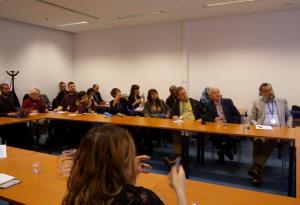
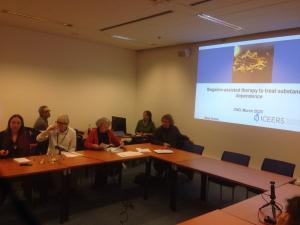 Encod and the Nonviolent Radical Party co-organized a side-event on Friday morning on heroin and ibogaine-assisted treatments in the era of the opiods crisis. Professor Carla Rossi and Christopher Hallam were talking about heroin-assisted therapy as an effective harm reduction treatment. Maja Kohek was presenting the work and studies done in ICEERS on iboga(ine) as a treatment for substance dependence.
 The “Empowering women” side-event was canceled. However, a spontaneous meeting took place after all attended by representatives of SSDP and Encod as well as other participants from South Africa, Canada, Bolivia, Austria, Myanmar, the Netherlands and USA.