Screenshot at 2020-01-23 17-48-54

Drug policy reform at the United Nations: A Youth Advocacy Handbook

Civil society engagement at the UN Commission on Narcotic Drugs (CND) and related meetings has improved dramatically over the past decade – in terms of the numbers attending, the opportunities to interact and participate, and the levels of experience and professionalism of non-governmental organizations (NGOs) themselves. These changes are very important given that  the contribution of NGOs and civil society organisations make policy making more responsive to the needs of society. Moreover, youth involvement specifically makes the voice of those who are normally excluded from policy making but are disproportionally affected by the results heard. In their efforts to promote an inclusive and evidence based debate, SSDPers have been organizing side events and have even been elected on the board of the Vienna NGO Committee on Drugs (VNGOC) which advocates for and oversees civil society involvement in CND proceedings. In order to encourage these dynamics, this Advocacy Handbook gives an overview of the main UN institutions involved with the making of global drug policy, as well as about the ins and outs of youth advocacy at the CND. We hope that such an overview will help you to make valuable contribution to the work of the CND and advocate for an evidence based drug policy embedded in the protection of human rights.

Please access the handbook here.

maltareleaf

ReLeaf Malta presented the proposal for legalised & regulated cannabis market

We are pleased to inform you that on 11 December ReLeaf Malta presented the proposal for legalised & regulated cannabis market to Hon. Julia Farrugia Portelli, Parliamentary Secretary responsible from the reform.
This proposal aims to provide local authorities with a brief over view of a regulated cannabis market for adult use and highlights the importance to enact legislative changes based on human rights and harm reduction principles.
ReLeaf underlines the importance of a multidisciplinary approach, therefore the need to include legal, social, economic, educational and health considerations when drafting a national framework regulating the cultivation, consumption and sale of the cannabis plants and its derivatives. As already proven by countries legislating and regulating cannabis for personal use, cannabis policy is best implemented through a balanced, evidence based and inclusive legislative framework.
Please find the Proposal here: ReLeaf-Presentation
and Video here: Releaf 2020 Proposal
2019-Banner-150x300-04-1080px-web-614x346

A seed for a better future: A proposal for a European regulation of cannabis use

We are proud to present our proposal, addressed to the European Commission, the European Parliament and the governments of the Members States represented in the European Council, related to cannabis use for recreational purposes and the decriminalization of minor offences related to illicit drugs.

The proposal defines the opportunities the European Union has to regulate the personal use of illicit drugs, as well as the cultivation or possession for such purposes in order to respect basic rights of the users. It presents the trends and legal possibilities to regulate cannabis supply systems, as well as provides arguments for the decriminalization of illicit drug use in the European Union.

It is necessary to give a voice to the civil society through the participatory tools in the Member States and to explore new models of regulation that are based on human rights and harm reduction.

For more information see: SUMMARY PROPOSALS FOR THE REGULATION OF CANNABIS FOR RECREATIONAL PURPOSES IN THE EUROPEAN UNION

releafmaltalogo

ReLeaf Malta proposes Freedom to Farm for the Maltese Constitutional reform

In the past years, Malta experienced drastic demographic, technological and infrastructural change. These changes are having a direct effect on the country and positioning Malta at a curious cross roads between a conservative and closed past towards a more open, diverse and inclusive future.

A country that slowly but surely emerges from a relatively economic and socially stagnant past, and moving towards an innovative and modern future requires a constitution which reflects novel aspirations of the people, whilst include safeguards for the promotion of a democratic and just nation state.

The country is implementing these changes with a strong capitalist mindset and with commercial interests sometimes taking over human, environmental and health considerations. We are seeing a corporate take over in various fields, with the role and rights of the individual diminished in the name of good business.

It is curious that when it comes to certain substances, such as cannabis, the Government together with businesses is centralising cultivation, manufacturing and distribution to the extent that Maltese citizens continue to face harsh criminal repercussions if caught cultivating cannabis for personal use.

ReLeaf is therefore highlighting the importance to safeguard the right to personal cultivation of plants, including psychoactive plants and ensure Maltese citizens continue to enjoy the right to personal cultivation and freedom to farm.

Read the ReLeaf proposal for the Reform of the Constitution of Malta here: https://riformakostituzzjonali.gov.mt/documents/andrew-bonello-releaf-malta/?lang=en

Source: ReLeaf Malta

00-20191013_header-1

Cultiva 2019 (AT) was a target of an intensive police action


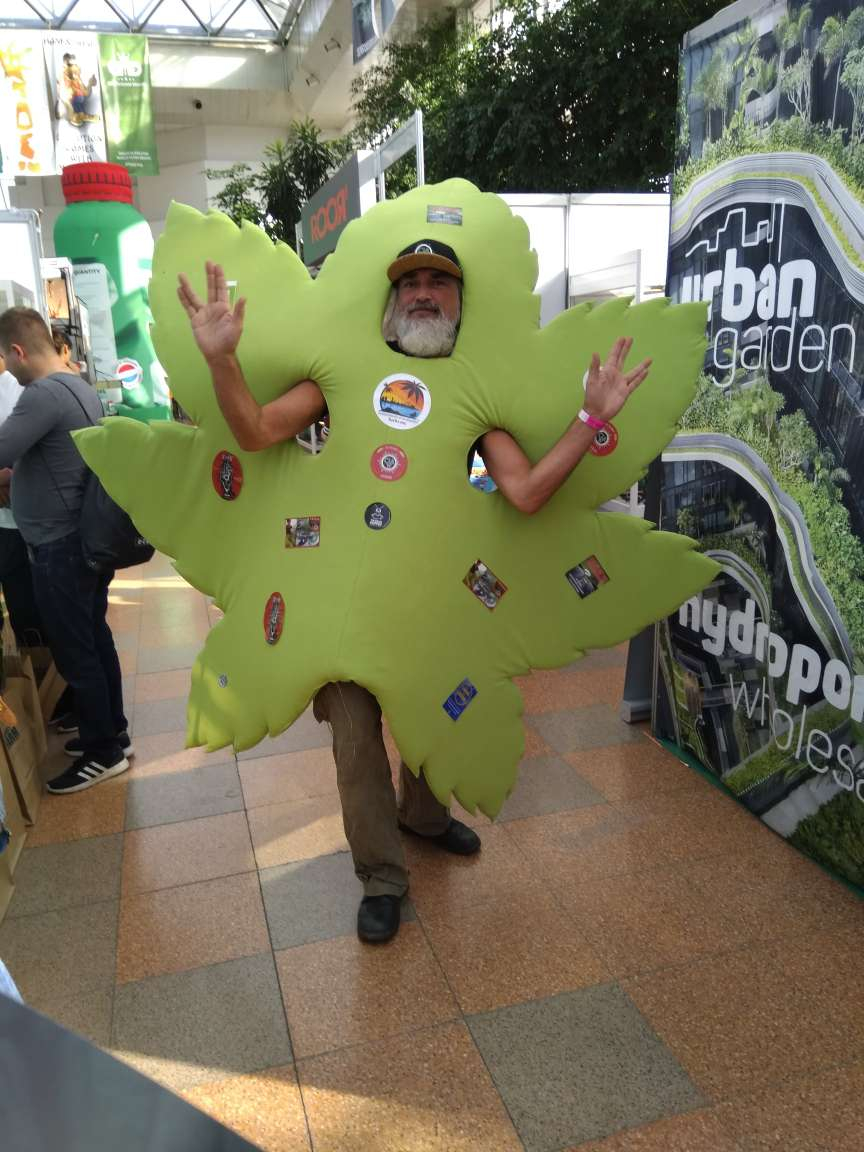
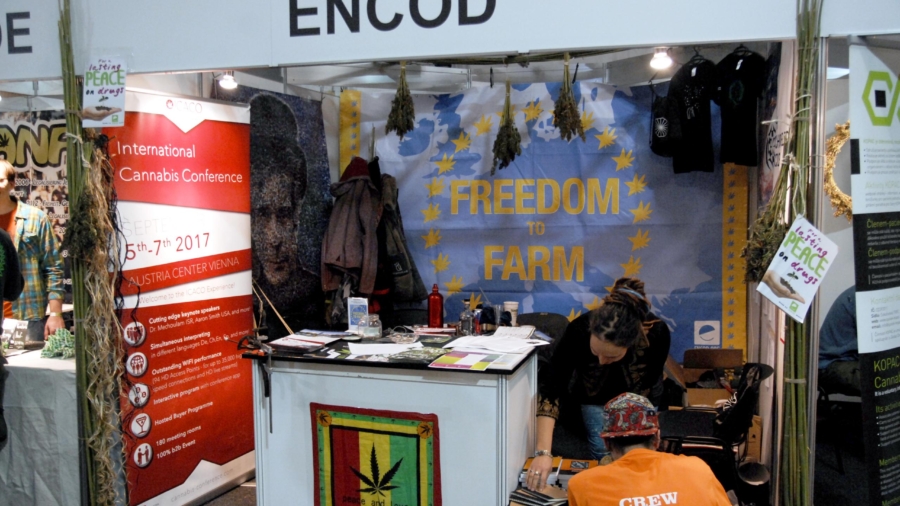
This year’s Cultiva took place from 11th to 13th October 2019. But this time with less enthusiasm. This can be attributed to increased police controls, which affected almost 200 trade fair visitors this year. Hemp, a versatile plant that has been in great demand for more than 4,000 years, has been enjoying increasing popularity in medicine for several years now. A lot of countries around Austria decriminalized cannabis, but instead of supporting the prosperity of the citizens, a hunt is launched that destroys families, health and other livelihoods. “This is a violation of human rights,” comments ENCOD’s EC with anger. ENCOD is one of the NGOs who participated with an information stand at Cultiva for several years and educates interested people about drug policy. According to insider information, medical officers rent hotel rooms in the same venue with their drug dogs and catch visitors after closing time. Two years ago there were even racist comments made by Austrian Police officer to a group of visitors from Slovenia: ‘They should leave Austria and never set foot in the country again.’ Such measures are not exactly a model for a state that is on the first place of quality of life. Quality of life means prosperity and prosperity is defined with happiness, health, love and money. As for the first three values, the country seems to be increasingly impoverished. It is time for citizens to take certain actions into their own hands.

Police department of Lower Austria published on Oct. 14th 2019 a press release with the following records:

161 drivers were impaired by (illegal) substances

22 drivers had to pay a fine

6 drivers refused examination by public medical officer

15 drivers had symptoms of fatigue


Confiscated products:

710 g cannabis, 36 joints, 11 grinders, XTC tablets, magic mushrooms and a knife.

The actions of the police are outrageous and point to several important issues related to cannabis. There is an urgent need to define the allowed levels of THC in blood since the cannabinoid stays in the body for a much longer time than the acute effects last. Medical users (even German patients who have a prescription and are allowed to drive in Germany) were humiliated, mistreated and taken by the police as criminals.

The “City Back Driver” project was founded by CIA-TV (and support of ENCOD) to redirect trade fair visitors back to the urban areas for a voluntary donation. Of course, the drivers are “clean”. The action has been enforced on Sunday evening, as taxi drivers joined the project. More solidarity and humanity are needed in this world. If there is a fair next year it’s time again and you can sign up as a City Back Driver (and maybe From City Driver too).

If you still have interesting reports and information from the Cultiva, send it to office@encod.org.

 

Survey: European Civil Society on Drugs Report (ENCOD)

We are very happy to present you the new survey: ¨European Civil Society on Drugs¨ by ENCOD. It will be used to create an updated report about the Drugs Policy in Europe and the situation of the most vulnerable people on drug matters: the users, the activists and the advocates.


It is addressed to activists, advocates and experts who want to participate, and it includes questions about the users’ experience as well. It is to draw the current situation on Drugs Policy in each European country. Please. It will take you ten minutes approximately.


The deadline to contribute to the survey is Saturday 15th of December 2018. Moreover, you can send to other activists and NGO’s to enlarge the sample in the collection of data.


Thank you for your confidence.


You can find the survey embedded below or visit this link.

bill-griffen-800w.jpg

Encod Participates In Civil Society Meeting On Municipal Drug Policies In Member States At European Parliament

Brussels – 20 June 2017
An expert panel was held in the European Parliament organized by Michał Boni MEP, Maltese Presidency of the Council of the European Union and the Polish Drug Policy Network on “Public safety and public health – municipal drug policies in the Member States”. Representatives of groups working “in the trenches” were invited to listen to panels and share their thoughts and questions.