Press release The Stoned Society
26 february 2015

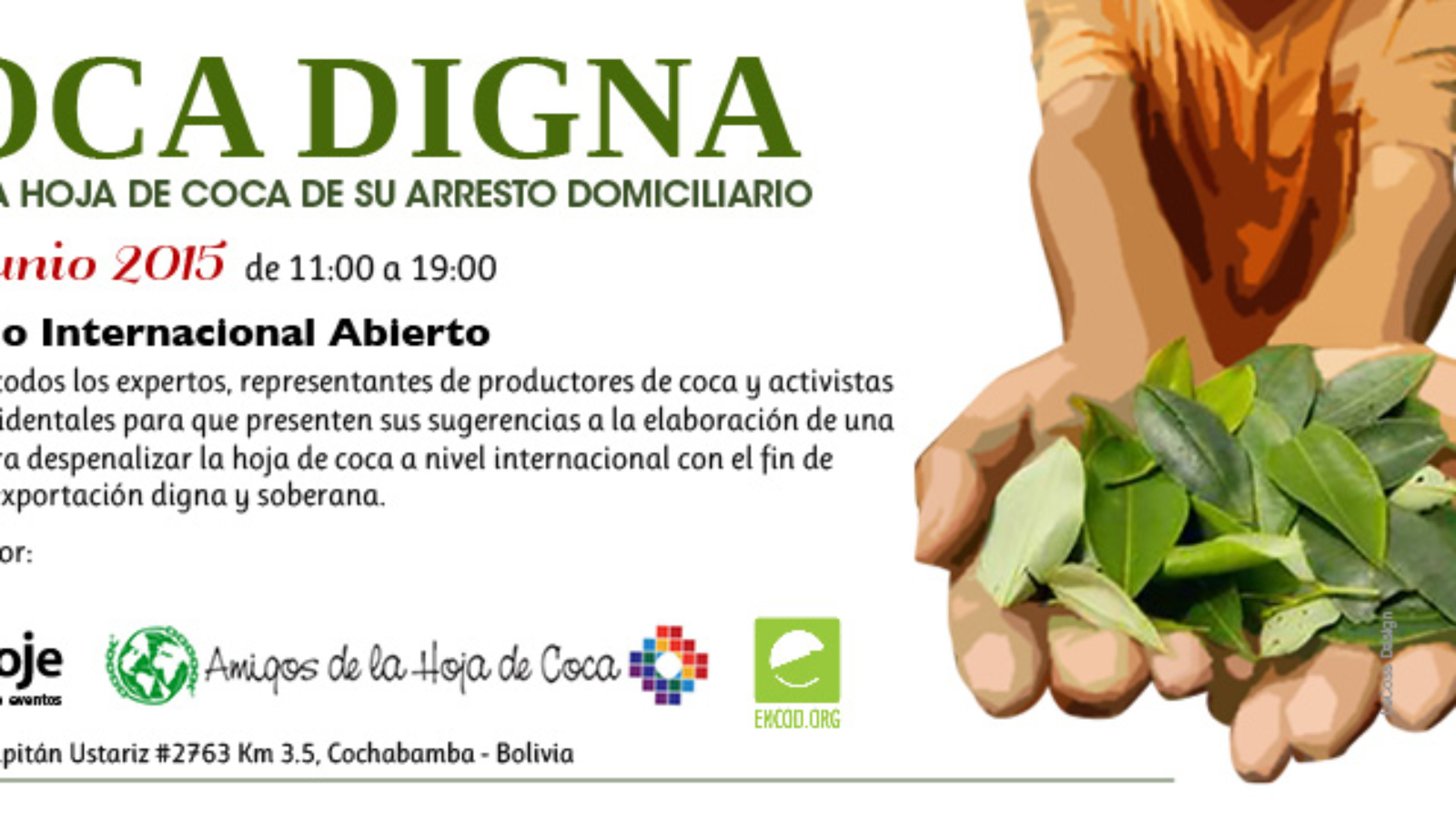
The Friends of the Coca Leaf are implementing a visit to Bolivia and Peru in June 2015.
The Coca Leaf Route is an initiative of people living in Europe who want to promote a legal market for the coca leaf and its derivates. The purpose is to meet with people with whom we can formulate a common strategy to obtain this. Always in respect of the initial values promoting healthy products in a context of fair trade.
From Europe, as Friends of the Coca Leaf, we want to establish a green bridge to all those who are willing to engage themselves (producers and consumers) in this strategy towards a worthy and souvereign future for the coca leaf and its derivates.

Prague, Czech Republic
4 to 6 march 2015
On policy, science,
and medical practice


Press release
9 December 2014
Law Enforcement Against Prohibition Concerned Congress is Undermining Democratic Process
Antwerpen, 28 November 2014
To Esbjörn Hoernberg
Chairperson Vienna Non-Governmental Organisations Committee (VNGOC), Vienna
Vienna
Dear Esbjörn Hoernberg,
Press Release
November 12, 2014
Let’s End Wasted Justice Resources: Second Round in Hasselt ‘Cannabis Social Club’ Lawsuit
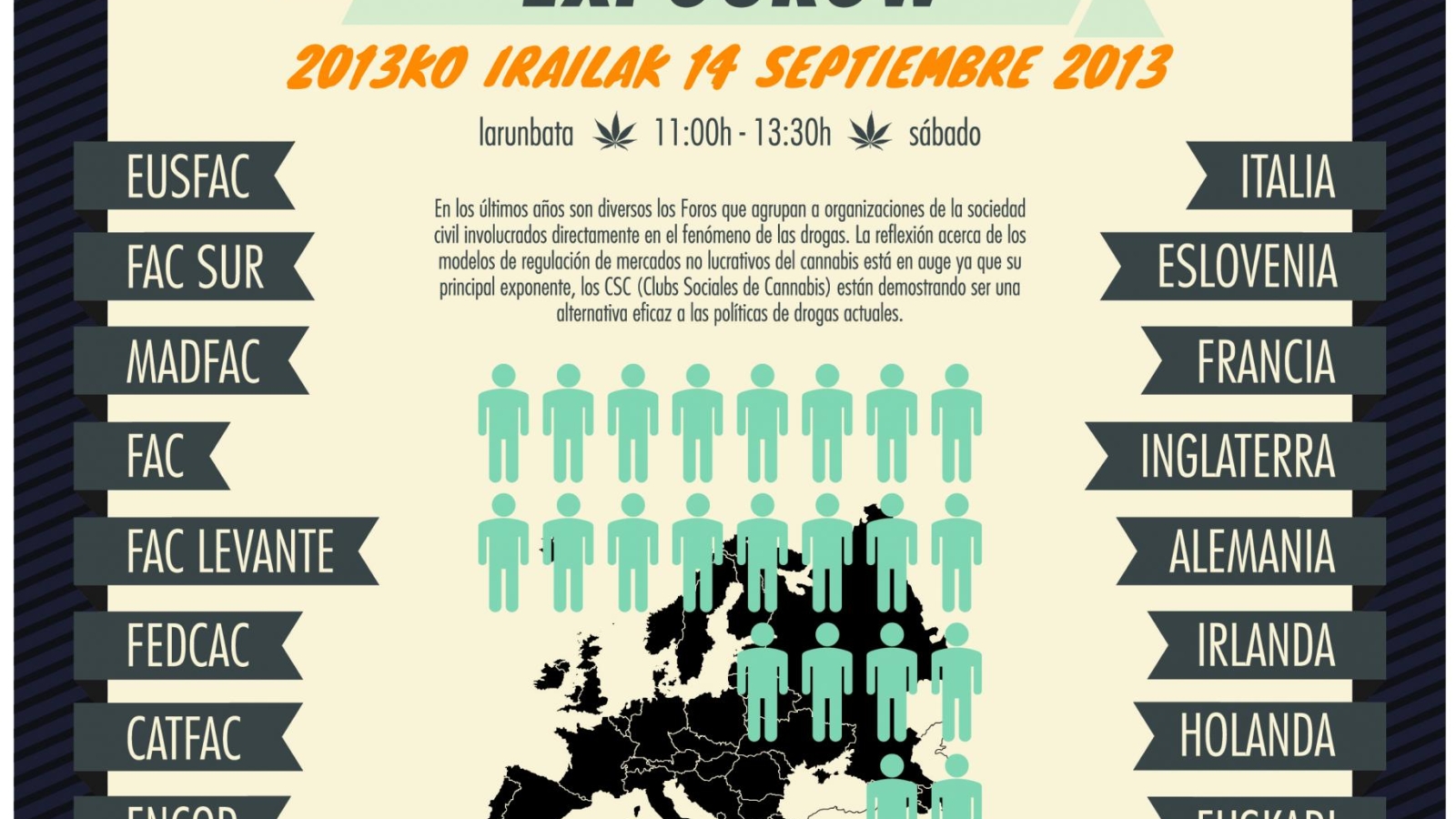

Cannabis Social Clubs are set up to protect the rights of cannabis consumers and producers and help establish cannabis policies that benefit society as a whole.
Cannabis Social Clubs consist of members, adult citizens who organise the cultivation of a limited amount of cannabis to satisfy their personal needs. Thus a closed circuit is established between producers and consumers, where certain requirements are met concerning health, safety, transparency and accountability.
The concrete form and ways of operating of a Cannabis Social Club depend on the legal, political and cultural standards in the country in which it is established. However, there are some basic principles and attitudes which all Cannabis Social Clubs adhere to and which distinguish them from other kinds of initiatives.
1. Supply follows demand, not vice versa
The production capacity of a CSC is based on the expected level of the consumption of its members. The supply is organised in order to meet the demand of the members, not vice versa.
2. Non-profitability
Cannabis Social Clubs are non-profit associations. The financial benefits that may be obtained by the association and that derive from economic activities, are used to promote the goals of the association, and not distributed among the members. CSC’s aim to generate legal employment and produce goods and services in a taxable way.
3. Transparency
Cannabis Social Clubs are legally registered associations. Their internal organisation is democratic and participative. The decision-making body is the Annual General Assembly, to which all members are invited to attend. Each member has one vote.
On the AG, a narrative and financial report of the activities of the association in the preceding year should be presented and approved, as well as a plan for the following year.
CSC’s maintain a record of their activities, which is easily consultable by members, other CSC’s or authorities. This includes financial accountability, an (anonymized) registration of members and their consumption, and an (anonymized) registration of production.
4. Public health oriented
Cannabis Social Clubs only use methods of cultivation that meet the standards of organic agriculture. They develop an effective policy of prevention of problematic use of cannabis and promote safe and responsible use. This includes providing members with factual information on cannabis/hemp. They elaborate research into health aspects of the cannabis that they produce and inform their members on the results of this research.
5. Open to dialogue with authorities
Cannabis Social Clubs are willing to engage in any kind of dialogue with authorities, and implement an active policy to invite authorities to this dialogue.
See also the Code of Conduct for Cannabis Social Clubs