Rete degli Studenti
Rete degli StudentiIn the last issue of the International Journal of Drug Policy
Dangerous authoritarian drift in Italia: Meloni’s attack on Rights and the Hemp Industry
Italian Prime Minister, Giorgia Meloni, has presented a sweeping decree that significantly alters the country’s political and legal landscape. This decree compromises the Human Rights and Civil Liberties of millions of people in the country. It also targets the flowering hemp and CBD industry, threatening thousands of jobs and undermining scientific consensus.
General measures compromising Human Rights and Civil Liberties
The decree comes into effect immediately, bypassing the ordinary legislative process. The Congress of Deputies, with a far-right and right-wing absolute majority, has 60 days to ratify or reject it. This approach of ruling by decree centralizes executive power and restricts the elected representative’s role, indicating a move toward authoritarian governance.
This rule criminalizes dissent by imposing harsh penalties for civil disobedience. It will affect several social movements: ecologism, LGTBIQ+, syndicalism, etc. Peaceful protests that block roads or occupy public spaces now face prison sentences of up to six years, whereas these offenses were before treated as minor administrative infractions. Furthermore, the law extends punitive measures to unrest in prisons and migrant detention centers, authorizing additional prison terms of up to 5 years of imprisonment even when protests stem from human rights abuses or poor living conditions. This criminalization targets marginalized groups and deters public opposition.
In parallel, the decree grants protections to security forces and intelligence agencies. Police officers under investigation for torture will not be suspended, which raises concerns about increased impunity. The decree also expands the autonomy and secrecy of intelligence services, reducing parliamentary oversight. Coupled with the threat of revoking citizenship from those convicted of certain crimes, this creates a climate of fear and control reminiscent of authoritarian regimes. International bodies, including six UN special rapporteurs and Amnesty International, have condemned the decree for eroding fundamental rights and democratic norms.
Targeting the Hemp and CBD Industry
This decree in the article 18 has an effect on the Italian hemp and CBD industries. The government has moved to classify cannabidiol (CBD) derived from cannabis as a narcotic substance, banning its use in dietary supplements and other ingestible products. This decision contradicts scientific findings and European Union regulations, which recognize CBD’s therapeutic benefits and non-psychoactive properties. [On 24 January 2019, the World Health Organisation (WHO) recommended amending Schedule I of the 1961 UN Single Convention on Narcotic Drugs in order to clarify that cannabidiol (CBD) is not a narcotic drug.]
The decree also seeks to prohibit the sale and consumption of hemp flowers, even those containing negligible levels of THC. Even some representatives of the right wing opposed the decree as not consistent with EU norms and procedures. For instance, the former mayor of Verona, Flavio Tosi, claimed that he was backed by the Popular parties of the European Union and insisted on applying the EU rules even in Italy.
Just to remember, the Giovanardi law which criminalized drug users for several years, was revoked in 2015. After that there was a small opening. Medical cannabis was regulated, and CBD shops and the first CSCs appeared. But Italy was ever a difficult country for cannabis and drugs. For example, Cannapa Mundi in Rome had to stop due to heavy police harassment of the last edition.
That said, the decree was officially published in the meanwhile Indicasativa Trade was running in Bologna. It created a fearful environment even though Bologna is one of the main progressive countries in the country. The concerns at the fair were the sudden prohibition of hemp flowers and the new traffic rules. This last has a tremendous impact on people not driving under the influence but just under detection, accused of a criminal act, and stripped of their driving license for three years. Industry experts warn that such measures could devastate the sector, which comprises approximately 3,000 companies, employs around 10,000 individuals, and generates an estimated €500 million annually.
Some early cases were raised by lawyers in Milan because the decree lacked the necessary criteria of necessity and urgency, lumping together many different articles without any sense. Similarly, the 2007 decree that amended drug laws by equating cannabis with heroin was struck down in February 2014 by the Constitutional Court, albeit a bit late. It may happen sooner or later with flower prohibition, but leaving many bodies on the ground because this would lead to the destruction of much of the Italian hemp industry.
Conclusion
The recent decree in Italy has sparked significant backlash from global human rights organizations and domestic critics who warn it threatens civil liberties and contradicts international commitments. The concerns about the law are driving an extensive movement of judges, lawyers, political activists, most of the opposition parties, trade unions, social centers, and cannabis workers. They are launching a big demonstration in Rome at the end of May. Due to cannabis repression, this could also become an encounter point for the drug policy reform movement. This demonstration will embrace the populations most impacted by the decree. The cannabis movement should be there. Don’t give up, organize yourselves! Let’s march together.
Italy : Massive demonstrations to say “NO DDL SICUREZZA”
In Italy, several demonstrations against the dictatorial proposals of Meloni’s government against cannabis, and civil and human rights were quite big, with for example over 5000 people in Bologna and many others in most towns…
Like our friend Enrico Fletzer argued “It was nice but the right wing goes on like a bulldozer so we have to involve more interest and participation. One big participant of the demonstration was the metal workers union but at the core there were many young people”. Here is the link to a facebook real posted to witness and some pictures of this huge movement.
Dalla manifestazione regionale NO DDL SICUREZZA di Bologna, 22 Febbraio
, “”!
This decree does not bring security, it brings repression. It hits those who fight for housing, for jobs, for the climate, for social justice. It criminalizes dissent, punishes the weakest, militarizes cities.
But today we gave a clear answer: ̀ ̀ !
Real security is housing, income, rights. Not criminalization and repression.
In the country there will always be those who will continue to fill the squares, to fight inside and outside the institutions.
Because we do not accept a more unjust, more repressive, more unequal society.
⚡️, .⚡️
Forum Droghe, CNCA, CTCA
Summer School 2017: 8, 9, 10 settembre 2017
Centro studi CISL- Via della Piazzuola 71-50133 Firenze
FOR IMMEDIATE RELEASE
Press Release foundation ENCOD, 5th June, Barcelona
Drug Policy Coalition ENCOD Relaunches With New Board
della Coalizione europea per Politiche Giuste ed Efficaci sulle droghe
Anversa 8t maggio 2017
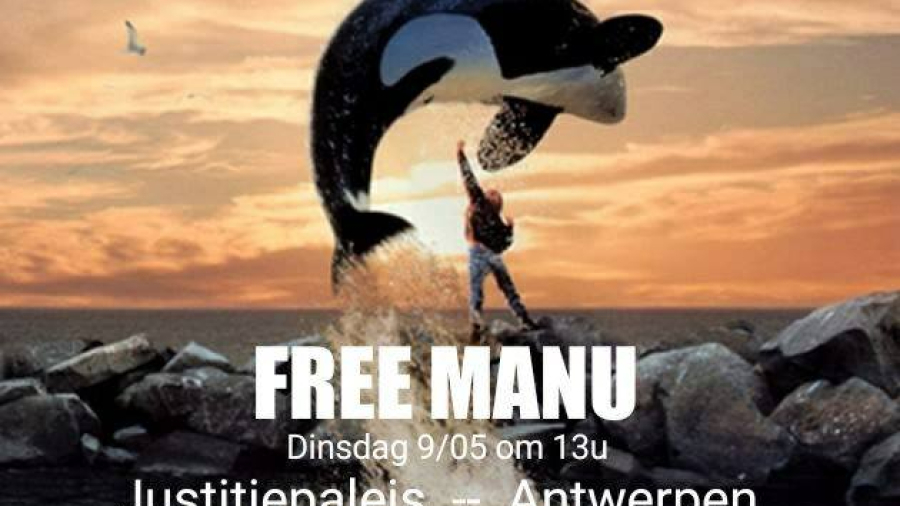
Liberiamo Manu Moreau
Tra i rappresentanti politici che nel 2016 hanno riprodotto una virata verso il populismo autoritario di destra nel mondo si iscrive in pieno Rodrigo Duterte, ex sindaco della città di Davao diventato presidente delle Filippine nell’anno che va per concludersi. Le sua politica di lotta alla criminalità ed all’uso della droga diffuse nel paese hanno prodotto migliaia di morti, attirando gli occhi e le preoccupazioni dell’opinione pubblica e di diverse organizzazioni umanitarie. Eppure l’impressione, anche questa volta, sia che la svolta a destra del paese non sia frutto del caso o di un evento naturale come un tifone, ma di un neoliberismo andato in tilt la cui governance, che nelle Filippine per decenni ha avuto una forma politica istituzionale liberal – democratica, sia in crisi, perché foriera di una violenza economica liberista mal sopportata dalla popolazione. Ne abbiamo parlato nell’intervista di seguito con Sonny Melencio, comunista veterano delle Filippine residente a Manila, segretario del “Partido Lakas ng Masa”, “Partito delle masse lavoratrici”, fondato nel 2009.
Caro Marco il testo è tratto quasi interamente da una lettera che mi ha mandato Dana Beal ieri sera mentre stavo uscendo. Ho tradotto il suo testo e l’ho inviato ad Eleonora Martini del Manifesto che mi ha detto che non poteva pubblicarlo. Ma l’argomento è molto interessante comunque. Che fare?
Da un testo di Dana Beal…
Di prima mattina il quartiere San Paolo si è risvegliato con un’intero isolato militarizzato, cinque camionette di carabinieri e polizia, gazzelle e auto della digos hanno chiuso l’accesso di via Millio per procedere a una solerte operazione volta alla perquisizione del Centro Sociale Gabrio. Decine di uomini in uniforme sono penetrati nel centro sfondando tutte le porte, rovistando in ogni stanza e addirittura sfondando un muro per accedere ai locali informatici.