
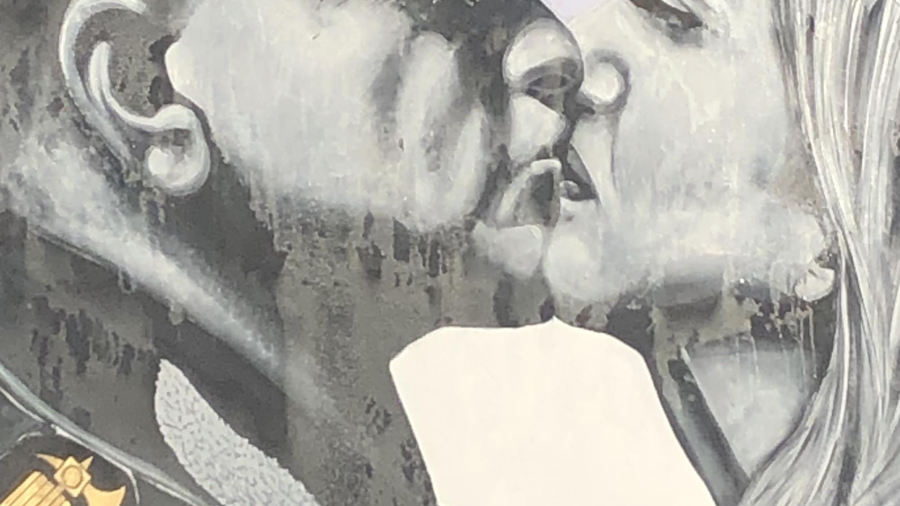
Meloni_Mussolini

Dangerous authoritarian drift in Italia: Meloni’s attack on Rights and the Hemp Industry

Dangerous authoritarian drift in Italia: Meloni’s attack on Rights and the Hemp Industry

Italian Prime Minister, Giorgia Meloni, has presented a sweeping decree that significantly alters the country’s political and legal landscape. This decree compromises the Human Rights and Civil Liberties of millions of people in the country. It also targets the flowering hemp and CBD industry, threatening thousands of jobs and undermining scientific consensus.

General measures compromising Human Rights and Civil Liberties 

The decree comes into effect immediately, bypassing the ordinary legislative process. The Congress of Deputies, with a far-right and right-wing absolute majority, has 60 days to ratify or reject it. This approach of ruling by decree centralizes executive power and restricts the elected representative’s role, indicating a move toward authoritarian governance.

This rule criminalizes dissent by imposing harsh penalties for civil disobedience. It will affect several social movements: ecologism, LGTBIQ+, syndicalism, etc. Peaceful protests that block roads or occupy public spaces now face prison sentences of up to six years, whereas these offenses were before treated as minor administrative infractions. Furthermore, the law extends punitive measures to unrest in prisons and migrant detention centers, authorizing additional prison terms of up to 5 years of imprisonment even when protests stem from human rights abuses or poor living conditions. This criminalization targets marginalized groups and deters public opposition.

In parallel, the decree grants protections to security forces and intelligence agencies. Police officers under investigation for torture will not be suspended, which raises concerns about increased impunity. The decree also expands the autonomy and secrecy of intelligence services, reducing parliamentary oversight. Coupled with the threat of revoking citizenship from those convicted of certain crimes, this creates a climate of fear and control reminiscent of authoritarian regimes. International bodies, including six UN special rapporteurs and Amnesty International, have condemned the decree for eroding fundamental rights and democratic norms.

Targeting the Hemp and CBD Industry

This decree in the article 18 has an effect on the Italian hemp and CBD industries. The government has moved to classify cannabidiol (CBD) derived from cannabis as a narcotic substance, banning its use in dietary supplements and other ingestible products. This decision contradicts scientific findings and European Union regulations, which recognize CBD’s therapeutic benefits and non-psychoactive properties. ​[On 24 January 2019, the World Health Organisation (WHO) recommended amending Schedule I of the 1961 UN Single Convention on Narcotic Drugs  in order to clarify that cannabidiol (CBD) is not a narcotic drug.]

The decree also seeks to prohibit the sale and consumption of hemp flowers, even those containing negligible levels of THC. Even some representatives of the right wing opposed the decree as not consistent with EU norms and procedures. For instance, the former mayor of Verona, Flavio Tosi, claimed that he was backed by the Popular parties of the European Union and insisted on applying the EU rules even in Italy.

Just to remember, the Giovanardi law which criminalized drug users for several years, was revoked in 2015. After that there was a small opening. Medical cannabis was regulated, and CBD shops and the first CSCs appeared. But Italy was ever a difficult country for cannabis and drugs. For example, Cannapa Mundi in Rome had to stop due to heavy police harassment of the last edition.

That said, the decree was officially published in the meanwhile Indicasativa Trade was running in Bologna. It created a fearful environment even though Bologna is one of the main progressive countries in the country. The concerns at the fair were the sudden prohibition of hemp flowers and the new traffic rules. This last has a tremendous impact on people not driving under the influence but just under detection,  accused of a criminal act, and stripped of their driving license for three years. Industry experts warn that such measures could devastate the sector, which comprises approximately 3,000 companies, employs around 10,000 individuals, and generates an estimated €500 million annually.

Some early cases were raised by lawyers in Milan because the decree lacked the necessary criteria of necessity and urgency, lumping together many different articles without any sense. Similarly, the 2007 decree that amended drug laws by equating cannabis with heroin was struck down in February 2014 by the Constitutional Court, albeit a bit late. It may happen sooner or later with flower prohibition, but leaving many bodies on the ground because this would lead to the destruction of much of the Italian hemp industry.

Conclusion

The recent decree in Italy has sparked significant backlash from global human rights organizations and domestic critics who warn it threatens civil liberties and contradicts international commitments. The concerns about the law are driving an extensive movement of judges, lawyers, political activists, most of the opposition parties, trade unions, social centers, and cannabis workers. They are launching a big demonstration in Rome at the end of May. Due to cannabis repression, this could also become an encounter point for the drug policy reform movement. This demonstration will embrace the populations most impacted by the decree. The cannabis movement should be there. Don’t give up, organize yourselves! Let’s march together.


Italy Bologna Demonstration NO DDL

Italy : Massive demonstrations to say “NO DDL SICUREZZA”

Italy : Massive demonstrations to say “NO DDL SICUREZZA”

In Italy, several demonstrations against the dictatorial proposals of Meloni’s government against cannabis, and civil and human rights were quite big, with for example over 5000 people in Bologna and many others in most towns…

Like our friend Enrico Fletzer argued “It was nice but the right wing goes on like a bulldozer so we have to involve more interest and participation. One big participant of the demonstration was the metal workers union but at the core there were many young people”.  Here is the link to a facebook real posted to witness and some pictures of this huge movement.

Dalla manifestazione regionale NO DDL SICUREZZA di Bologna, 22 Febbraio

, “”!

This decree does not bring security, it brings repression. It hits those who fight for housing, for jobs, for the climate, for social justice. It criminalizes dissent, punishes the weakest, militarizes cities.

But today we gave a clear answer: ̀ ̀ !

Real security is housing, income, rights. Not criminalization and repression.

In the country there will always be those who will continue to fill the squares, to fight inside and outside the institutions.
Because we do not accept a more unjust, more repressive, more unequal society.
⚡️, .⚡️


Capture d’écran 2024-12-19 à 09.55.30

Putting people first; empowering communities and driving innovation.

Putting people first; empowering communities and driving innovation.

Reflections following the 6th European Harm Reduction Conference.

In the first week of December around five hundred participants from across Europe travelled to Warsaw for a three-day conference on drug use and drug policy organised by the Correlation European Harm Reduction Network (C-EHRN). Echoing the United Nations Sustainable Development Goals ethos to ‘leave no one behind’, this year’s European Harm Reduction Conference’s motto, Putting People First, acts as a testament to the new found consensus on human rights, harm reduction and drug policy.

Various distinguished speakers, amongst which the Mayor of Amsterdam Femke Halsema, the Executive Secretary of the Pompidou Group Denis Huber, the UN Human Rights and Drug Policy Advisor Zaved Mahmood, and the UN Human Rights Commissioner Volker Türk, spoke about the importance of moving drug policies away from criminalisation, and closer to human rights principles. Some of the speakers also explored the role of the responsible regulation of drugs in transforming the present criminally monpolised market into one which is regulated, monitored, and adjusted according to evidence and research.

Speaking in the opening session Daphne Chronopoulou, Chairperson of the European Network of People who use drugs stated: As a woman who uses drugs, as an activist and Chair of the network, I am the definition of harm reduction. And therefore, she continued, Nothing About Us, Without Us!

This bold statement underlined the centrality of providing people with living experiences an equal opportunity to participate in discussions, conferences and policy design directly impacting their well-being and lives. The conference included multiple parallel sessions, and the participation of various speakers and experts in the fields of drug policy reform, human rights, civil society representing the voice of people who use drugs and regulation of drugs. An inclusive and broad definition of harm reduction was recognised as important to better reflect emerging drug trends and evolving challenges. Speakers underlined the need to move away from strictly medicalised and heroin focused interventions, and ensure all people who use drugs have equal access to health, social, economic and cultural rights.

The role of responsible regulation was also discussed as an important tool to significantly address the criminal and violent nature of illegal drug markets and ensure citizens are not exposed to adulterants and risky synthetic drugs. Multiple sessions explored various areas linked with drug policy, including considerations for gender equality, and the importance develop bottom-up and peer-led solutions addressing the needs of different communities and groups.

An art exhibition Junk(ie) Art and a civil society exhibition space further complemented the conference’s efforts of merging theoretical speeches and presentations with practical solutions and tools.

During the session on cannabis regulation Karen Mamo reminded government representatives from Switzerland, Malta, and Germany that one cannot fail to mention and recognise the pivotal role played by civil society and grass-roots organisations in advancing the cannabis frameworks they are now speaking about. She also mentioned the urgent need for European countries regulating cannabis to include in the discussion and regulatory framework measures to ensure restorative justice and social equity are prioritised and communities most negatively impacted by prohibition are provided with added tools to participate in the regulated cannabis market.

Speaking also during the session on harm reduction in the media in the age of disinformation, Karen Mamo underlined the central role of language in preventing or facilitating negative perceptions about people who use drugs. She underlined a shared goal between journalists, health practitioners, educators, and the broader community to move away from stigmatised language and policies, and recognise that language does matter!

In conclusion, what could be three keywords to describe the conference’s outcome? Dignity, for all people, irrespectively if using an illegal substance and have no intention to stop. Empowerment, to challenge discriminatory laws and prioritise human centred policies over criminalisation and dehumanising policies. Hope, for the next five years to advance increased opportunities for comprehensive and inclusive harm reduction tools, and a continued discussion on the responsible regulation of drugs, the latter recognised as a catalyst for innovation and positive social change.

The 6th European Harm Reduction Conference was attended by the national focal point for CEHRN Ms Karen Mamo and young researcher and social worker Mr Mark Farrugia (Harm Reduction Malta).