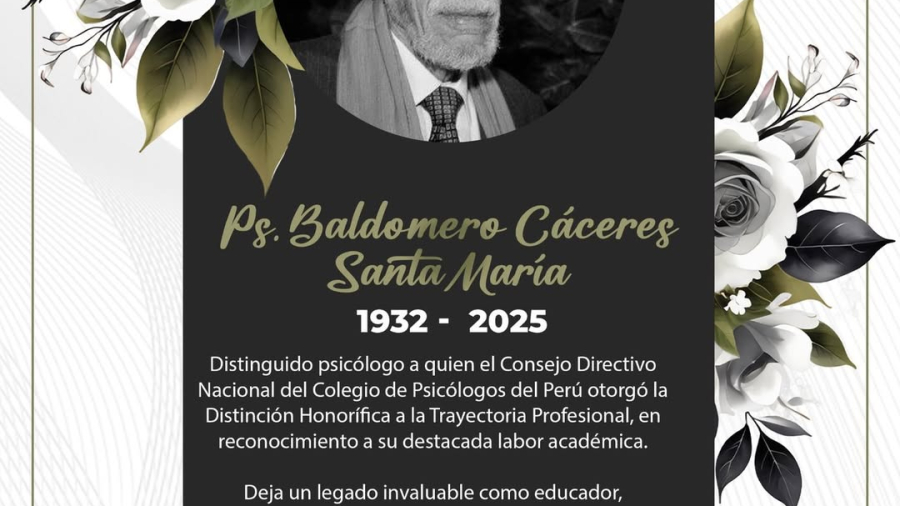
Baldomero Caceres Santa Maria 1932-2025

ENCOD deeply regret the passing of Pr. Baldomero Cáceres Santa María (1932–2025)

ENCOD deeply regret the passing of Pr. Baldomero Cáceres Santa María

We, as ENCOD, as well as the Regional Board of Directors I Lima and Callao of the College of Psychologists of Peru, deeply regret the passing of Pr. Baldomero Cáceres Santa María (1932–2025), a distinguished psychologist recognized for his outstanding academic career, his research on the coca leaf, and his defense of Andean knowledge.

He was one of the panelist of the “Just Coca 2022” (read presentation below), and delivered the keynote speech at Just Coca Workshop 1 #medicine: Coca leaf in medicine: lege artis on safety & therapeutics for physical & mental health.

He was recognised in Peru and abroad for his academic activism for the decriminalisation of marijuana (Cannabis sativa) and coca leaf (Erythroxylum coca), promoting their medicinal uses, among others.

He leaves behind an invaluable legacy as an educator and researcher.

We express our condolences to his family, colleagues, and friends.


 Just Coca 2022: Health | Science | People.  Workshops in the Series “People and Psychoactive Plants” from the Centre for Biocultural Diversity: Coca leaf and coca products: uses, safety, medical applications, and regulatory challenges. 18–19 May 2022. https://justcoca.org/
✅ Free event | Interpretation English-Spanish | Organized by: ENCOD, FAAAT, Fairtrade Cocaine Foundation, and Center for Biocultural Diversity (Universidad de Kent). Sponsors: Coca Leaf Café, KFN+ Law Office, ICEERS Foundation.
Workshop 1 #medicine Coca leaf in medicine: lege artis on safety & therapeutics for physical & mental health.
Workshop 2 #nutrition Coca leaf and industrial products: lege artis aspects of nutrition, wellbeing, safety, innovation and process engineering.
Workshop 3 #nature Sustainable coca cultivation & production in fragile environments: an engine for development, not a threat.
Workshop 4 #policy From the Andeans to the Alps: the changing landscapes of coca leaf laws.
➡️ Info & registration: https://justcoca.org
–––


ENG: Baldomero Cáceres Santa María is a Peruvian social psychologist, researcher, university professor and writer. He is recognised in Peru for his academic activism for the decriminalisation of marijuana (Cannabis sativa) and coca leaf (Erythroxylum coca), promoting their medicinal uses, among others. He delivered the keynote speech at Just Coca Workshop 1 #medicine: Coca leaf in medicine: lege artis on safety & therapeutics for physical & mental health.


ESP: Baldomero Cáceres Santa María es un psicólogo social, investigador, docente universitario y escritor peruano.​ Es reconocido en Perú por su activismo académico por la despenalización de la marihuana (Cannabis sativa) y la hoja de coca (Erythroxylum coca),​ promoviendo sus usos medicinales, entre otros. Hizo la charla magistral en el Solo Coca Taller 1 #medicina: La hoja de coca en medicina: lege artis sobre seguridad y terapia para la salud física y mental. Just Coca webinar: https://justcoca.org/


More info :

https://www.facebook.com/100087096976195/posts/713122124934347/?rdid=s1lYXcGgs8e12J21#

https://es.wikipedia.org/wiki/Baldomero_C%C3%A1ceres

photo_5918271257089002116_y

From Protest to Practice: Klub Karl and the Quiet Maturation of Germany’s Cannabis Clubs

Report from Chemnitz

Just a short walk from the imposing Karl Marx monument in Chemnitz —a 7-meter-high bronze head—sits a smaller sign of social change: Founded in 2022, Klub Karl is one of Germany’s first Cannabis Social Clubs (CSCs), but it can not grow a single plant yet, due to administration process. What the club does grow is trust, infrastructure, and preparation. And that’s not to underrate.

Roots That Go Back Decades

Despite its recent founding, Klub Karl didn’t appear out of nowhere. The core members are not newcomers to cannabis. Many have been involved in cultivation, advocacy, and harm reduction work since the 1990s, often at the edges of legality, sometimes in open defiance of it.

Gerfried Düregger is the president and co-founder of Klub Karl, a Cannabis Social Club in Chemnitz. A former wholesale merchant, he turned to medical cannabis in 2011 as part of his treatment for a chronic illness—a therapy that, in his words, gave him his life back. This experience led him to co-found the Austrian patient advocacy group ARGE CANNA in 2014 and to become a committed educator and advisor on medical cannabis. Since 2022, he and Jacqueline Meurer have worked to establish Klub Karl as a model of responsible, community-based cultivation under Germany’s new cannabis legislation. Düregger also represented the club at the founding of the German Cannabis Social Club Association (CSCD) and continues to advocate for patient rights and evidence-based drug policy at the European level.

After decades of prohibition it is the first time that the state of Germany says yes, you can. But only if you do it right. Doing it right, in this context, means navigating a complex new legal framework introduced by Germany’s cannabis law in 2024, following the rules of the KCanG. The law allows for cannabis to be grown and shared through nonprofit clubs—up to 500 adult members each—starting from July 2025. In practice, that means a lot of paperwork, planning, money, and patience.

Not Just Waiting—Preparing

Currently, Klub Karl is awaiting its official cultivation license from the Saxony state authorities—a process that, in their case, has moved relatively quickly thanks to a good working relationship with local regulators. As a final step once the license is granted, the club will have three months to appoint an official prevention officer, as required by law. 

Everything else is ready. The cultivation facility is located in an industrial area well-suited for such operations, and is fully prepared for indoor cannabis production. The site features secure infrastructure, including a fenced perimeter, motion sensors, and 24/7 video surveillance. Klub Karl plans to operate under the license framework for at least seven years, with a long-term commitment for quality and compliance. It places heavy emphasis on education and internal standards.

Bureaucracy as a Test of Patience

Since the law passed, clubs across Germany have been waiting for clear application procedures. Some waited a long time. In Chemnitz, the official window to apply opens July 1, 2025. Klub Karl already has their paperwork drafted—dozens of pages outlining how they’ll secure their grow site, track every gram of product, and educate their members.

The bureaucratic process—and the financial burden of maintaining a fully equipped facility while waiting for the cultivation license—pose significant challenges. Keeping a secured, operational site ready for cannabis production without generating any revenue requires not only careful planning but also substantial financial backing. Without solid capital behind them, many associations may struggle to reach the final stage. The law may be in effect, but the high entry costs and lengthy waiting periods mean that not everyone will have the capabilities to grow legally.


A Different Vision of Cannabis

Unlike the commercial cannabis models emerging in other countries, Klub Karl has no interest in branding or marketing. It is structured as a nonprofit association, with a strong emphasis on collective responsibility and democratic participation. Every member has a voice in how the club operates, and every euro collected is reinvested directly into cultivation, education, and compliance. The focus here is not on lifestyle or trend, but on access, quality, harm reduction, and accountability. This approach reflects a deeper philosophy: that cannabis, when removed from the profit motive, can be integrated into society in a safer and more constructive way.

As of mid-2025, Klub Karl remains in a waiting phase. The official license application approval could be received in July, but there is no guarantee how quickly it will be. It could take weeks or even months. For the people behind the club, this waiting period is not unfamiliar. Many of them have spent decades—some since the 1990s—engaged in activism, informal cultivation, or advocacy under the shadow of prohibition. Compared to that long history, a few more months is tolerable. In the meantime, they continue refining internal processes, supporting the formation of new clubs across Germany, and building a foundation for long-term sustainability.

There is no rush, no marketing campaign, no grand announcement. Under the silent gaze of Karl Marx’s monumental bronze head, the people of Klub Karl are not promising a cannabis revolution. What they are building is slower but potentially more enduring: a legal, local, and community-driven model for cannabis distribution in Germany. It is cautious by design, rooted in decades of lived experience, and motivated by something rarer than hype—responsibility.


Register in encod.org (3)

Be Part of the Green Shift: Professional Training for Germany’s Cannabis Clubs

Germany’s cannabis sector is entering a new era. With the regulation of Cannabis Clubs underway, the time has come to educate and professionalize those who will lead this transformation.

Join us on Wednesday, June 18, 2025, in Berlin for
“Be Part of the Green Shift: Professional Training for Germany’s Cannabis Clubs”—a unique event that brings together international experts, regulators, and key stakeholders to provide the tools, knowledge, and strategies needed to build a safe and sustainable cannabis community.

Who Should Attend?

  • Cannabis clubs (existing or forming)
  • Cultivators and distributors
  • Legal and healthcare professionals
  • Researchers and academics
  • Regulators and policy makers

What Will You Learn?

Over three intensive hours, three internationally renowned experts—each with over 20 years of experience in Spain’s cannabis club model—will lead a practical and high-impact training focused on club management, legal compliance, quality control, harm reduction and prevention strategies.


Why You Shouldn’t Miss This

✔️ Exclusive, experience-based training from European leaders
✔️ Tailored content for the German regulatory context
✔️ Direct networking with key industry players
✔️ Completely free access thanks to European funds and event sponsors (estimated value: €320)

Event Details

    Date: Wednesday, June 18, 2025
Time: 6:00 PM – 9:00 PM
Location: Bergmannkiez, Kreuzberg, Berlin, Germany (exact venue TBA via email)
  Cost: FREE with registration (limited spots available)

Presented by: ConFAC (Spanish Confederation for Cannabis Social Clubs), ENCOD (European Coalition for Just and Effective Drug Policies) and RdR LAB

Duration: 3 hours

Time Session

18:00 – Welcome & Introduction

18:10 – Lessons for Club Management in a changing landscape – Ana Afuera

18:50 – Harm Reduction Strategies – Mireia Ambròs

19:30 – Coffee Break

20:00 – Cannabis Clubs: From Stigma to Social Value – Patricia Amiguet

20:40 – Kykeon Analytics Presentation – Stanislav Visochin

20:50 – Close and Networking Session

✅ Register Now!

Click here to register via Google Forms

Don’t miss this unique opportunity to prepare for the future of cannabis in Germany.
Be part of the shift. Be part of the change.


German Cannabis Clubs Workshop

German Cannabis Clubs workshop

German Cannabis Clubs workshop
ENCOD and ConFAC are pleased to present a workshop tailored for German cannabis associations. This workshop aims to address specific aspects of cannabis regulation, harm reduction, and best practices within the framework of cannabis clubs. The workshop will provide valuable insights into the controlled substance system and harm reduction strategies. It offers a platform for exchanging best practices and experiences among participants.

Target audience:
Leaders, staff, and stakeholders of cannabis clubs in Germany.

Workshop goal:
To provide practical tools and knowledge about risk reduction strategies, legal frameworks, and best practices to enhance the functioning of cannabis clubs and promote safe and sustainable cannabis consumption practices.

Date: Wednesday, 5th March 2025 from 18:00h to 20:00h

More information: ana@encod.org

Registration here

ENCOD supports VLD mail action to SPÖ and ÖVP.

In Austria, the government is subject to a long deal between different political parties to form a coalition.

In order to ensure that their program and coalition’s contract includes cannabis legalisation, some activists with Verein für liberale Drogenpolitik are aiming to influence this coalition’s deal by sending letters :   if you’re an austrian citizen or you’re living in Austria, please just use this sample letter and mail action available on this webpage.

https://mailaktion.hanfheimat.at/

cocazakje

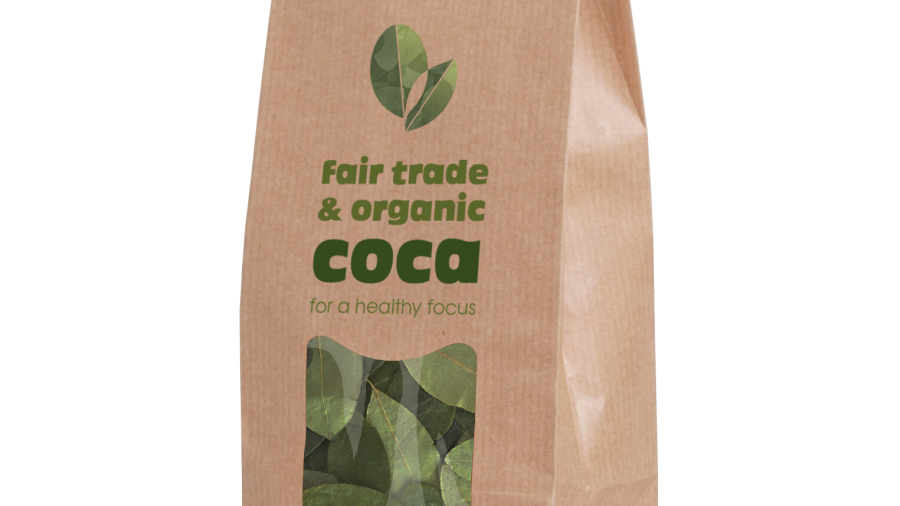
Amigos de la Hoja de Coca: history of a pioneering coca leaf fair-trade

This is a masterpiece for all ENCOD’s friends and supporters ; A real piece about ENCOD history and attempt to keep the experience alive and make it possible for the future… Thanks to the magazin Drugs, habits and Social policy and its editing team for keeping the importance of the subject and the publishing of it. Please download, read, spread and share this very very nice article. Click here to get all articles published.

Amigos de la Hoja de Coca: history of a pioneering coca leaf fair-trade

Drugs, Habits and Social Policy

ISSN2752-6739

Article publication date: 29 July 2024 

Issue publication date: 28 November 2024

Abstract

Purpose

The leaves of the Erythroxylum “coca” plant are a well-known food, beverage, and nutraceutical in their native Andean region. A decade ago, the European non-profit “Amigos de la Hoja de Coca” (Friends of the Coca Leaf) operated a short-lived fair-trade in raw coca leaves between Bolivia and the European Union. The chronicles of this initiative can be insightful, as interest in natural, wellness, and self-care products continues rising in Europe.

Design/methodology/approach

Historical review of the inception, and documentation of the organisation of the scheme and its outcome, via all primary sources available.

Findings

From the 1990s to the early 2010s, civil society groups organised several campaigns to normalise coca leaf in Europe, finding echo at the European Parliament, culminating in 2012-2013 when a periodical distribution system was set-up: growers in Bolivia shipped 150 g. coca leaf packets directly to Friends of the Coca Leaf members in Europe. Initially, most parcels reached their recipients without issue but after technical hurdles and reduced political support, the scheme was eventually discontinued.

Originality/value

European civil society campaigns surrounding coca have been poorly documented. Historically, Friends of the Coca Leaf emerged alongside Cannabis social clubs, but only the latter has prospered. While Friends of Coca Leaf was short-lived, its political outcomes (both at the institutional level and via a fair and do-it-yourself trade initiative) may prove inspirational to current drug policy reform discussions.

Keywords

Citation

Ghehiouèche, F. and Riboulet-Zemouli, K. (2024), “Amigos de la Hoja de Coca: history of a pioneering coca leaf fair-trade”, Drugs, Habits and Social Policy, Vol. 25 No. 2, pp. 155-172. https://doi.org/10.1108/DHS-10-2023-0040

The current hour in the Bundestag

The current hour in the Bundestag

On 15 November 2024, the CDU/CSU parliamentary group in the German Bundestag convened a topical debate on the effects of the Konsum-Cannabis-Gesetz, KCanG, on internal security. The list of speakers was long, and too many of those who took to the microphone used their time exclusively for election campaign posturing.

The CDU/CSU once again made the refuted claims that the KCanG would lead to more crime, more violent offenses and more work for the judiciary. It seems logical to them, that the black market will explode with the permitted possession quantities and that organized crime will experience an upswing, new markets will emerge that will be brutally fought over, as can currently be seen in NRW.

In addition, the judiciary is badly overburdened by the old cases that have to be processed in order to review the judgements in the light of the KCanG. Justice only if it does not do any work, according to the statement by the Senator for Justice in Berlin, Ms Badenberg, CDU, who complained about the extra work in her department and also made the false claim that the KCanG would lead to more crime. As a senator in the capital of stoners, the lady should be more familiar with reality. It remains unclear how she comes up with an additional burden on the judiciary when, according to the Federal Police, 180 000 fewer proceedings are to be expected each year, all related to consumers.

During the debate, most of the people sitting on the Union bench were from the CSU, a far right party that governs Bavaria for 67 years without interruption, and part of the party-union with CDU, who went to great lengths to mock the federal government and ridicule its factual arguments. The members of the CDU had gone to get coffee after the opening of the meeting, as had most of the other members. A clear sign.

The representatives of the neo-Nazi party pretended to be tolerant of cannabis, only to present irrelevant arguments against the federal government in their speeches and present themselves as dashing campaigners. They were not the only ones. Even a representative of the party of the cultivated personality cult, BSW, felt called upon to step up to the microphone, although the subsequent speaker made it clear that the lady was not otherwise to be seen in the Bundestag. Cannabis as an election campaign aid for opponents who are otherwise not interested in it. An old game. This show was more for them than for cannabis.

So they gave the usual performance of refuting and outright lying arguments, painted doomsday scenarios and, of course, children must be protected! We waited in vain for valid evidence of the concrete threat to internal security, the topic of the requested question time, but instead there were plenty of outrageous accusations against the coalition. Election campaigning on the backs of those affected. The CDU/CSU’s hatred of cannabis seems pathological, they actively refuse to recognise and debate the issue on a factual level and instead go full culture war. You have to ask yourself why the CDU/CSU wants to protect the already firmly established illegal market at all costs when it pretends that this did not exist before the KCanG in order to justify the ban, which has failed at all levels. An unworthy spectacle of a retreat battle pretending to be an offense.

Those involved in the KCanG, on the other hand, presented their valid arguments in a consistently objective and calm manner, substantiating them and showing that they had taken the right step overall. Clear signals came from the SPD that the law would not be sacrificed in a future coalition and that, on the contrary, it would continue to move in the right direction with Pillar 2 and dispensaries. In his energetic closing speech, Dirk Heidenblut from the SPD clarified all the claims and also gave a clear indication that the KCanG should be retained until it has been properly evaluated, as is usual with new laws.

For cannabis users in Germany, this parliamentary current hour was associated with the realization that the withdrawal of the KCanG will not be as easy for the Union as they pretend.

But also that we need to keep up the pressure on politicians for sure!

OW

Responsibility ping-pong in the German capital

Responsibility ping-pong in the German capital

Since 1 July 2024, cultivation associations in Germany have been able to apply for permission to cultivate cannabis to supply their members in accordance with the Consumer Cannabis Act. Over 300 applications have now been submitted to the relevant authorities across Germany, and around 25 of these have been granted a licence. The state of Lower Saxony is the front-runner when it comes to granting licences.

Number one in the ranking of federal states that delay or openly refuse to grant licences is the capital of the stoners: Berlin.

The Bavarian Prime Minister Markus Söder of the CSU has publicly announced that he will hunt down cannabis users wherever possible, that they are not welcome in his state and is massively delaying the granting of licences. A special authority has been set up, at a cost of 36 million euros, and they are pretending to comply with a federal law, although no licence has yet been issued. A lawsuit against the federal state is in preparation, initiated by an alliance of the SPD, Die Linke and DHV.

In Berlin, the health senator Dr Czyborra claims in a statement from July* that she has been negotiating with the districts since 2023 about the granting of permits for cultivation communities and says that the districts have refused. The districts, in turn, say that the Senate did not want to provide them with any resources for the task, which makes the refusal understandable in view of the tight budgets and staff shortages.

Added to this are the local addiction support centres, which, together with the youth care organisations, allow themselves to be driven by conservative doctors and put the protection of minors first. They are not responsible for ‘the regulation of addictive substances’. Discussions usually follow the same pattern: as soon as it comes to making cultivation associations possible in concrete terms, the medical profession is cited as a reason to hide behind the protection of minors (we can already see how harmful cannabis is for young people), and all attempts at constructive cooperation are blocked.

‘We are waiting for the Senate and are not responsible,’ is the unanimous opinion of the mayors from 12 districts. Everyone is afraid of doing something wrong, the funding remains unclear and the necessary resources are not available.

There has been talk in the media of transferring the authorisation procedure to the State Office for Health and Social Affairs, starting with the Senate. In an early statement, the LaGeSo announced that it was not willing to take on this task and was not responsible for it as it does not fall within its area of competence. The acceptance of applications was still rejected in August, and we have received emails to this effect. 

So it was a positive surprise when LaGeSo invited Olli Waack-Jürgensen, representing the umbrella organisation German Cannabis Social Clubs, together with Georg Wurth from the German Hemp Association to a meeting at short notice. Olli was welcomed by the prevention officer of the CSC High Ground Berlin e. V., Georg came with his press officer. Our interlocutors were the head of LaGeSo, Dr Merx, the head of the department in which the authority responsible for permission procedures is to be set up, Dr Pelz, as well as the head of the LaGeSo press department and the future head of the permission authority department.

The discussion lasted over 90 minutes and was factual, pragmatic and open. The LaGeSo would like to ‘implement a federal law’ and has received questions and catalogues from other federal states in preparation. ‘We want harmonious applications’ was said, which presumably means not as disproportionate as in Hamburg or Bavaria, for example, but orientated towards the requirements of Section 11 KCanG. They want to work with us, which we do not reject, on the contrary. We welcome this step and will seize the opportunity.

In order to be able to process the authorisation procedure with legal certainty, the authority needs a statutory order from the Senate. The Senate had claimed that this would require an amendment to the law. In Berlin, this change means that it can take a long time. Legislative procedures take an average of 40 months here, and although an amendment to the law takes less time, it is significantly longer than a statutory order. Frustrated, clubs have already turned away and are trying their luck in the federal state of Brandenburg. Now we have learnt that a statutory instrument is sufficient, and that is good news, because the statutory instrument is significantly quicker than the amendment to the law and is more favourable to the clubs.

LaGeSo expects to be able to start work on 1 January 2025, and the job advertisements for the four positions in the future licensing authority are already public. The districts will be responsible for monitoring the AVs.

The clubs can be job engines for those without opportunities on the regular labour market; the sooner they can start working, the sooner the social security funds will be relieved. Most AVs are already in the starting blocks and want to get started. 

The blockade strengthens the illegal market, hinders evaluation and stigmatises adult cannabis users, which should end with the KCanG.

It is now up to the Senate to decide when the authorisation procedure can finally start in Berlin. The boards of the AVs are not prepared to wait just one day longer than necessary and are demanding precise information on when the authority can begin its work. The legal decree must be issued immediately; any further delay is an affront to dozens of clubs, their members and boards.

The monkey dance around cannabis, it really must be said, must end. The KCanG, which was passed in the Bundestag by over 60%, must be implemented across the board without delay. 

It’s not up to us, we are ready.


OWaack


*Press release Senate:

https://www.berlin.de/sen/wgp/presse/2024/pressemitteilung.1476859.php