arton2194

PUBLICACIÓN: USOS DE DROGAS Y PARTICIPACIÓN DEMOCRÁTICA

Durante el año pasado las organizaciones de ENCOD estuvieron involucradas en la elaboración del Estudio “Drogas y Diplomacia: una investigación”. Para ello, se realizaron diversas actividades, entre ellas, dos Talleres de trabajo en Murgia, en noviembre de 2008 y abril de 2009. El informe final, Usos de drogas y participación democrática, ha sido publicado en octubre de 2009.

Continue Reading

arton1382

Drug prohibition – an untenable hypocrisy

Julian Critchley has come out and said what those in charge of UK drug policy won’t admit: prohibition doesn’t work

Danny Kushlick
guardian.co.uk,
Wednesday August 13 2008

The former head of the government’s UK anti-drug co-ordination unit (UKADCU), Julian Critchley, posted to BBC Home Affairs correspondent Mark Easton’s blog last week, The War on Drugs, calling for the legalisation of drugs. In his post he also reports how those he met during his time at the unit knew that criminalisation was causing more harm than the drugs themselves. (This comes as no surprise to anyone who has read the damning report from the prime minister’s strategy unit from 2003.)

Critchley says:

“I think what was truly depressing about my time in UKADCU was that the overwhelming majority of professionals I met, including those from the police, the health service, government and voluntary sectors held the same view: the illegality of drugs causes far more problems for society and the individual than it solves. Yet publicly, all those intelligent, knowledgeable people were forced to repeat the nonsensical mantra that the Government would be ‘tough on drugs’, even though they all knew that the Government’s policy was actually causing harm”.

Critchley is to be congratulated for speaking out with such candour on the issue. I have met many former and current civil servants who are of the same opinion, but haven’t gone public. What Critchley makes absolutely clear is that many, if not most of those working in the drugs field are knowingly colluding with a regime that actively causes harm. Their silence is not based on ignorance but is tacit support for one of the great social policy disasters of the last 100 years.

Critchley, having retrained as a teacher, concludes with the following:

“I find that when presented with the facts, the students I teach are quite capable of considering issues such as this, and reaching rational conclusions even if they started with a blind Daily Mail-esque approach. I find it a shame that no mainstream political party accords the electorate the same respect”.

His final comment ought to send a shiver down the spine of every UK voter. If you voted in the last election, you probably voted for prohibition. You voted to gift hundreds of billions of pounds to organised crime each year, to undermine the social and economic development of producer countries such as Colombia, Afghanistan as well as transit countries such as Guinea Bissau and Jamaica. You voted to double the amount of acquisitive crime in the UK and to double the prison population with it. Your “X” contributed to misery and degradation for millions of the most marginalised people on earth. Unless we all do something to change it, you will probably vote for prohibition next time too.

In 2003 at a press conference, I asked the then drugs spokesperson at the Home Office, Bob Ainsworth MP, whether the government would support a cost benefit analysis of drug law enforcement. Quick as a flash his reply came back: “Why would we want to do that unless we were going to legalise drugs?” Does that sound like a man ignorant of where that audit trail would lead?

It is the candour of the likes of Critchley and others that exposes the hypocrisy of those failing to speak out and makes prohibition untenable in the long term. As Joseph McNamara, former police chief of Kansas City and San Jose put it: “The drug war cannot stand the light of day. It will collapse as quickly as the Vietnam war, as soon as people find out what’s really going on.” Tragically and despicably, the government’s commitment to populist posturing means that the collapse will come far too late for many.

arton1377

Cannabis growing offers pot of gold for farmers

The Sidney Morning Herald
13/07/2008
Australia

Cannabis growing offers pot of gold for farmers

FRANK WALKER

NSW farmers could be growing cannabis by spring with the approval of the Iemma Government – but this marijuana can’t be smoked to get high.

It will be a variety of the cannabis plant containing tiny levels of tetrahydrocannabinol (THC), the chemical that puts the pleasure in pot.

Smoke this Government-approved cannabis and all you’ll get is a cough. The Government has just passed the Hemp Industry Act allowing farmers to grow industrial hemp under licence.

Primary Industries Minister Ian Macdonald said the plant could be used to help create fuel, building materials, insulation, a base for skincare products, paints, paper products and textiles.

“It is a potentially lucrative industrial industry because farmers will have the option of another fast-growing summer crop that can be used in rotation with winter grain crops,” Mr Macdonald said.

The minister said hemp was environmentally friendly, water efficient and extremely hardy.

This is a marked turnaround for governments, which for more than 60 years have seen hemp as synonymous with drugs. NSW follows four other states in allowing industrial hemp crops.

Hemp was a major product for textiles, rope and paper around the world until the 1930s when it was overtaken by the oil and timber industries.

Mr Macdonald said there was an issue with getting the plant accepted as a crop because industrial hemp and marijuana plants look similar.

National Party deputy leader Andrew Fraser said he was concerned farmers could mix the crops and grow the illegal variety.

But under the law only farmers with no criminal record can get a licence to grow hemp. Police and agricultural inspectors will monitor properties regularly.

Narromine farmer Ross Browning found 13 police officers raiding his farm when he was involved in an industrial hemp trial project.

“Somebody stole heads of the plants from my field and dobbed me in when police arrested him for possessing dope. They demanded I pull it all out until I showed them the licence. But they still took samples from my crop and sent it away for testing.

“When it came back with almost no THC reading I was off the hook, but the thief was still in trouble.”

Griffith farmer Pat Calabria has been experimenting with hemp varieties for seven years, but believes Australia has a long way to go to catch up to the rest of the world.

“This could become a major crop in Australia like it is in Europe, but we need processing plants and a market for this crop to take off,” he said.

http://www.smh.com.au

arton1372

Rastas can use cannabis, Italian court rules

Peter Popham
The Independent
Saturday 12 Jul 2008

Rastafarians have always regarded Ethiopia as the promised land, but
Italy could rank a close second after its Supreme Court ruled that
smoking or possessing cannabis is not a criminal offence but a religious
act when the person doing it is a Rastafarian.

Last year, the same court declared that cultivating even a single
cannabis plant was a punishable offence. But now Italy’s Court of
Cassation has said Rastafarians use marijuana “not only as a medical but
also as a meditative herb. And, as such [it is] a possible bearer of the
psychophysical state to contemplation and prayer”.

Release, the London-based drugs information service, said that the
ruling was a European first.

The case was brought by a man in his forties from Perugia who was
sentenced to 16 months in jail plus a €4,000 (£3,000) fine in 2004 for
possession of 97g of marijuana. The Supreme Court said the court of
first appeal had failed to consider that the man, a Rastafarian, smoked
marijuana according to the precepts of his religion, which, the judges
said, permits the smoking of 10g per day. Rastafarians smoke the drug,
said the court, “with the memory and in the belief that the sacred plant
grew on the tomb of King Solomon”.

The government is livid. The judgment “shatters the laws which forbid
and proscribe penal sanctions for” the use of illegal drugs, an Interior
Ministry spokesman said.

Right-wing politicians were scathing. Senator Maurizio Gasparri said:
“Today we learn a Rasta is free to go around with drugs. If somebody
belonged to a religion which permitted them to eat their children, would
they give them the go-ahead, too?”

But the verdict was received with joy at Rototom Sunsplash, Europe’s
biggest festival of reggae music, near Udine, in north-east Italy.
“Finally the principle of religious pluralism is beginning to make
headway,” Filippo Giunta, president of the festival, said. “This
judgment … underlines again the difference between this substance and
so-called ‘hard’ drugs, alcohol included.”

http://www.independent.co.uk/

arton1369

Decriminalisation of personal use of cannabis in Austria

A recent court ruling highlights the impacts of the new narcotics law.
Although he had harvested more than 10 kg of cannabis leaves, an
Austrian man was not sentenced and the public prosecutor recently
dismissed the case – with a two-year probation period. According to the
new law the prosecutor must refrain from prosecution if the suspect
possessed the drug exclusively for personal use. However, if the suspect
is again found to possess cannabis within the probation period he is
threatened by prosecution since cannabis possession is not legal under
the new law.

Prior to January 1, 2008, dismissal of a case was only possible if the
suspect had been in possession of a “minor quantity” of a drug. For
cannabis, that quantity was, as in Germany, in the range of a few grams.
The revised law now no longer considers the quantity but the personal
use of a drug. In the current case where the defendant had harvested
leaves from allegedly discovered hemp field there was no evidence for
his intent to sell the material. The main motivation for the recent
amendment to the law was, according to responsibles at the Ministry of
Justice an EU decision regarding the fight against drugs. It had
tightened measures against drug dealers. However, it was felt that this
amendment required a stronger separation of drug dealing from personal use.

Translated from OÖnachrichten

arton1368

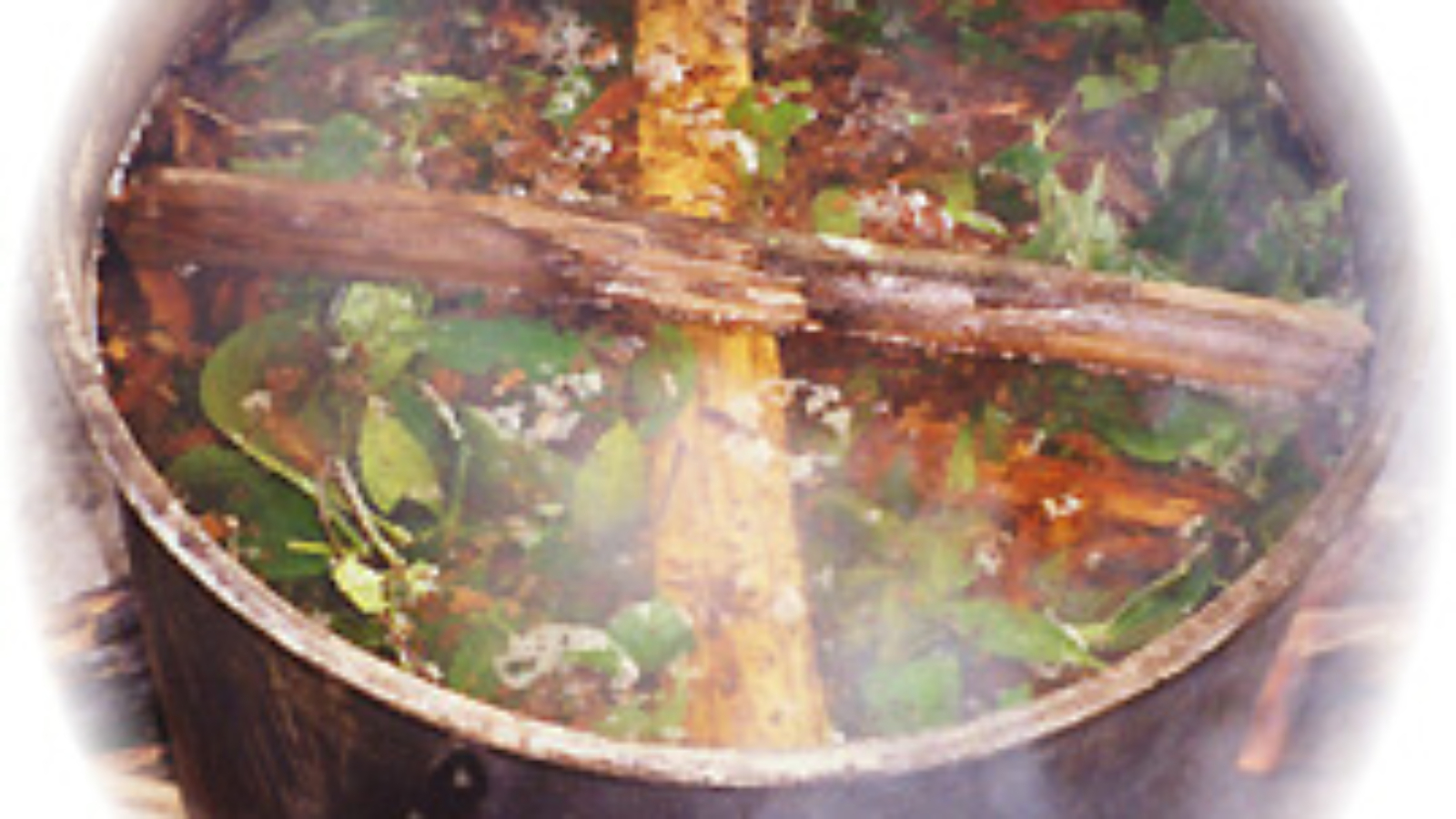
Official Recognition of Ayahuasca in Peru

Takiwasi is proud to announce the official decision of the Peruvian Government to declare the knowledge and traditional uses of Ayahuasca as a cultural patrimony of the nation, product of a dossier realized by Dr.
Rosa Giove, M.D., head of Takiwasi Center, Tarapoto-Peru for the National
Institute of Culture of Peru. We hope it will be a positive step for the
preservation of ancestral wisdom of indigenous people and contribute to
open a new and respectfull research on this topics. See above the
translation of the declaration published in “El Peruano”, official journal
of Peruvian Government.

Sincerely,

Dr. Jacques Mabit, M.D.
Executive President
Takiwasi Center
www.takiwasi.com

Continue Reading