Press Release
November 12, 2014
Let’s End Wasted Justice Resources: Second Round in Hasselt ‘Cannabis Social Club’ Lawsuit


Press Release
November 12, 2014
Let’s End Wasted Justice Resources: Second Round in Hasselt ‘Cannabis Social Club’ Lawsuit
Sarà un’associazione regolarmente registrata i cui componenti organizzeranno la coltivazione collettiva di cannabis esclusivamente per uso terapeuticodi
Di Danilo Renzullo
06 novembre 2014

ENCOD-BULLETIN ZUR DROGENPOLITIK IN EUROPA
NOVEMBER 2014
Etwas ist faul in Skandinavien

Cannabis Social Clubs are set up to protect the rights of cannabis consumers and producers and help establish cannabis policies that benefit society as a whole.
Cannabis Social Clubs consist of members, adult citizens who organise the cultivation of a limited amount of cannabis to satisfy their personal needs. Thus a closed circuit is established between producers and consumers, where certain requirements are met concerning health, safety, transparency and accountability.
The concrete form and ways of operating of a Cannabis Social Club depend on the legal, political and cultural standards in the country in which it is established. However, there are some basic principles and attitudes which all Cannabis Social Clubs adhere to and which distinguish them from other kinds of initiatives.
1. Supply follows demand, not vice versa
The production capacity of a CSC is based on the expected level of the consumption of its members. The supply is organised in order to meet the demand of the members, not vice versa.
2. Non-profitability
Cannabis Social Clubs are non-profit associations. The financial benefits that may be obtained by the association and that derive from economic activities, are used to promote the goals of the association, and not distributed among the members. CSC’s aim to generate legal employment and produce goods and services in a taxable way.
3. Transparency
Cannabis Social Clubs are legally registered associations. Their internal organisation is democratic and participative. The decision-making body is the Annual General Assembly, to which all members are invited to attend. Each member has one vote.
On the AG, a narrative and financial report of the activities of the association in the preceding year should be presented and approved, as well as a plan for the following year.
CSC’s maintain a record of their activities, which is easily consultable by members, other CSC’s or authorities. This includes financial accountability, an (anonymized) registration of members and their consumption, and an (anonymized) registration of production.
4. Public health oriented
Cannabis Social Clubs only use methods of cultivation that meet the standards of organic agriculture. They develop an effective policy of prevention of problematic use of cannabis and promote safe and responsible use. This includes providing members with factual information on cannabis/hemp. They elaborate research into health aspects of the cannabis that they produce and inform their members on the results of this research.
5. Open to dialogue with authorities
Cannabis Social Clubs are willing to engage in any kind of dialogue with authorities, and implement an active policy to invite authorities to this dialogue.
See also the Code of Conduct for Cannabis Social Clubs

6 november 2014
door Mirjam Remie
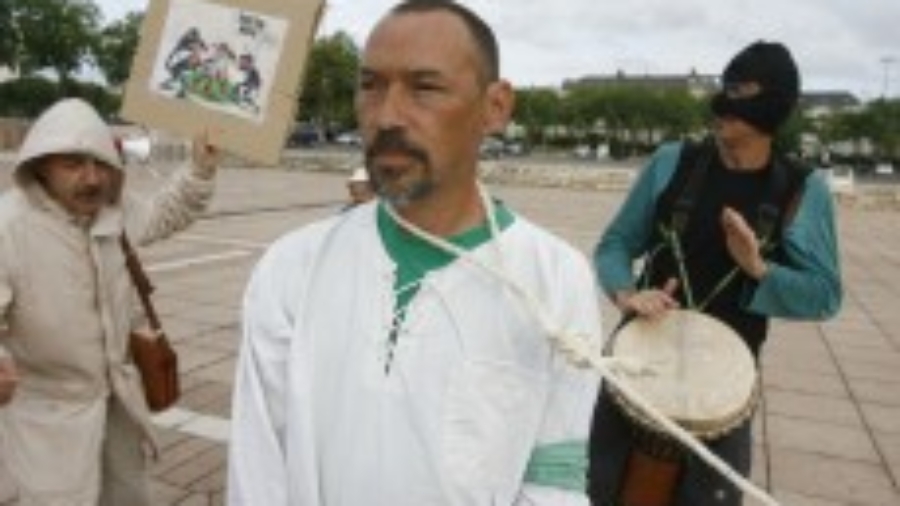
HALTE à la « triple peine des usagers du cannabis »
Tous à Angers, le 10 – 11 novembre 2014 pour soutenir Eric Chapel « victime de la triple peine » et célébrer « l’armistice de la sale guerre aux utilisateurs des fleurs de chanvre ».
Una Iniziativa dei Cittadini per un sistema legale di produzione, distribuzione e consumo personale della Cannabis.
Durante l’Assemblea Generale di Encod in Berneo, Spagna, dal 21 a 23 Giugno 2013, è stata concordata la seguente serie di principi per definire il concetto di Cannabis Social Club.
Il 15 marzo del 1998, 14 ONG (Organizzazioni Non Governative) provenienti da Europa, Africa e America Latina si sono incontrate a Vienna, in Austria, per stabilire un’intesa comune prima della partecipazione alla Sessione speciale dell’Assemblea generale delle Nazioni Unite sulla droga (UNGASS 1998), che avrebbe avuto luogo 3 mesi più tardi a New York. Dopo molte ore di dibattito, il risultato è stata l’adozione di un Manifesto per le politiche sulle droghe giuste ed efficaci. Questo Manifesto, che è stato firmato da centinaia di organizzazioni in tutto il mondo, rappresenta la visione della Coalizione Internazionale delle NGO in materia di politiche sulle droghe.
Nel 2004, durante l’Assemblea Generale di ENCOD a Copenaghen, si è deciso di adottare il titolo del Manifesto in nome di ENCOD: Coalizione Europea per le Politiche sulle Droghe Giuste ed Efficaci.
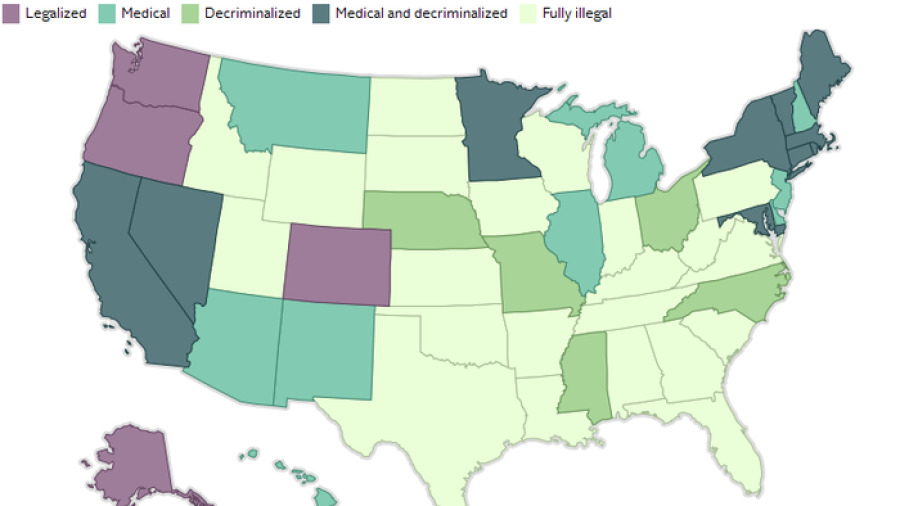
By Amar Toor
5 November 2014
Legalization advocates hail ballot results as a sign of progress, but medical pot stalls in Florida