arton1377

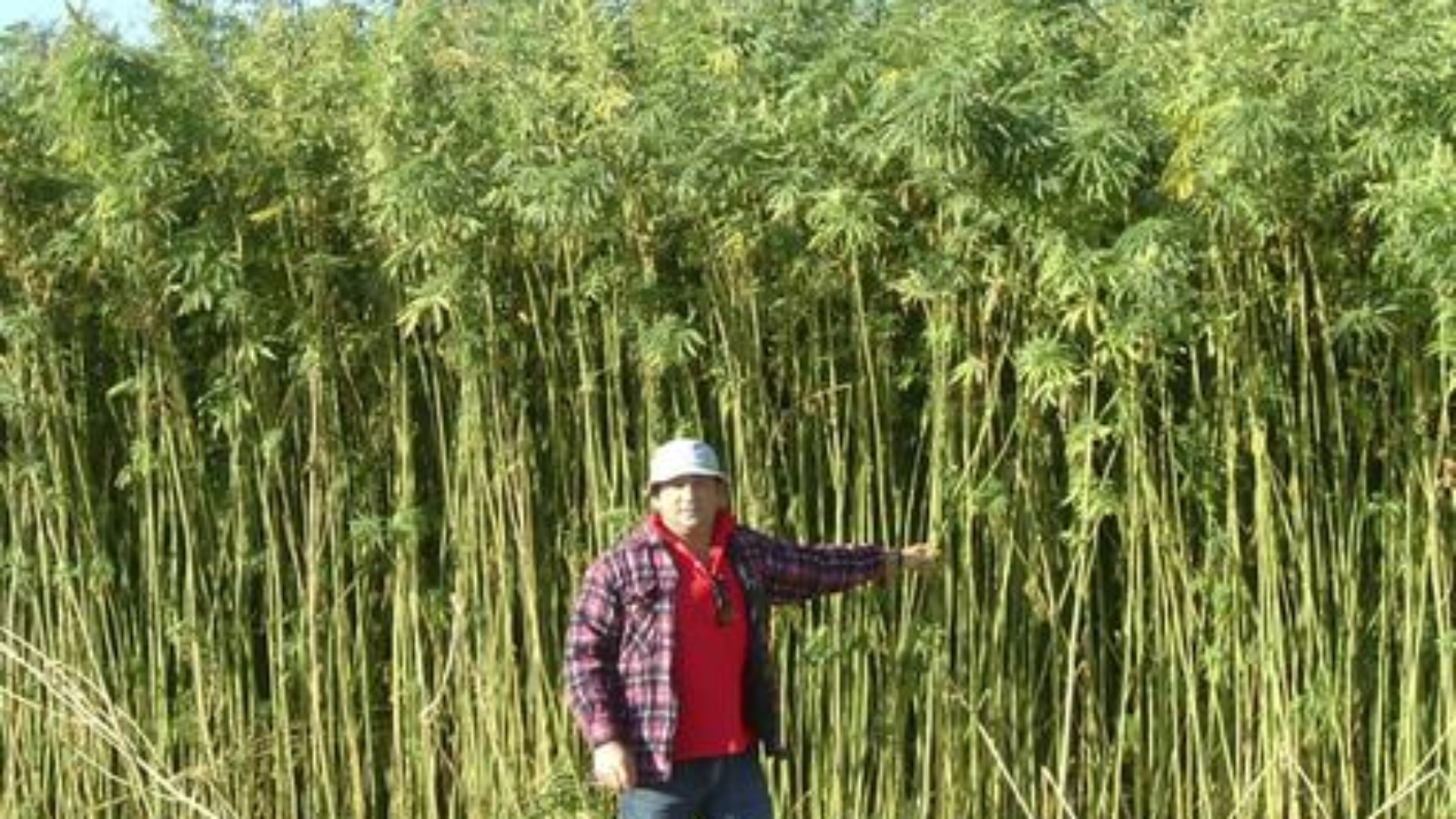
Cannabis growing offers pot of gold for farmers

The Sidney Morning Herald
13/07/2008
Australia

Cannabis growing offers pot of gold for farmers

FRANK WALKER

NSW farmers could be growing cannabis by spring with the approval of the Iemma Government – but this marijuana can’t be smoked to get high.

It will be a variety of the cannabis plant containing tiny levels of tetrahydrocannabinol (THC), the chemical that puts the pleasure in pot.

Smoke this Government-approved cannabis and all you’ll get is a cough. The Government has just passed the Hemp Industry Act allowing farmers to grow industrial hemp under licence.

Primary Industries Minister Ian Macdonald said the plant could be used to help create fuel, building materials, insulation, a base for skincare products, paints, paper products and textiles.

“It is a potentially lucrative industrial industry because farmers will have the option of another fast-growing summer crop that can be used in rotation with winter grain crops,” Mr Macdonald said.

The minister said hemp was environmentally friendly, water efficient and extremely hardy.

This is a marked turnaround for governments, which for more than 60 years have seen hemp as synonymous with drugs. NSW follows four other states in allowing industrial hemp crops.

Hemp was a major product for textiles, rope and paper around the world until the 1930s when it was overtaken by the oil and timber industries.

Mr Macdonald said there was an issue with getting the plant accepted as a crop because industrial hemp and marijuana plants look similar.

National Party deputy leader Andrew Fraser said he was concerned farmers could mix the crops and grow the illegal variety.

But under the law only farmers with no criminal record can get a licence to grow hemp. Police and agricultural inspectors will monitor properties regularly.

Narromine farmer Ross Browning found 13 police officers raiding his farm when he was involved in an industrial hemp trial project.

“Somebody stole heads of the plants from my field and dobbed me in when police arrested him for possessing dope. They demanded I pull it all out until I showed them the licence. But they still took samples from my crop and sent it away for testing.

“When it came back with almost no THC reading I was off the hook, but the thief was still in trouble.”

Griffith farmer Pat Calabria has been experimenting with hemp varieties for seven years, but believes Australia has a long way to go to catch up to the rest of the world.

“This could become a major crop in Australia like it is in Europe, but we need processing plants and a market for this crop to take off,” he said.


http://www.smh.com.au

arton1372

Rastas can use cannabis, Italian court rules

Peter Popham
The Independent
Saturday 12 Jul 2008

Rastafarians have always regarded Ethiopia as the promised land, but
Italy could rank a close second after its Supreme Court ruled that
smoking or possessing cannabis is not a criminal offence but a religious
act when the person doing it is a Rastafarian.

Last year, the same court declared that cultivating even a single
cannabis plant was a punishable offence. But now Italy’s Court of
Cassation has said Rastafarians use marijuana “not only as a medical but
also as a meditative herb. And, as such [it is] a possible bearer of the
psychophysical state to contemplation and prayer”.

Release, the London-based drugs information service, said that the
ruling was a European first.

The case was brought by a man in his forties from Perugia who was
sentenced to 16 months in jail plus a €4,000 (£3,000) fine in 2004 for
possession of 97g of marijuana. The Supreme Court said the court of
first appeal had failed to consider that the man, a Rastafarian, smoked
marijuana according to the precepts of his religion, which, the judges
said, permits the smoking of 10g per day. Rastafarians smoke the drug,
said the court, “with the memory and in the belief that the sacred plant
grew on the tomb of King Solomon”.

The government is livid. The judgment “shatters the laws which forbid
and proscribe penal sanctions for” the use of illegal drugs, an Interior
Ministry spokesman said.

Right-wing politicians were scathing. Senator Maurizio Gasparri said:
“Today we learn a Rasta is free to go around with drugs. If somebody
belonged to a religion which permitted them to eat their children, would
they give them the go-ahead, too?”

But the verdict was received with joy at Rototom Sunsplash, Europe’s
biggest festival of reggae music, near Udine, in north-east Italy.
“Finally the principle of religious pluralism is beginning to make
headway,” Filippo Giunta, president of the festival, said. “This
judgment … underlines again the difference between this substance and
so-called ‘hard’ drugs, alcohol included.”

http://www.independent.co.uk/

arton1369

Decriminalisation of personal use of cannabis in Austria

A recent court ruling highlights the impacts of the new narcotics law.
Although he had harvested more than 10 kg of cannabis leaves, an
Austrian man was not sentenced and the public prosecutor recently
dismissed the case – with a two-year probation period. According to the
new law the prosecutor must refrain from prosecution if the suspect
possessed the drug exclusively for personal use. However, if the suspect
is again found to possess cannabis within the probation period he is
threatened by prosecution since cannabis possession is not legal under
the new law.

Prior to January 1, 2008, dismissal of a case was only possible if the
suspect had been in possession of a “minor quantity” of a drug. For
cannabis, that quantity was, as in Germany, in the range of a few grams.
The revised law now no longer considers the quantity but the personal
use of a drug. In the current case where the defendant had harvested
leaves from allegedly discovered hemp field there was no evidence for
his intent to sell the material. The main motivation for the recent
amendment to the law was, according to responsibles at the Ministry of
Justice an EU decision regarding the fight against drugs. It had
tightened measures against drug dealers. However, it was felt that this
amendment required a stronger separation of drug dealing from personal use.

Translated from OÖnachrichten

arton1368

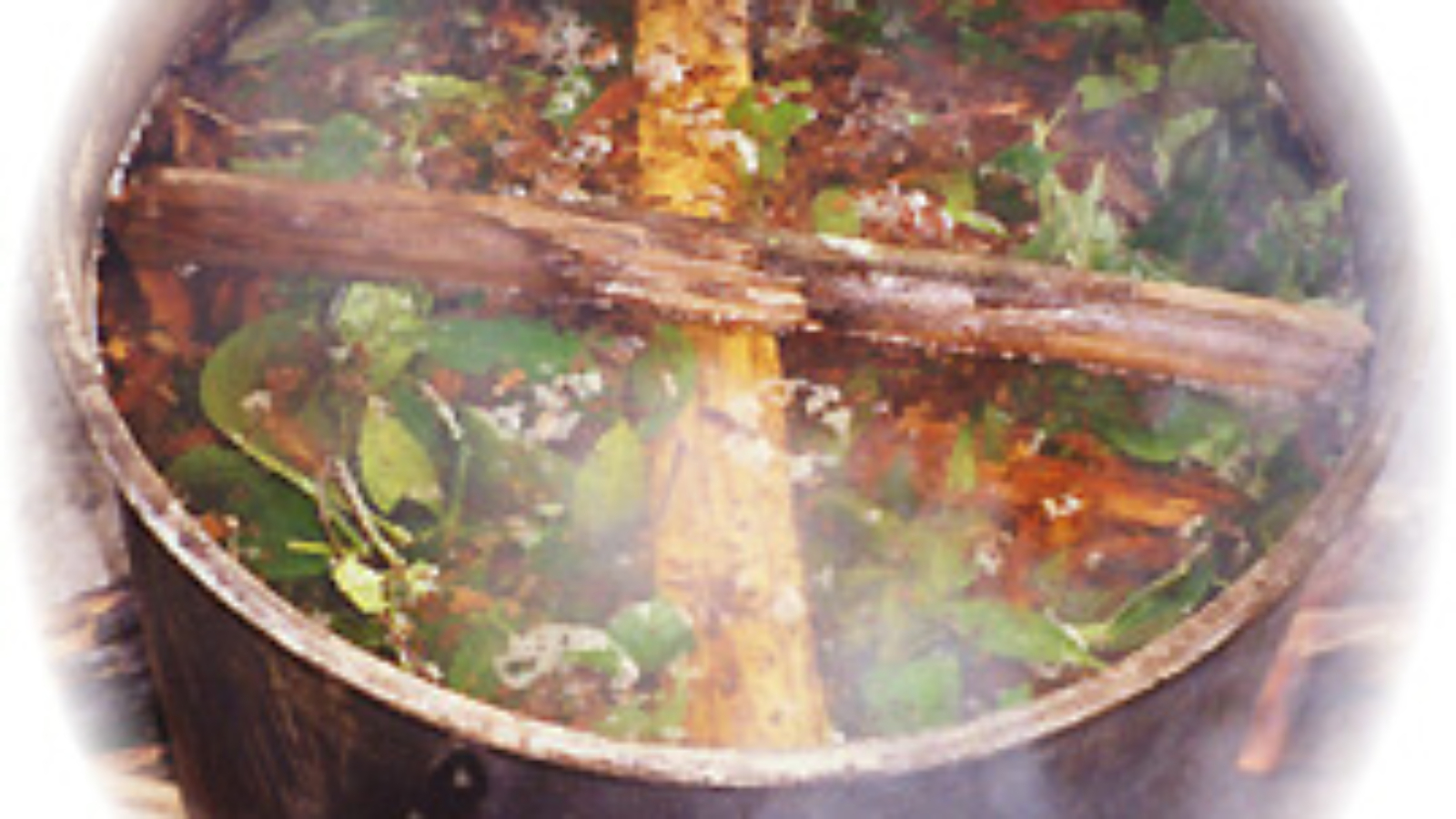
Official Recognition of Ayahuasca in Peru

Takiwasi is proud to announce the official decision of the Peruvian Government to declare the knowledge and traditional uses of Ayahuasca as a cultural patrimony of the nation, product of a dossier realized by Dr.
Rosa Giove, M.D., head of Takiwasi Center, Tarapoto-Peru for the National
Institute of Culture of Peru. We hope it will be a positive step for the
preservation of ancestral wisdom of indigenous people and contribute to
open a new and respectfull research on this topics. See above the
translation of the declaration published in “El Peruano”, official journal
of Peruvian Government.

Sincerely,

Dr. Jacques Mabit, M.D.
Executive President
Takiwasi Center
www.takiwasi.com

Continue Reading

arton1348

The Brazilian anthropology and the theme of psychoactive

By Bia Labate and Sergio Vidal
Translated by Luana Malheiro

Between last days 1 and 4 of June it occurred at Porto Seguro, in Bahia, Brazil, the biggest event of anthropology of Latin America: the 26ª Anthropology Brazilian Meeting of Brazilian Anthropology Association (ABA). This year the direct of ABA it accepted two proposals to realization one round table discussion and one working group to discussing the “war on drugs”.

On June 2, the teacher Edward MacRae, one of the founders-researchers of Neip (Core of interdisciplinary studies on psychoactive) coordinated the round table discussion: “Formal and informal controls of the psychoactive use”. On that day, a lot of people crowded the room. The discussion included the exposure of the researcher Thiago Rodrigues (PUC/SP; NEIP), Paulo César Pontes Fraga (UESC), Eduardo Viana Vargas (UFMG) the more recent participant of NEIP.

Eduardo Vargas suggested we should go beyond the categories as “substance itself”, “set” and “setting” to think the question of drugs, to think the question of drugs and, from a reading of the theory of Bruno Latour, thinking the “event” of drug use, or ecstase from agenciamento and not agency. Paulo Fraga discussed the symbolic logic and material of marijuana’s polygon, and Thiago Rodrigues drew a wide network of historical and political relations and policies that make possible the establishment of prohibition drugs, considering also “the success of the policy failures of the war on drugs” (who interest and why continues the prohibition and complete its goal of banning the consumption of psychoactive substances in the world).

On 3 was the launching of the book “Religiões Ayahuasqueiras: um balanco bibliografico”, writing by Bia Labate, Isabel de Rose and Rafael Guimarães dos Santos. In the same day, was also beginning the Working Group Substances Psicoativas: Culture and Politics, which included the exposure of different works on the theme, with emphasis on religious use of psychoactive plants, especially in modalities related to ayahuasca and jurema.

On day 4 were the last two sessions of the GT, with exposures about various topics, such as drug use among academics, at parties raves in the northeast, public service of attendance the dependent, the new law of narcotics and the speeches doctors on drugs, among others.

Sergio Vidal discussed the need for more institutionalization of the discussion on drugs within the Brazilian Association of Anthropology and need more effective dialogue between the anthropology and others knowledge in the task of subsidizing the development og public policies ands laws on the subject. The researcher noted that discussion on drugs has not been part of the discussion in the themes of the standing committees of the ABA.

Moreover, emphasizing the fact that in 2004 the ABA had refused na invitation to attend the Symposium Cannabis Sativa L. and Substances of Cannabis in Medicine and give advice on the question “Should the Cannabis Sativa remain in tier IV of Convention of 1961?”, calling attention that this absence may have influenced the decision prepared in Decree 5.912/06 of the wave to an anthropologist ate the National Antidrug Council (CONAD) isn’t chosen through an indication of the ABA, but the President of CONAD, General Jorge Armando Felix, Chief Minister of Institutional Security Cabinet of the Presidency of the Republic.

Some of the themes that have preocucupied the researchers in this area relate to legal and ethical issues. In the first field, was the fact that several prominent researchers in the filed ate being prosecuted or threatened qith suffering legal process on the basis or theis activities to research. The second set of issues relates to the challenges that researchers in this area must face in their day-to-day search, as the difficulty to obtain “informed consent” of their informants (signed a paper where the person who says science has about what is the research and who agree to participate in them), frequent demands of the councils of medical ethics, which prevents the limit the activity of the anthropologist, especially those related to the study of illicit activities.

This meeting of the ABA was a particularly fruitful time – arriscaríamos say, even historic – because the ABA has accepted the holding of a Round Table and a GT on psicoativos. Before that, at least where our colleagues managed to remember, only one had occurred on GT psicoativos the 20 th meeting of the ABA in Salvador in 1996 (also organized by Edward MacRae).

Remember that if social scientists criticize the excessive medicalization of debate about the use of psychoactive substances in society, the theme of “drugs” is still quite marginalized within their own social sciences. Apparently, this is beginning to reverse.

Sources: Alto das Estrelas e ANANDA